
Design Highlights
- Global insured losses from natural disasters reached $100 billion in early 2025, indicating a costly trend for insurers.
- In the U.K., weather-related property claims surged to £1.6 billion in 2025, doubling prior averages.
- Severe convective storms are the leading cause of insured losses, totaling $61 billion globally in 2024.
- Aon reports a 60% global protection gap, leaving many disaster damages uninsured and households financially vulnerable.
- Climate change is driving increased storm intensity, raising the financial burden on the insurance industry and challenging sustainability.
Extreme weather isn’t just a conversation starter anymore; it’s wreaking havoc on insurance claims like never before. The numbers are staggering. In the first half of 2025 alone, global insured losses from natural catastrophes hit around $100 billion—second highest on record. That’s a lot of zeros. Total economic losses? A whopping $162 billion. And let’s not forget the U.S. footing the bill for about $126 billion of that total. It seems like every year, the insurance industry is left picking up the pieces from disasters that are only getting more severe.
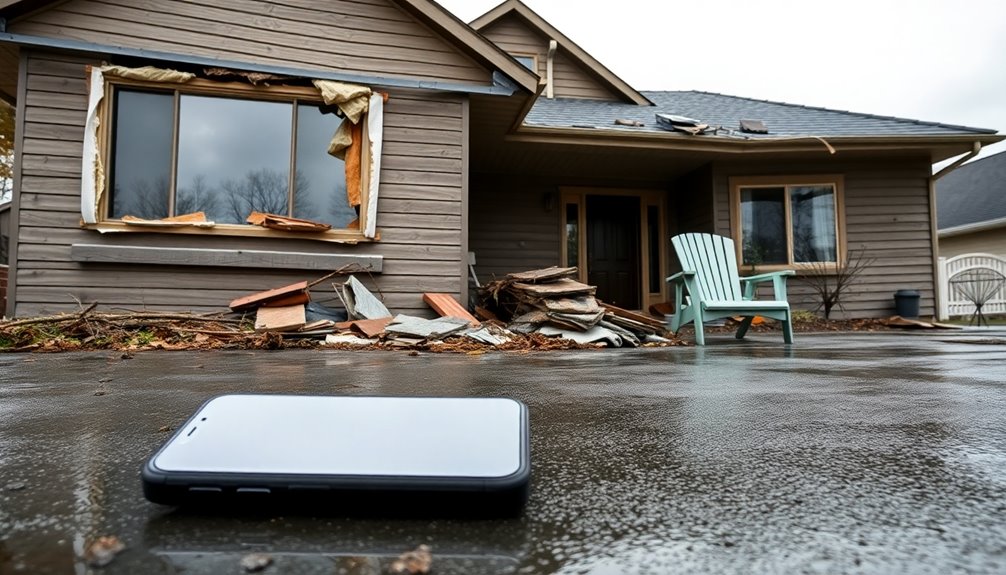
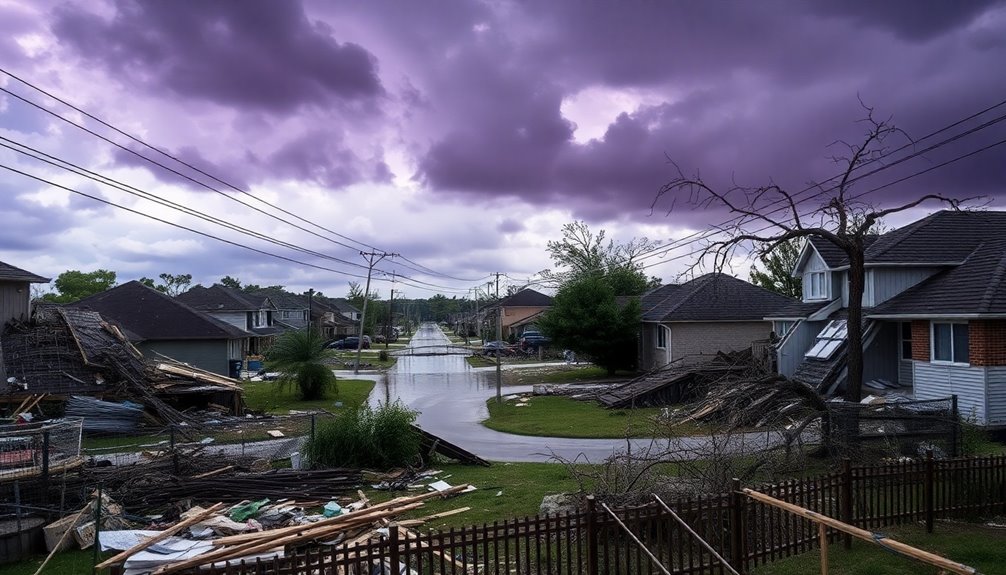
Extreme weather is wreaking havoc on insurance claims, with 2025’s global insured losses soaring to $100 billion.
Weather-related claims are now the bread and butter of property insurance. In the U.K., these claims soared to around £1.6 billion in 2025, which is roughly $2.2 billion. That’s a quarter of all property insurance claims! To put it bluntly, that’s more than double the average seen from 2017 to 2021. Insurers are feeling the heat, and it’s not just from the sun. Deloitte’s findings make it clear: severe, long-lasting weather events are becoming the norm. Weather-related claims in 2025 are expected to be the most expensive year on record for property insurers. Additionally, the trend of increasing global insured losses has put further pressure on the industry.
Severe convective storms? They’re the major culprits here. Aon’s catastrophe insights highlight these storms as the most damaging peril for insurers. In 2024, global insured losses from such storms hit about $61 billion, and 2025 is shaping up to be just as brutal. In the U.S., losses from these storms reached around $51 billion. Seriously, it’s like nature is throwing a tantrum.
Then there are the wildfires and hurricanes. The Palisades and Eaton fires racked up about $41 billion in insured losses, while Hurricane Melissa alone caused around $11 billion. These events show how one disaster can create a mountain of claims, leaving insurers scrambling. Much like the case for early enrollment timing in pet insurance, experts stress that securing coverage before a catastrophe strikes is critical to avoiding devastating financial losses.
But here’s the kicker: there’s a massive protection gap. Aon highlights a global gap of about 60%. Even as insured losses climb, a significant chunk of disaster damage remains uninsured. It’s a scary thought, especially for households and businesses trying to recover after a catastrophe.
Climate change is ramping up the pressure, making every storm, every wildfire, and every flood more intense. The insurance industry is on the brink of a costly new era. With these rising claims, one has to wonder: how much longer can insurers keep up? The future looks bleak, and it’s not just the weather that’s getting stormy.