
Design Highlights
- Hail damage accounts for nearly half of all homeowners’ claims, significantly driving up insurance premiums nationwide.
- In hail-prone states, separate deductibles for hail damage can lead to substantial out-of-pocket costs before coverage kicks in.
- Homeowners can mitigate financial impacts by preparing their properties against hail, such as installing impact-resistant roofing.
- Regularly reviewing and comparing insurance policies can help homeowners find better rates and coverage options.
- Filing small claims may lead to future rate increases, so consider the long-term impact before submitting a claim.
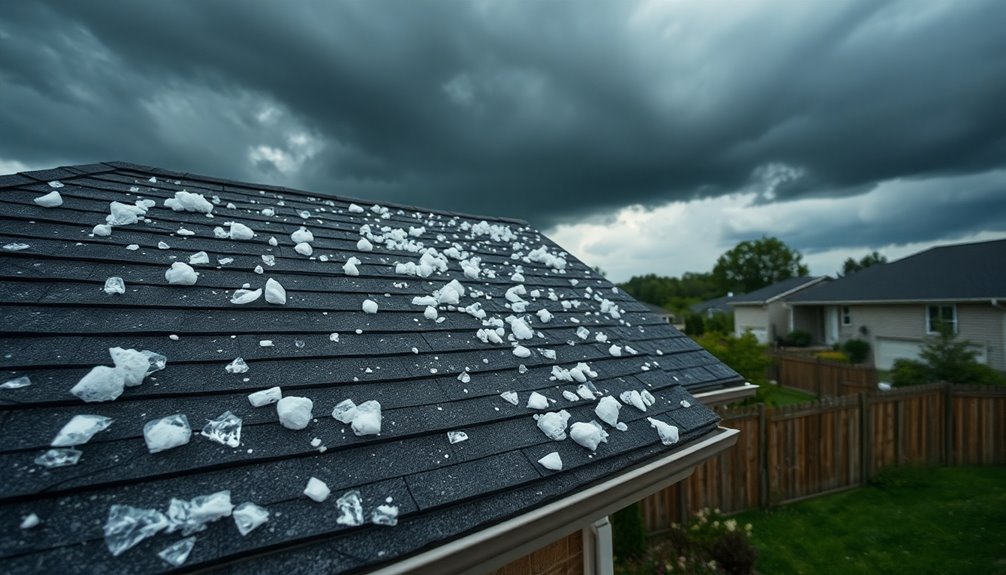
Insurance rates are skyrocketing, and it’s not just a bad joke. The culprit? Hail. Yes, those little ice balls falling from the sky are wreaking havoc on homeowners’ wallets. In 2022 alone, there were 5,879 reports of hailstones one inch or larger. That’s a 17% jump from the previous year.
Insurance rates are skyrocketing, all thanks to hail wreaking havoc on homeowners’ wallets with a staggering 17% increase in reports!
And if you think that’s wild, preliminary data for 2023 shows a staggering 6,962 reports, with some hailstones even reaching two inches. It’s like Mother Nature is out here throwing ice grenades.
State Farm, one of the biggest players in the insurance game, isn’t laughing either. They paid out 27,300 hail claims in 2023. That’s up from 23,200 in 2022. The total bill? A whopping $6.1 billion, surpassing the payouts from the past two years combined. Hail damage payouts accounted for nearly half of all homeowners’ claims nationwide.
It’s no surprise that hail damage accounts for nearly half of all homeowners’ claims nationwide. The average claim costs about $11,695, while State Farm‘s average hit $17,000 this year. Talk about a punch to the gut. Base rate increases due to regional losses affect all in high-risk areas, making it even more challenging for homeowners.
What’s even more astonishing? Annual losses from hailstorms have ballooned from over $1 billion in the 1990s to a staggering $8-15 billion today. In 2020 alone, insured losses exceeded $14 billion.
Just one hailstorm in Texas and Oklahoma caused a colossal $3.3 billion in damage. It’s like the sky is the new villain in town.
So, how does this affect insurance premiums? Buckle up. In Colorado, average premiums have surged nearly 52%. Texas isn’t far behind, with rates climbing nearly 19% annually. The national average homeowners insurance premium reached approximately $2,424 in 2025 for $300,000 in dwelling coverage, highlighting how widespread the affordability crisis has become.
You better believe that if you live in hail-prone areas, you might as well brace for a rate hike. Some regions are witnessing increases that feel like a punch in the gut—rates are doubling or even tripling.
Filing a claim? That could come back to bite. While Texas law won’t slap you with a surcharge for a single weather claim, regional rate adjustments happen. Small claims can stay on your record for years, thanks to the dreaded CLUE report.
And guess what? Hail-prone states often have separate deductibles. That means you could be shelling out thousands out-of-pocket before your insurance even kicks in.