Will your renters insurance cover hurricane damage? Well, it might, but don’t get too cozy. Wind, hail, and falling debris? Sure, they’re on the list. But flood damage and storm surges? Nope, that’s a hard pass. Your landlord’s got the building covered, but your shattered belongings? That’s on you. Think your policy protects you? Think again. Keep your eyes peeled, because there’s more to this insurance puzzle that could leave you hanging when you need it most.
Design Highlights
- Renters insurance covers wind damage, hail, lightning, and debris, but does not cover flood or storm surge damage.
- Confirm your policy includes Loss of Use coverage for temporary housing and meals after storm damage.
- Structural damage is the landlord’s responsibility; renters must protect personal belongings themselves.
- Gaps exist in coverage limits, potentially leaving valuables underinsured during storms.
- Consider purchasing separate flood insurance, especially if you live in a high-risk flood zone.
What Types of Hurricane Damage Are Covered by Renters Insurance?
When a hurricane barrels through, it doesn’t just knock on the door; it kicks it down. Renters insurance can be your lifeline, covering a range of hurricane-induced chaos.
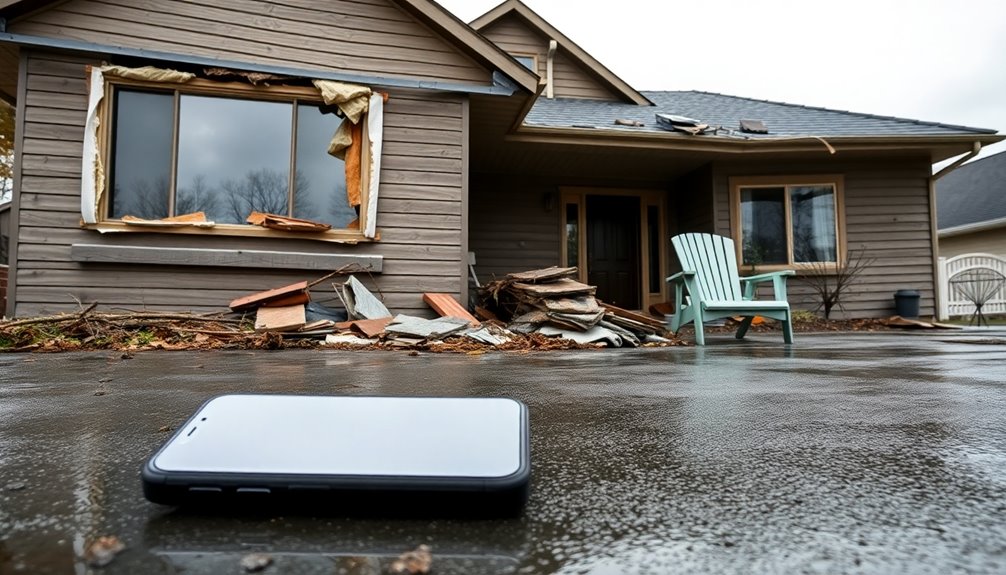
First up, wind damage. Your beloved couch, fancy electronics, and even that vintage jacket? Covered, as long as wind is the culprit. Hail and lightning? Yep, they’re included too—no one likes their new TV fried by a bolt from above. And let’s not forget falling debris; that tree limb crashing through your window is also fair game. Water damage from wind-created openings? Covered! However, if you’re relying on your renters insurance for flood damage, you’ll need to look elsewhere. Additionally, losses due to blizzard-related damage may also be treated under storm coverage in certain situations.
Wind damage can wreak havoc on your belongings—couches, electronics, and even vintage jackets are covered if the wind is to blame.
But if you’re thinking about floodwaters, think again. Renters insurance has your back, but only if you know what to look for. If your home becomes uninhabitable due to hurricane damage, your policy may also cover additional living expenses, such as temporary housing and meals while repairs are underway.
Major Gaps in Coverage During a Hurricane
Hurricanes can wreak havoc, but renters insurance often leaves gaping holes in coverage. First off, flood damage? Forget it. That’s a separate policy you’ll need to shell out for. Storm surge? Nope, also excluded. So, good luck if you think water rising from the ground up is covered. And let’s not even start on sewer backups or drainage issues—standard policies just won’t touch those. Renters in high-risk flood zones should strongly consider purchasing separate flood insurance through the National Flood Insurance Program or a private insurer to protect their belongings.
Structural damage? That’s on the landlord, not you. You’re left scrambling for temporary housing if your place becomes uninhabitable, but only if it’s due to covered damage—good luck if it’s just flooding. Additionally, coverage limits mean your belongings might not be fully protected anyway. Personal property coverage may only pay to repair or replace items damaged by specific perils, leaving you vulnerable to unexpected losses. Welcome to the fine print!
Strategies to Strengthen Your Coverage Against Hurricane Risks
Strengthening coverage against hurricane risks isn’t just a good idea; it’s essential.
First up, flood insurance. Standard renters insurance? It’s about as useful as a boat with a hole in it when it comes to flood damage. Grab a separate flood policy before the storm season hits. Keep in mind that flood insurance waiting periods are typically 30 days, so don’t wait until a hurricane is on the horizon.
Next, confirm your coverage for wind, hail, and lightning. You’d be shocked at what’s included—or not. Many policies exclude flood damage and storm surge losses, so be sure to check the specifics.
Don’t forget Loss of Use coverage. No one wants to be stuck in a hotel after a hurricane, racking up bills.
Check those personal property limits, too. They should match what it costs to replace your stuff.
Finally, review your policy for those sneaky exclusions. Ignorance isn’t bliss when the winds start howling.
Prepare or panic. Your choice.