
Design Highlights
- Monitor crude oil prices, as every $1 increase raises gasoline prices by $0.02-$0.03, impacting your summer travel budget.
- Consider alternative modes of transportation to avoid rising airfare, which has increased by 18% or more this year.
- Be proactive in meal planning and grocery shopping to counteract gradual price hikes in food due to supply chain disruptions.
- Factor in potential surcharges from retailers and delivery services, like Amazon and UPS, into your household budget.
- Explore carpooling or combining trips to reduce fuel consumption and mitigate rising gas prices during the summer travel season.
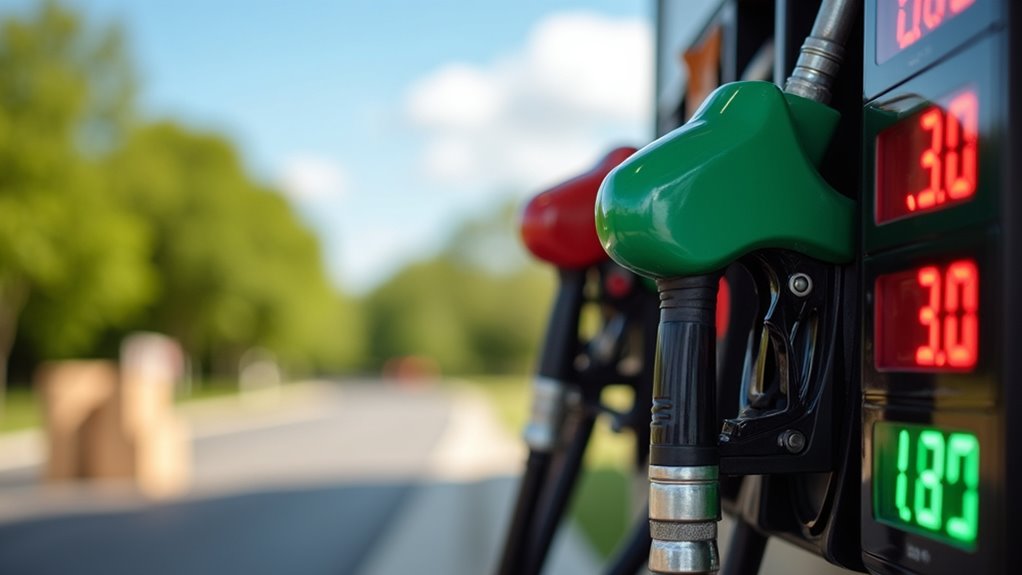
As oil prices continue to soar, one can’t help but wonder if the world is spiraling into a costly abyss. Brent crude, that infamous benchmark, has surged past $100 per barrel. Thank you, Iran war, for the supply disruptions. It’s like a bad joke that just keeps getting worse. Meanwhile, the average price of gas in the U.S. shot up to $4 per gallon, a staggering 35% spike since February. Talk about a punch to the gut.
Diesel prices? Oh, they’ve escalated from $3.64 a year ago, climbing even faster during these disruptions. And as if that weren’t enough, jet fuel prices have risen even more sharply than crude—conveniently impacting airfares. It’s a wild ride, and the worst part? Oil prices have generally hovered above $100 since the conflict began.
Here’s how it shakes out: every $1 increase in crude oil translates to a $0.02-$0.03 rise in gasoline prices. Add taxes, refining, and distribution, and you’re looking at an extra $1-$1.50 per gallon. So, at $104 for Brent crude, the base cost of gasoline peeks around $2.63 per gallon. The national average hit $4 recently, the highest since 2022. Great! Just what everyone wants to hear while planning summer road trips.
Speaking of summer, airlines have jumped on the bandwagon, with tickets tracking 18% higher than last year. They might even hit 30%. Airlines like SAS, Qantas, and Air France are slapping on fuel surcharges faster than you can say “unexpected fees.” Even United and JetBlue raised checked baggage fees. It’s a wonder anyone can afford to travel anymore.
And those surcharges? They’re creeping into every corner of the economy. Amazon imposed a 3.5% surcharge on third-party sellers. UPS is raising ground shipment rates by 27%. Everyone’s feeling it, from gas stations to retailers.
The thing is, these higher oil prices don’t just hit overnight. They filter through the supply chain like a slow, painful drip. Diesel hikes hit first, followed by an uptick in grocery prices. By the time summer demand amps up, costs have already built up. Concerns about prolonged disruptions make it clear that this summer will be particularly costly.
In fact, experts anticipate that fare increases for flights routing through the Middle East will further complicate travel plans for many families.
Road trips, airfare, delivery fees, groceries—all affected. Households are in for a rude awakening. With supply disruptions limiting oil access, it’s a maze of rising costs. Experts say don’t bother with your usual booking playbooks. This isn’t just another summer. Renters displaced by fire or other covered perils may find their budgets stretched even thinner, since additional living expenses covered under renters insurance can help offset temporary housing costs during an already expensive season. It’s a costly rollercoaster, and everyone’s strapped in for the ride.