
Design Highlights
- Climate change is increasing the frequency and intensity of weather-related disasters, leading to higher economic losses across major economies.
- Urbanization and rising asset values in hazard-prone areas, like California, exacerbate vulnerability and contribute to escalating insured losses.
- Severe convective storms in the US accounted for significant economic damages, highlighting the growing impact of weather events on industrialized nations.
- Weather-related events represent 88% of total losses and 98% of insured losses globally, indicating a shift in disaster risk.
- Insured catastrophe losses in H1 2025 were nearly double long-term averages, showcasing a trend of escalating financial impacts from natural disasters.
Weather losses are skyrocketing, and it’s hard to ignore the chaos unfolding across major economies. In just the first half of 2025, insured catastrophe losses topped a staggering US$80 billion. That’s nearly double what we’d expect based on long-term averages. What’s driving this madness? Weather-related events are the main culprits, racking up an eye-watering 88% of total losses and 98% of insured losses globally. Earthquakes? They barely made a blip on the radar.
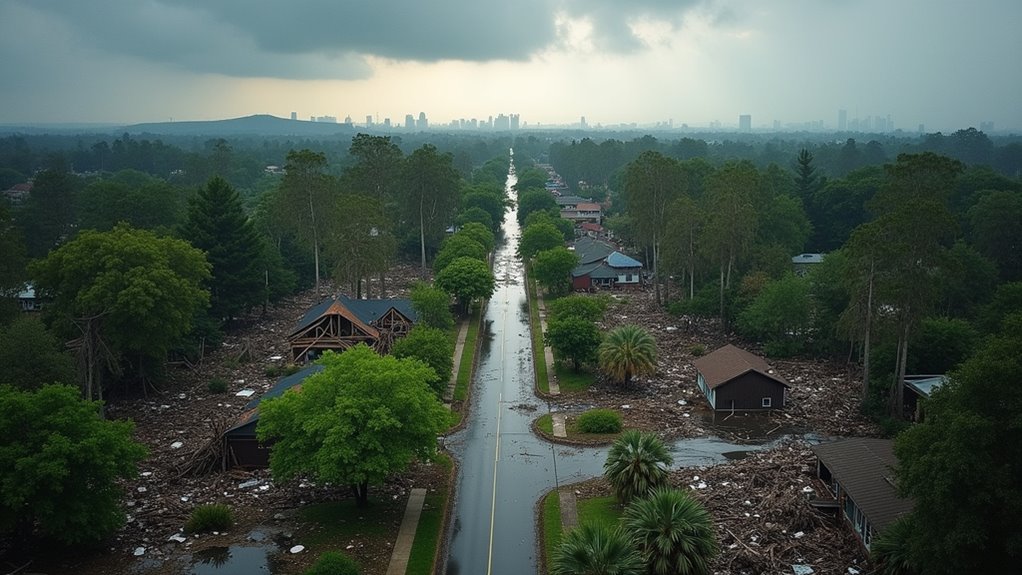
The global economic damages from natural catastrophes hit around US$131 billion in H1 2025, which is about 30% above the 10-year historical average. We’re not just talking about a bad year; we’re witnessing the second-highest insured losses on record, just falling short of 2011. The loss ratios are shooting up in major industrialized nations like Germany, Canada, Italy, and France. Why? Blame the increasingly frequent floods, hailstorms, and wildfires.
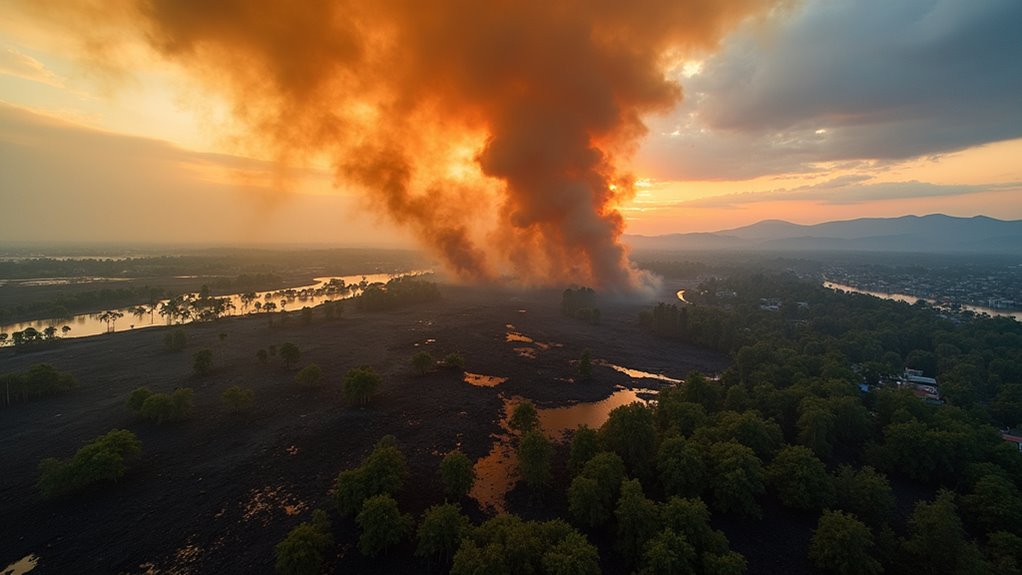
Take California, for example. Southern California wildfires during the off-season winter months alone caused a jaw-dropping US$53 billion in total losses, with US$40 billion insured. This isn’t just a local tragedy; it’s the highest wildfire loss ever recorded worldwide. Total economic losses reached $131 billion, 30% above the historical average. Insurance coverage for disaster damages remains low in developing countries (below 10%), highlighting the urgent need for better protection mechanisms.
Then there were severe convective storms in the US, which piled on roughly US$34 billion in economic losses and US$26 billion in insured losses.
Europe? They had their share of weather disasters, but the total losses there (~US$5 billion) were lower than the previous year. Still, thunderstorms and cyclones wreaked havoc, particularly in places like Réunion and Madagascar.
Meanwhile, California’s wildfires were such a big deal that they consumed nearly 39% of Munich Re’s annual catastrophe loss budget for 2025.
What’s to blame for this relentless surge in losses? Climate change is a key player. There’s growing evidence linking man-made climate change to the rise in frequency and intensity of weather-related disasters. Wildfire seasons are stretching, droughts are overlapping with winds (hello, Santa Ana winds), and all of it is just a recipe for disaster. Urbanization and rising asset values in hazard-prone areas make things worse. Just as families navigate cost-sharing through premiums and deductibles in health insurance, governments and insurers must balance risk management with affordable protection against escalating climate disasters.
The cold hard truth? Eight of the ten largest industrialized economies are now facing higher weather-related losses as a proportion of their Gross National Income compared to the 1980s.
The numbers are staggering. The US alone averaged losses equal to 0.54% of GNI from 2020 to 2025. What a wild ride.