
Design Highlights
- Standard travel insurance policies exclude coverage for war, armed conflict, and civil unrest, leaving travelers unprotected in these situations.
- Government “do not travel” warnings automatically void insurance coverage, limiting options for travelers in conflict zones.
- Traveling through layovers in war zones can lead to policy cancellations, even if the traveler does not stay in the area.
- Many policies offer only limited coverage for medical emergencies in active conflict, which may be inadequate for serious situations.
- Insurance claims for incidents in designated high-risk areas, such as Syria or Afghanistan, are often denied, leaving travelers without recourse.
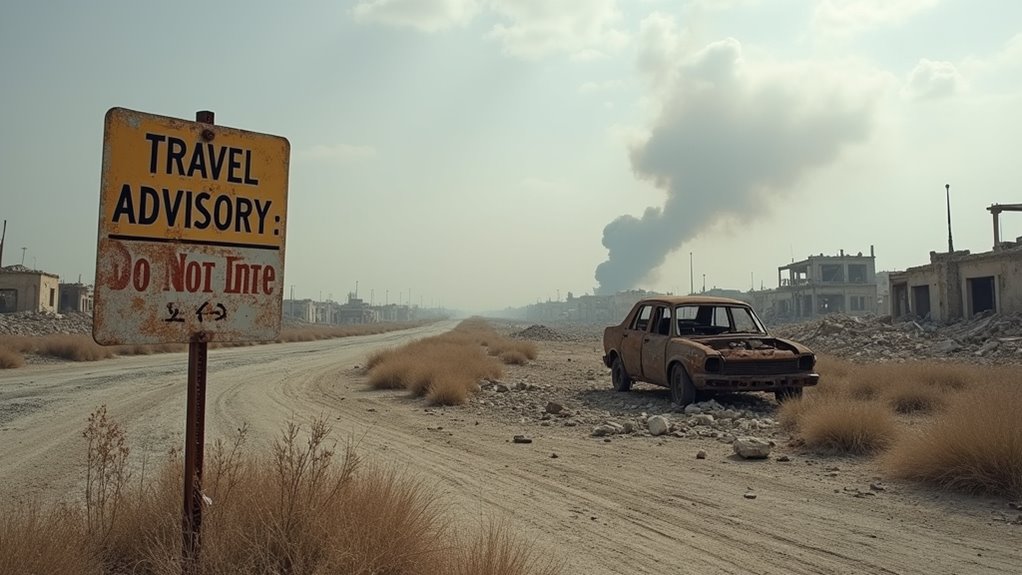
When planning a trip, one might think, “How bad could it be?” Well, if war zones are on the itinerary, quite bad, actually. Travel insurance? Forget it. Most policies have a standard exclusion list that reads like a horror story for anyone considering a jaunt through a conflict-ridden area. War, armed conflict, civil unrest—these are the big no-nos. You step foot in a place where the government has issued a “do not travel” warning, and suddenly, your coverage is as useful as a chocolate teapot.
Traveling to war zones? Think again. Most insurance policies leave you high and dry in conflict-ridden areas.
Let’s be clear: if there’s a declared war, your insurance is likely about as helpful as a rock in a storm. Even a stopover in a war zone counts as travel to that country. That’s right—one wrong layover, and your coverage is void. Trip cancellation, interruption, or delay due to war? Good luck with that. You’re on your own. Tens of thousands of Australians currently affected by the escalating conflict are facing similar challenges in securing assistance.
However, don’t despair entirely. Some policies, like Heymondo, offer limited coverage for those already in a war zone. Medical expenses up to 20,000 euros? Not exactly a gold mine, but it’s something. Assistance is capped at 5,000 euros if you find yourself in an active conflict—better than nothing, but still a drop in the bucket when you’re dodging bullets. Good travel insurance provides practical support in emergencies, underscoring the importance of understanding what your policy can actually do.
What about those pre-existing conflicts? If you’re thinking of visiting Syria or Afghanistan, don’t even bother. Standard policies will kick you to the curb, leaving you high and dry. High-risk areas in the Middle East? Forget it. Even the most adventurous travelers may find themselves facing automatic exclusions due to the region’s turbulent history.
And if you think you’re clever and book your trip before a warning is issued, you might catch a break. Post-booking advisories may allow for cancellations, but only if the warning comes after you’ve made your arrangements. If the U.S. State Department raises the alert to level four within 30 days of departure? Guess what—you can cancel.
Terrorism is a different beast. If there’s an attack 30-60 days before your trip, cancellation might be on the table. But don’t expect a free pass; the U.S. government declaration is required.
In short, if you’re dreaming of an adventurous expedition through war zones, you might want to rethink your plans. The fine print doesn’t lie; it just leaves you stranded.