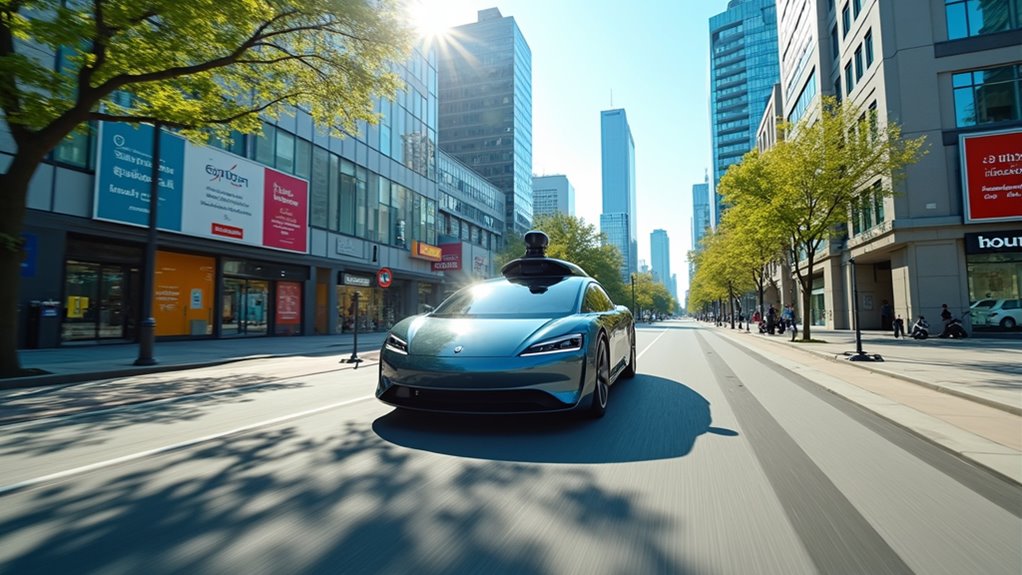

Design Highlights
- State Farm is aligning its investments with its core auto insurance business to enhance operational efficiencies and improve claims accuracy.
- The shift focuses on targeted investments in automotive technology, committing nearly half of its venture portfolio to this sector by 2022.
- Advances in automotive tech, including AI and telematics, are seen as crucial for better underwriting and risk management in the insurance industry.
- State Farm aims for faster financial returns through strategic investments, moving from experimental spending to a more focused approach.
- Innovations in automotive tech, including quantum computing, are expected to redefine risk assessment and enhance data analysis capabilities in insurance.
As the auto industry shifts gears into a tech-driven future, State Farm is revving up its investment strategy. Gone are the days of casting a wide net and hoping for the best. Between 2019 and 2025, State Farm Ventures has made a sharp pivot, ditching the experimental approach in favor of a laser focus on auto technology. By 2022, nearly half of their venture portfolio was all about automotive tech—think vehicle operation, crash recording, and claims processing. This isn’t just a whim; it’s a calculated move to align closely with their core auto insurance business. Maturity in strategy? You bet.
State Farm is shifting gears, focusing its investments on automotive tech to align with its core insurance business.
The broader insurance industry is hopping on this bandwagon. Insurers are prioritizing venture capital where they can actually use their data and expertise for something useful—like underwriting and risk management. State Farm’s shift represents a clear departure from freewheeling spending to a more targeted approach. It’s not just about throwing money at the wall and seeing what sticks anymore. They want financial returns, and they want them fast.
Among the shiny tech investments? Companies like Nexar, which crowdsources dashcam video to give insurers real-world driving data. It’s like having a million eyes on the road—who wouldn’t want that? Then there’s May Mobility, working on autonomous vehicle technology. As driving shifts from humans to machines, the risks change too. State Farm’s focus is on technologies that not only influence how vehicles operate but also improve claims accuracy. They’re all about enhancing data streams—because more data means better fraud detection and sharper underwriting. This aligns with the trend of venture capital becoming a strategic tool for insurers, enabling them to leverage market intelligence effectively. Their commitment to empowering innovative companies for a better future underscores their dedication to shaping the auto tech landscape.
And don’t forget their investment categories. State Farm Ventures is eyeing the future with gusto: AI, telematics, mobility, safety, insurtech, fintech—you name it, they’re interested. With funding typically capped at about $5 million, they’re casting a wide but careful net. And while they’re considering home safety tech, auto tech remains the shining star. Understanding regional factors like state regulations becomes crucial as these technologies roll out across different markets.
Then there’s the quantum leap—literally. Their stake in Quantum Rings shows they’re betting big on quantum computing. Why? Because the future of insurance could hinge on better data analysis. State Farm is there, ready to tackle challenges and redefine risk and underwriting. It’s a bold move, but in the game of auto tech, it’s one they’re willing to make.