
Design Highlights
- SuperAgers, aged 80 and above, have cognitive abilities similar to those in their 50s or 60s, defying aging stereotypes.
- They experience minimal brain atrophy, particularly in memory-critical areas like the hippocampus, preserving cognitive function.
- SuperAgers produce twice as many new neurons in the hippocampus compared to typical older adults, enhancing memory and learning capabilities.
- High levels of social engagement and mental activity contribute to their cognitive resilience and overall brain health.
- Research on SuperAgers may lead to potential treatments for dementia and strategies for promoting cognitive longevity in the elderly.
Ever wonder why some octogenarians seem to have their mental faculties locked in a time capsule? Enter the world of SuperAgers. These remarkable individuals, aged 80 and up, perform memory tasks with the prowess of folks in their 50s or 60s. They’re not just lucky; they’re a distinct group defined by their impressive cognitive abilities, scoring at least 9 out of 15 on delayed word recall tests. SuperAgers defy the stereotypes of aging, showcasing brain functions that would make even some middle-aged adults envious.
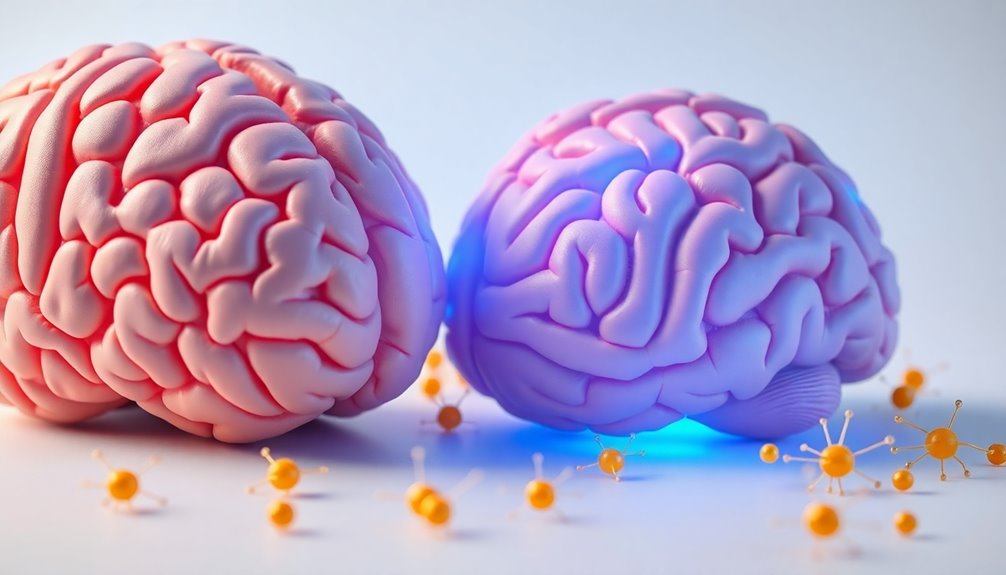
Meet the SuperAgers: octogenarians defying aging stereotypes with memory skills rivaling those in their 50s and 60s.
So, what’s the magic behind this brainy phenomenon? Well, SuperAgers show no significant atrophy in the memory-critical areas of the brain, like the hippocampus or amygdala. That’s right—while most people are losing brain cells like they’re going out of style, SuperAgers maintain razor-sharp cognitive abilities. Their brains are like that rare vintage wine, only getting better with age.
They even produce twice as many new neurons in the hippocampus compared to normal older adults. Talk about a brain boost!
But it gets better. These SuperAgers show little to no cortical thinning, unlike the typical aging brain that’s more akin to a deflated balloon. The anterior cingulate cortex in SuperAgers is thicker, which helps with decision-making and emotional regulation. Their brains age slower, losing volume at a rate of 1.06% per year, compared to 2.24% for everyone else. That’s a whole lot of brain power packed into those golden years!
Genetics and lifestyle play a role, too. SuperAgers often lead high-social engagement lives packed with mental activity. Higher levels of social interaction support cognitive preservation. Imagine being 80 and still having the social calendar of a 20-something; that’s SuperAger life! Additionally, research indicates that SuperAgers exhibit higher numbers of von economo neurons, which are linked to social behavior, further enhancing their cognitive resilience.
Despite some presence of Alzheimer’s-type plaques and tangles, they resist the buildup, showcasing a unique ability to fend off the ravages of time.
Research on SuperAgers isn’t just academic fluff—it has real implications. Their resilience against dementia and brain aging might pave the way for treatments that could help others. Imagine a world where aging doesn’t mean a decline in mental sharpness. It’s not just wishful thinking; it’s a possibility worth exploring. Much like how financial assistance programs are designed to make healthcare more accessible, ongoing SuperAger research aims to make cognitive longevity attainable for a broader population.