
Design Highlights
- Memory cafés foster social connections, reducing loneliness and enhancing joy through shared experiences among individuals living with dementia and their caregivers.
- Engaging activities like music, arts, and simple games provide joyful moments that celebrate abilities rather than focusing on limitations.
- Caregivers gain respite and emotional support, lightening their burden and creating space for moments of laughter and connection.
- The welcoming atmosphere diminishes stigma, allowing participants to feel accepted and valued, promoting a sense of belonging.
- Community ties are strengthened as new friendships form, transforming caregiving into a shared journey filled with hope and camaraderie.
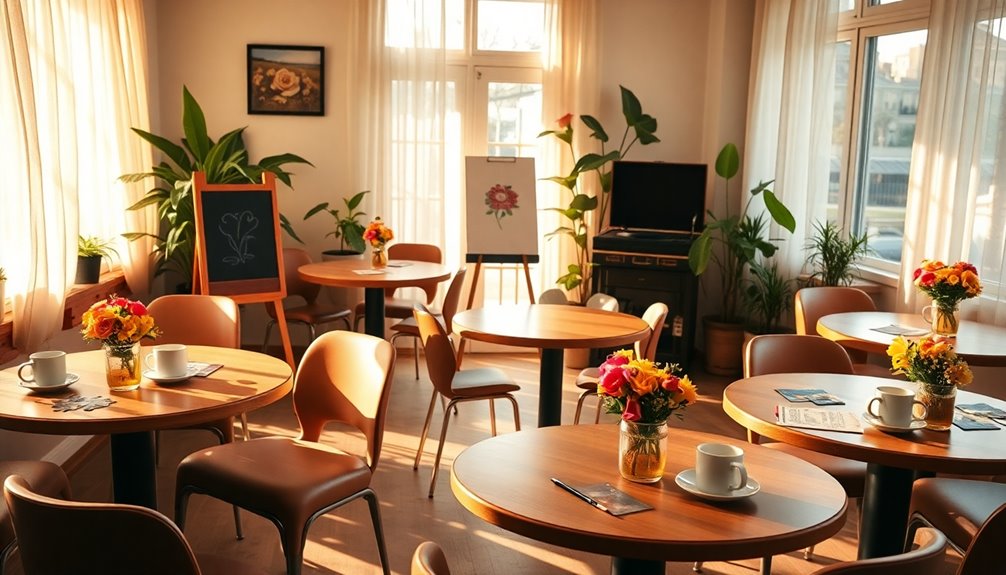
In the heart of community life, memory cafés are emerging as a lifeline for those steering the murky waters of dementia. These aren’t your ordinary coffee shops. No way. Memory cafés are vibrant community gatherings designed specifically for individuals living with dementia and their caregivers. The focus? Socialization, support, and well-being. Forget clinical settings—this is about camaraderie, not prescriptions.
Imagine walking into a place where everyone understands the unspoken struggles of memory loss. The atmosphere? Welcoming, supportive, and zero stigma. Participants are encouraged to laugh, chat, and try new activities. It’s like a block party, but without the awkward small talk about the weather. Instead, it’s all about having fun and connecting with others who get it.
And let’s talk about caregivers. They often carry an emotional weight heavier than a ton of bricks. Memory cafés can lighten that load. Caregivers report feeling supported, accepted, and, dare we say, a little more human. They find joy and laughter here, and those moments can make a world of difference. Seriously, who doesn’t need a break from the daily grind? It’s not just about the person with dementia; caregivers deserve joy too. Memory cafés also serve as a source of respite for caregivers, allowing them to step away from their routine and recharge. These cafés provide an inclusive environment, creating meeting places for caregivers to connect and share experiences.
For individuals living with dementia, memory cafés offer a gust of revitalizing air. They may improve social connectedness and reduce stigma. Here, dementia isn’t the central theme. Instead, participants focus on strengths and abilities, not deficits. Activities like music, arts, and dance engage them in ways that feel meaningful. Yes, even a game of bingo can spark joy. It’s all about finding those moments where laughter reigns and memories—however fleeting—can be created.
Social isolation? Not on their watch. Memory cafés combat loneliness by fostering a sense of belonging. People meet others who share similar experiences, and that mutual understanding is powerful. New friendships blossom, and community ties strengthen. Who knew that a cup of coffee could be the catalyst for connection?
The environment is relaxed and non-judgmental. It’s a place where creativity thrives. Activities are often designed around abilities that dementia affects last, ensuring everyone can participate. Plus, caregivers and care recipients share those moments, reinforcing their connection.
Memory cafés also serve as low-barrier entry points for education and support. Volunteers and peer participants are there to guide newcomers through the maze of dementia care. It’s a world that can feel overwhelming, but these cafés offer a glimmer of hope and a lot of heart. In a sea of uncertainty, they turn caregiving into moments of real joy. Just as renters insurance offers peace of mind by protecting against unforeseen financial burdens, memory cafés provide emotional security for caregivers navigating the unpredictable challenges of dementia.