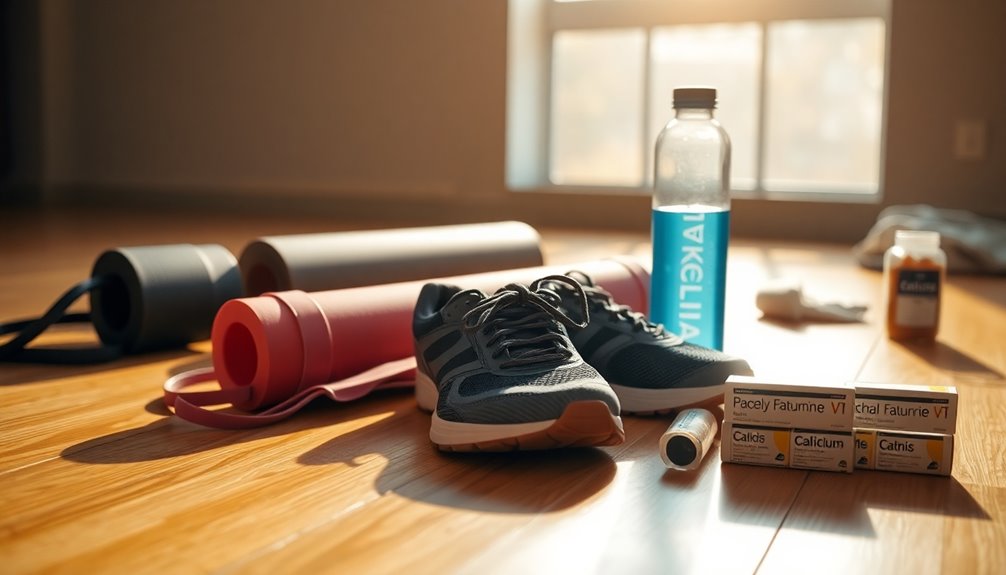

Design Highlights
- Regular strength training, like squats and deadlifts, maintains muscle mass and joint stability, reducing injury risk after 40.
- Gradually introduce new activities to avoid rapid spikes in intensity, which can lead to injuries.
- Monitor training loads using the 10% rule to ensure safe progression and minimize overuse injuries.
- Prioritize recovery through adequate sleep, nutrition, and hydration to support healing and prevent fatigue.
- Address early warning signs, such as persistent pain or weakness, to prevent serious injuries from developing.
Aging can feel like a cruel joke, especially after 40. One day, you’re crushing it at the gym; the next, your body feels like a creaky old door. What gives? Well, age-related changes in muscles, tendons, and bones can make everything less resilient. Recovery from a simple muscle strain? Forget it! Your body’s microenvironment slows down healing, leaving you feeling like you’ve aged a decade overnight.
Injuries don’t just sneak up; they’ve got a pattern. For those weekend warriors who think they can still party like it’s their twenties, overuse injuries become a nasty reality. A lifetime of cumulative training stress means your tendons and joints just can’t handle the same load anymore. But here’s the kicker: this rise in injury risk isn’t automatic. It’s not some cruel cosmic joke that you can’t dodge.
So, what’s the deal with training loads? Rapid increases in intensity can trigger injuries quicker than you can say “ice pack.” The classic 10% rule? Yeah, it becomes your best friend after 40. New activities should be introduced slowly, like a toddler learning to walk—not at full speed. Your body can’t bounce back like it used to, so don’t push it.
Strength training is your shield against the inevitable decline. Regular resistance work helps you maintain muscle mass and joint stability. Think squats and deadlifts—not just for bodybuilders, but for anyone wanting to stay upright. A couple of sessions per week can make a world of difference. Age-appropriate training helps combine experience with current physiology for maximum efficiency. Moreover, boosting core strength is essential for keeping your spine in a neutral position during movement.
Then there’s cross-training. It’s not just for the indecisive gym-goer. Mixing things up helps keep you fit while letting those overworked tissues recover. Low-impact activities like swimming or cycling can save your joints from repeated stress. Variety is key; do the same thing too often, and you’re asking for trouble.
Let’s not forget recovery. As you age, it’s more important than ever. Sleep, nutrition, and hydration become your best pals. They support healing and combat fatigue. Protein helps repair tissue, while calcium and vitamin D are vital for bone health. Planning ahead for your physical health now can also help you avoid long-term care costs that arise when mobility and independence decline later in life.
And those early warning signs? Don’t brush them off! Mild discomfort is fine, but if pain sticks around or worsens, it’s time to rethink your training. Losing strength or stability is a red flag. Remember, injuries after 40 aren’t inevitable, but ignoring the signs? That’s a surefire way to end up sidelined.