
Design Highlights
- Climate change has increased wildfire risks by 35%, impacting insurance rates for all homeowners, including those in traditionally safe areas.
- Major insurers are withdrawing from the market, limiting coverage options and driving up costs for even low-risk properties.
- The FAIR Plan is overwhelmed with new policyholders, leading to higher rates and inadequate support for homeowners seeking insurance.
- Cumulative rate increases of nearly 40% in one year are straining homeowners financially, regardless of their property’s perceived safety.
- Slow regulatory changes and over-regulation hinder timely solutions, leaving homeowners vulnerable to escalating insurance costs amidst rising climate risks.
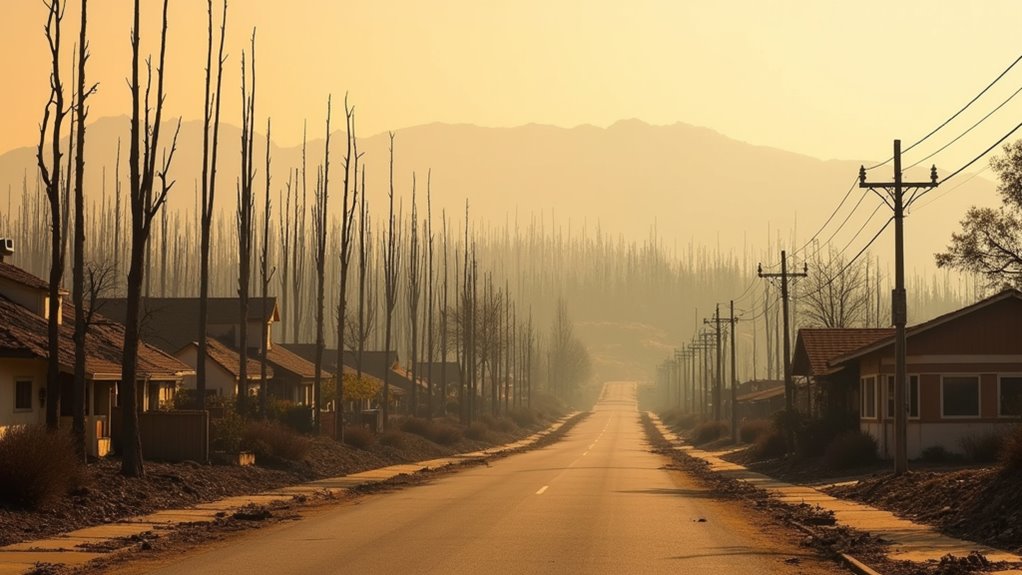
California is facing a climate insurance crisis, and it’s not pretty. The state’s once-reliable insurance market is crumbling, leaving many residents in a tight spot. Between September 2024 and December 2025, enrollment in the FAIR Plan surged by a staggering 43%. Why? Because major insurers like Allstate and State Farm pulled back after catastrophic wildfires wreaked havoc. These fires didn’t just singe a few trees; they obliterated 12,000 homes in Los Angeles alone, costing a mind-boggling $40 billion in damages.
California’s insurance market is collapsing, with a staggering 43% surge in FAIR Plan enrollment as wildfires devastate homes and costs soar.
And guess what? Climate change, driven by fossil fuels, made those wildfires 35% more likely. So, it’s no surprise that homeowners are flocking to the FAIR Plan, a program meant to be a last resort for high-risk areas, now turned into a first choice for many desperate residents.
But here’s the kicker: the FAIR Plan was never designed for mass coverage. It’s meant for limited high-risk properties, not a flood of policyholders seeking refuge from climate-induced disasters. As the private market slowly seems to improve—growth in the FAIR Plan slowed to less than 4% in the last quarter of 2025—there’s still a long way to go.
Reforms are in the works to shift policyholders back to private carriers, but can anyone say “hopeful”?
Meanwhile, rate hikes are hitting homeowners hard. State Farm proposed an 11% increase in 2025, which followed a hefty 17% hike the previous year. That means an average policyholder could see their bill rise by nearly 40% in one year. Ouch. Farmers Insurance isn’t any better, pushing for a 7% hike as they scramble to keep up with the spiraling costs. Six insurance carriers are currently engaging in the market, but more are urgently needed to alleviate pressure on the FAIR Plan.
On top of that, the regulatory landscape is changing, albeit sluggishly. The Sustainable Insurance Strategy is supposed to allow quicker rate reviews in exchange for coverage expansion, but who knows if that’s going to make a real difference? Major insurers are still pulling back due to climate risks and rising costs. In fact, a total increase from 2023 to 2026 is projected at 55%, putting even more financial strain on homeowners. Homeowners looking to offset some of these costs should know that bundling home and auto insurance can yield discounts between 10% and 25%, offering at least some financial relief in an otherwise brutal market.
The irony? Over-regulation is driving these companies away, forcing residents to rely more on the already overburdened FAIR Plan.
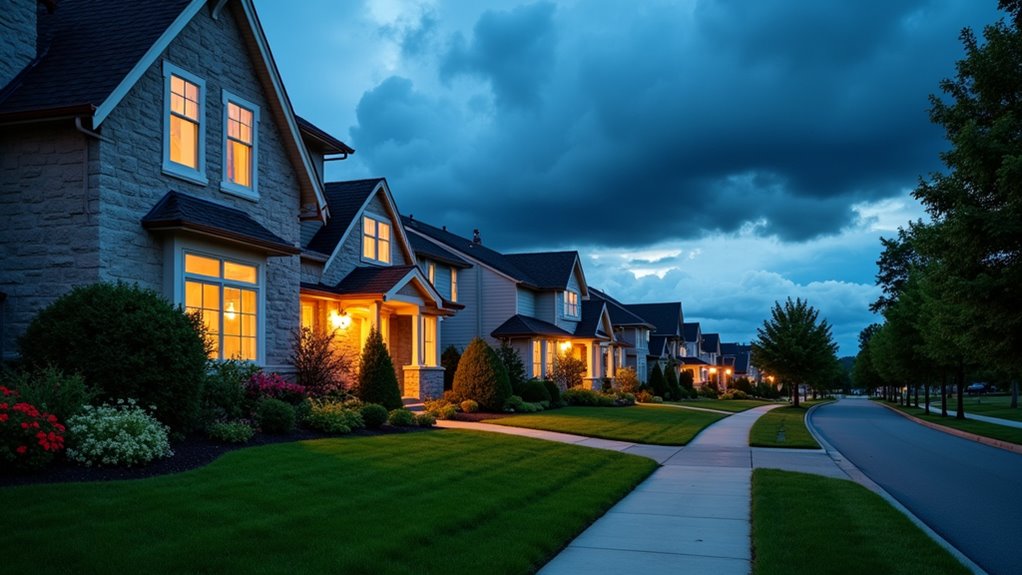
It’s a mess, and the truth is, even homes that once felt safe are now caught in this chaotic web. Climate change is reshaping the insurance landscape, and no one seems to be getting a handle on it. The crisis is real, and it’s hammering even the “safe” homes in California.