
Design Highlights
- Governments are reallocating funds, such as $1 billion from the IIJA, to address urgent but insufficient highway infrastructure needs.
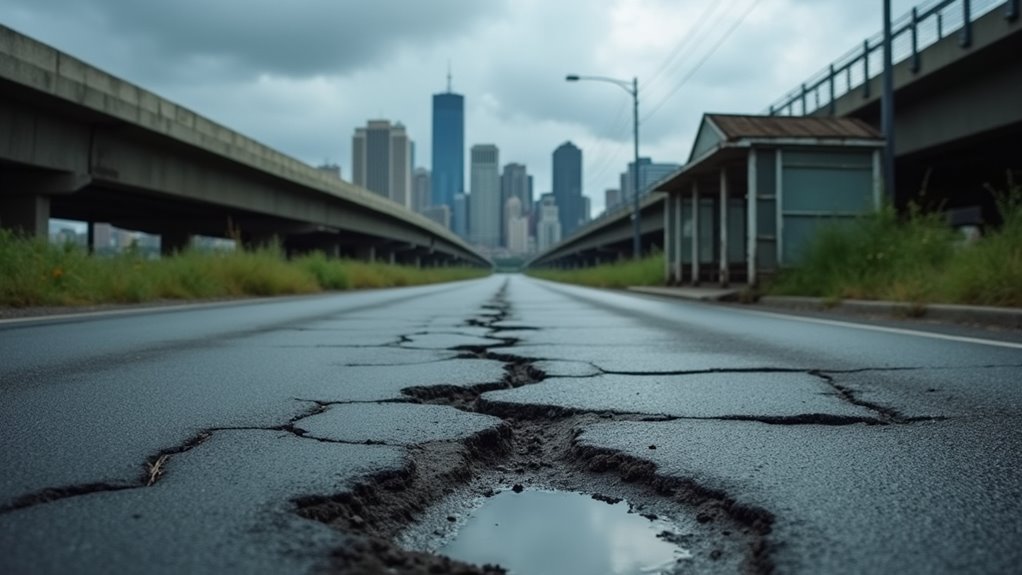
- The projected $33 billion shortfall in the Highway Trust Fund by 2026 exacerbates existing road maintenance issues, including potholes.
- Budget cuts, including a $500 million reduction in capital investment grants, limit new transit projects and hinder overall public transportation efficiency.
- Inflation and rising costs are straining already limited budgets, making it difficult to prioritize road repairs and maintenance.
- Legislative responses to infrastructure funding challenges are ongoing, but current allocations remain inadequate to ensure safe and reliable transportation systems.
Meanwhile, the Highway Infrastructure Program, which should be a lifeline for our crumbling roads, is getting a mere $9.8 billion.
Sure, they’ve repurposed $1 billion from the Infrastructure Investment and Jobs Act (IIJA) for highway programs, but good luck finding a smooth road for that electric vehicle charger rollout.
Repurposing $1 billion for highway programs won’t pave the way for a smooth electric vehicle charger rollout.
And guess what? The Congressional Budget Office has projected a $33 billion Highway Trust Fund shortfall in 2026.
Yep, inflation and rising costs are going to make those potholes even deeper.
Transit systems aren’t faring much better.
A $14.6 billion allocation for Transit Formula Grants sounds impressive until you realize it’s only $363 million more than last year.
They’re trying to keep bus fleets running, but do they really think that’s enough?
Not to mention, capital investment grants have been slashed to $3.7 billion.
That’s a $500 million haircut that’s going to hurt new rapid transit and commuter rail projects.
Talk about cutting off your nose to spite your face.
Amtrak, the beloved passenger rail service, is also facing the music.
Funding has dropped by $115 million, while the Federal-State Partnership for Intercity Passenger Rail took a hit from $1.5 billion to a pitiful $65 million.
And if you think that’s bad, $5.7 billion in IIJA funding for electric vehicle chargers is on the chopping block.
Yes, you read that right.
It seems like we’re just kidding ourselves if we think we’re making progress. Bipartisan legislation has been proposed to address these funding issues, but significant cuts are still affecting critical projects. The funding for the Federal Highway Administration is at 65 billion dollars, which represents a major increase, yet it is still not enough to adequately address the dire state of our highways. When weather severity and natural disasters strike, our already neglected infrastructure faces even greater challenges, yet we continue to underinvest in the very systems that keep our communities connected.