
Design Highlights
- Many older adults leave hospitals in worse condition due to inadequate geriatric care models and a focus on high-revenue procedures.
- Fragmented care systems lead to discontinuity, leaving seniors unsupported and lost in their recovery journey.
- Workforce shortages in primary care and home health create gaps in essential post-discharge support for older patients.
- Ageism and unmet mental health needs contribute to older adults feeling ignored within the healthcare system, exacerbating their challenges.
- Implementing structured post-discharge rehabilitation programs can provide necessary support, improving recovery outcomes for seniors.
In the chaotic world of hospital care, older adults often find themselves in a downward spiral. It’s a sad reality. For frail seniors, hospitalization can mean worsening health instead of recovery. Reports indicate that about one-third of adults over 70 leave the hospital in worse shape than they arrived. And if you’re over 85? Good luck. The odds climb to more than half. It’s like playing a game where the rules keep changing, and the house always wins.
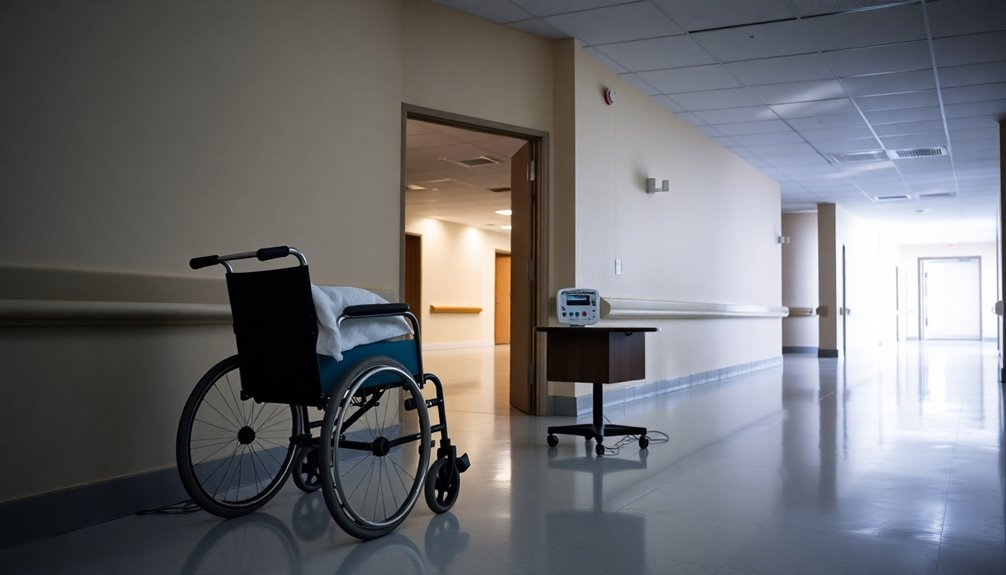
The US hospital system isn’t built for older folks. While hospitals chase high-revenue procedures, geriatric needs take a backseat. There’s a “culture of safety” that prioritizes bed alarms over actual patient mobility. Envision this: a frail elderly person stuck in bed, while staff focus on alarms instead of encouraging a little movement. Sure, there are successful geriatric care models out there, but implementing them consistently? That’s a different story. The effect size of current models is described as small—frankly, that’s just code for “not effective enough.”
Then there’s the fragmentation of care. The health system is a chaotic mess—inefficient, costly, and riddled with gaps. For older adults, especially those with limited means, finding their way through this maze feels like an obstacle course. Instead of continuous support, care is often organized in isolated episodes. Imagine being tossed from one provider to another, with no one actually in charge of your wellbeing. It’s a recipe for disaster.
Workforce shortages add fuel to the fire. As the aging population grows, the demand for healthcare services skyrockets. But guess what? There aren’t enough primary care providers, home health aides, or geriatricians to go around. This isn’t just a minor inconvenience; it’s a major crisis. With inadequate staffing, the follow-up care after discharge becomes a pipe dream. Recovery needs? Often unmet. Much like how vocational rehabilitation services help injured workers return to productivity, structured post-discharge rehabilitation programs could significantly improve recovery outcomes for seniors.
And let’s not forget ageism. Many older adults report feeling ignored by their providers, like they’re just invisible. Ageism in healthcare is like a bad joke that’s gone on for far too long. With nearly a quarter of older adults classified as “high need,” it’s baffling that mental health concerns often go unaddressed. The disconnect is staggering. Recent surveys show that 82% of older adults believe the U.S. health care system is not prepared for their growing and changing needs. Additionally, the inadequate care coordination often leaves seniors feeling lost and unsupported during their recovery.
In short, America’s approach to post-acute support for seniors is failing—miserably. The system needs a serious overhaul, or we risk losing our older population to a cycle of inadequate care and frustration.