
Design Highlights
- The luxury steamer Lac La Belle was discovered after nearly 150 years of resting beneath Lake Michigan’s waves.
- Paul Ehron, a passionate shipwreck hunter, dedicated over 60 years to locating maritime treasures.
- Advanced techniques, including side-scan sonar, enabled the quick identification of the wreck site.
- A significant tip from Ross Richardson helped refine the search area, leading to the successful discovery.
- The wreck’s historical context includes a tragic sinking, with eight lives lost during a gale nearly 150 years ago.
After 60 long years of searching, the luxury steamer Lac La Belle has finally been found. Yes, you read that right. The elusive wreck has been hiding beneath Lake Michigan‘s waves for nearly a century and a half, and it took a dedicated team led by Paul Ehron to finally uncover it. The announcement came on February 15, 2026, but the discovery happened back in October 2022. Talk about a dramatic reveal, right? Weather delays pushed the announcement back, leaving shipwreck enthusiasts on the edge of their seats.
After 60 years, the luxury steamer Lac La Belle has been found, thrilling shipwreck enthusiasts everywhere!
Paul Ehron, now 80, started this quest at just 15 years old. That’s right—this man has spent over six decades hunting down shipwrecks like a maritime Indiana Jones. His passion has only grown with age.
In 2022, a tip from Ross Richardson helped narrow down the search grid. It was like finding a needle in a haystack, except the needle was a sunken luxury steamer. Using side-scan sonar, the team located the wreck after just two hours of scanning. Talk about efficiency!
Now, let’s rewind to the sinking of Lac La Belle, which went down in a gale nearly 150 years ago. Imagine the chaos. Passengers and crew watched helplessly as the ship sank stern first. One lifeboat even capsized on its way to safety. Eight people lost their lives that day. It’s a somber part of the story that adds depth to this historical mystery.
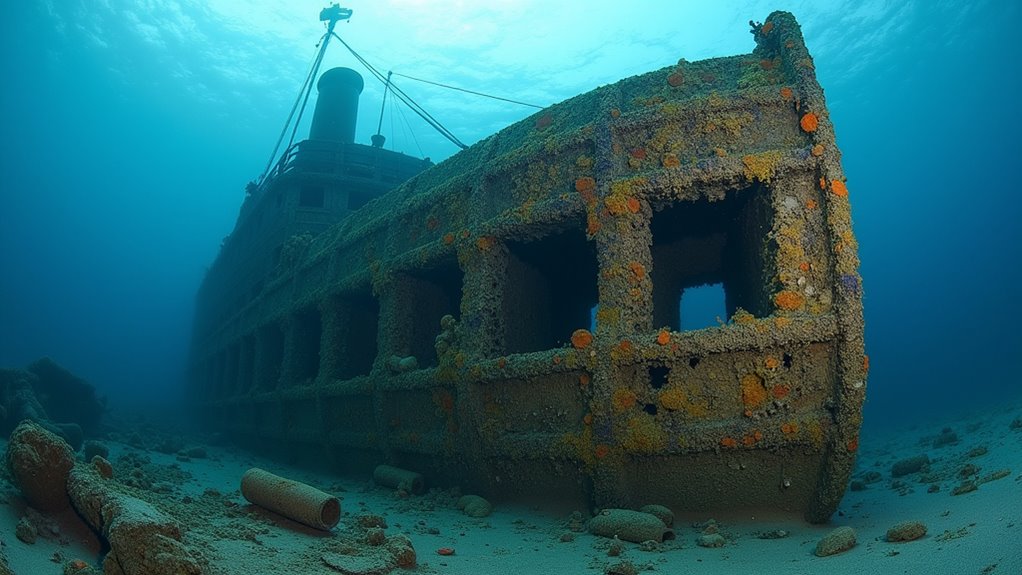
Fast forward to the wreck’s condition today. The exterior is draped in quagga mussels, but the hull remains intact. Upper cabins? Not so lucky; they’ve mostly collapsed or vanished. Yet, the oak interiors, surprisingly, are still in good shape. A dive team even returned last summer to create a three-dimensional model. Who knew shipwrecks could be so photogenic? The wreck’s condition is particularly concerning due to the invasive species threatening its preservation.
In the grand scheme of things, the Great Lakes are home to thousands of undiscovered wrecks, estimated between 6,000 and 10,000. The urgency to locate these wrecks is escalating, especially with invasive species like quagga mussels threatening their preservation. Much like how workers compensation protects employees from day one without requiring proof of fault, the preservation efforts aim to safeguard these historical sites from further deterioration.
The clock is ticking, and shipwreck hunters like Ehron are racing against it. The Lac La Belle isn’t just a relic; it’s a symbol of an era when luxury travel on the Great Lakes was all the rage. After all this time, it’s finally found. Who said persistence doesn’t pay off?