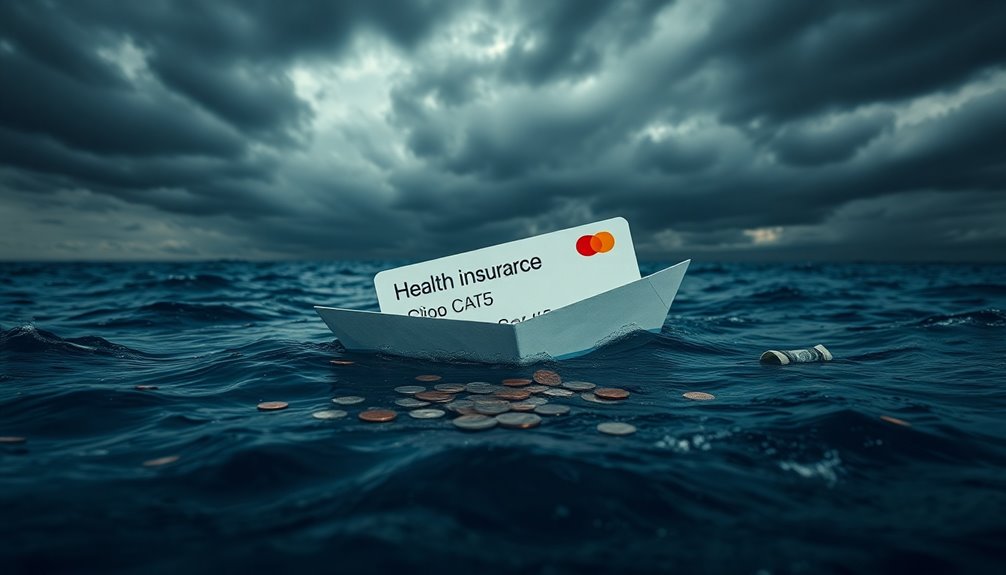

Design Highlights
- Health insurance often reduces financial fallout from illness but does not eliminate medical expenses, leaving individuals vulnerable to costs.
- Over one billion people face significant out-of-pocket payments, pushing many deeper into poverty due to health-related expenses.
- Individual insurance typically covers only 63% of healthcare bills, leading to higher out-of-pocket costs compared to group plans.
- A significant portion of insured individuals still experience financial strain, as comprehensive plans may not fully shield against unexpected expenses.
- Even with coverage, millions remain uninsured or underinsured, highlighting that being “covered” does not guarantee financial security.
Health insurance is often touted as a safety net, but let’s be real: it’s more of a flimsy parachute than a solid cushion. Sure, it reduces some of the financial fallout from illness, but it doesn’t prevent illness or eliminate medical expenses altogether. Just because someone has insurance doesn’t mean they’re shielded from financial ruin. The World Health Organization has made it crystal clear: having health coverage doesn’t guarantee financial protection. Surprise!
Health insurance may promise protection, but it often feels like a flimsy parachute in a stormy financial landscape.
Out-of-pocket costs are a major burden. Imagine this: over one billion people globally—about 14% of the world’s population—are hit with significant out-of-pocket payments that gnaw away at their budgets. And what’s worse? Approximately 1.3 billion individuals are either pushed deeper into poverty or held there by these health-related expenses. Even small medical bills can wipe out low-income families, leaving them scrambling to pay rent and buy groceries. A co-payment here, a deductible there, and suddenly, financial protection feels like a cruel joke.
The type of insurance one has makes all the difference. Individual insurance covers about 63% of healthcare bills, while group coverage does a much better job at 75%. Higher deductibles and limited benefits in individual plans translate to weaker protection when it matters most. Gaining health insurance has been causally linked to sizable reductions in adverse financial outcomes, highlighting how crucial coverage can be for financial stability. In fact, Medicaid managed care premiums may not reflect contractual adjustments from risk-sharing mechanisms, further complicating financial protection.
At 200% of the poverty line, those with individual insurance might spend 11% of their income on out-of-pocket care, compared to just 6% for group plan holders. It’s like being promised a lifeboat, only to find it has a hole or two.
And let’s not forget about the uninsured and underinsured. In the U.S., the uninsured rate was 7.6% as of mid-2024, which means millions still lack adequate coverage. According to the CDC, around 26.8 million people under 65 were uninsured at the time of their interviews. A 2024 survey even estimated that 26 million Americans—about 8% of the population—were without health insurance in 2023. Talk about a lottery where everyone loses. Marketplace plans are organized into metal tier categories—Bronze, Silver, Gold, and Platinum—each covering a different percentage of healthcare costs, yet even the most comprehensive options leave enrollees exposed to significant expenses.
Yes, insurance can reduce some financial harm. It can act as a buffer against financial toxicity. But it’s not a complete shield. The loss of Medicaid, for example, can send individuals spiraling into debt. Policymakers really ought to look at how changes to health insurance affect household finances. Because in the real world, “covered” often still means broke. And that’s a harsh reality check for many.