Design Highlights
- The AI art market’s rapid growth, from $3.2 billion to a projected $40.4 billion, creates opportunities for fraudulent claims of authenticity.
- Most AI-generated art utilizes unconsented works, raising questions about ownership and the legitimacy of creators.
- The lack of regulations in the AI art space allows criminals to exploit the gray area surrounding authenticity and ownership.
- Tools like Glaze and Nightshade offer temporary protection against AI misuse but do not fully address the deeper issues of forgery.
- As 38% of individuals struggle to distinguish AI art from human-made pieces, the potential for fraud increases significantly.
When AI turns art into a lie, it’s not just a headline—it’s a reality that’s spiraling out of control. The AI art market, once a niche curiosity, is now a $3.2 billion beast, projected to skyrocket to $40.4 billion by 2033. And guess what? Most of that “art” is trained on works that artists didn’t even consent to. Talk about a recipe for chaos. Authenticating AI-generated art versus human-made pieces? Nearly impossible. Regulations are nonexistent, leaving a huge gray area for fraud to fester.
But wait, it gets worse. Deepfakes aren’t just the stuff of sci-fi; they account for a staggering 6.5% of all fraud attacks, with a jaw-dropping 2,137% increase since 2022. That’s not just a blip—that’s an explosion. In fact, deepfake fraud attempts surged 3,000% in 2023 alone. By 2027, losses attributed to generative AI fraud are projected to hit a staggering $40 billion. Who knew that technology could become a thief in the night?
In the past year, a shocking 60% of consumers have stumbled upon deepfake videos. And 98% of those videos? You guessed it—they’re pornographic. Amidst all this, businesses are struggling to keep up. Human accuracy in detecting deepfake videos is a mere 24.5%, and even AI models only manage an 84% success rate, which drops dramatically when faced with real-world scenarios. 1 in 4 company leaders are unfamiliar with deepfake technology, making it even harder to figure out what’s real and what’s a scam.
Financial sectors are in panic mode. Over half of financial professionals reported being targeted by deepfake scams in 2024. It’s a free-for-all out there! The UK saw fraud losses top £1 billion in 2024, while North America faced over $200 million in deepfake fraud losses in just the first quarter of 2025. Just as liability coverage protects drivers from financial disaster in accidents, victims of AI fraud desperately need new forms of protection against digital identity theft and forgery.
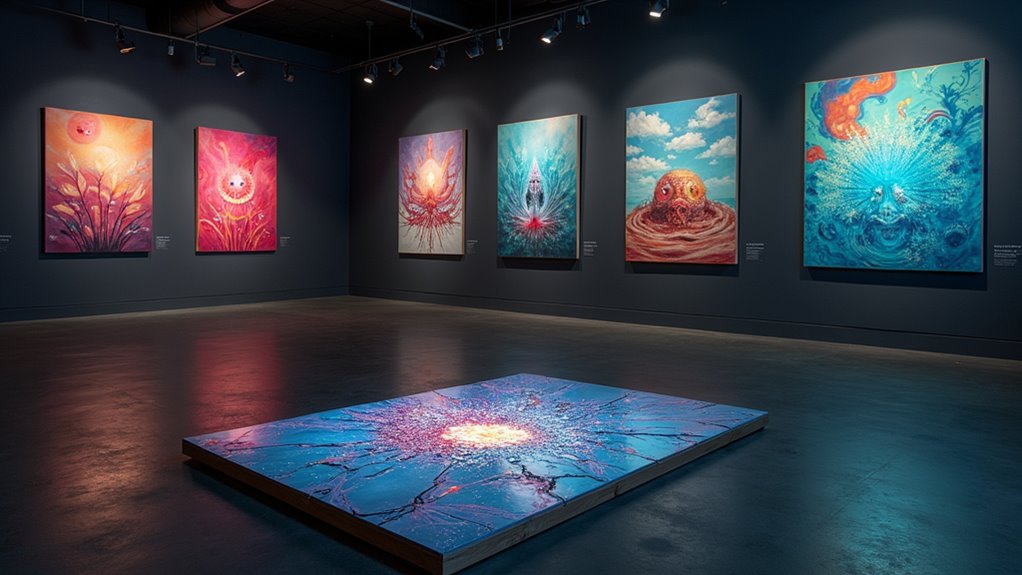
And let’s not forget the creative side of this madness. Tools like Glaze and Nightshade are emerging to mask art from AI training, but they’re just band-aids on a gaping wound. With AI synthetic identities and voice cloning, impersonation has never been easier. In fact, 38% of people are unable to distinguish AI-generated art from human-made art, illustrating the depth of this crisis.
In the end, when criminals can forge authenticity and ownership with a few clicks, the art world—and beyond—faces a grim reality. The line between real and fake is blurring, and it’s becoming harder to distinguish between what’s genuine and what’s just a clever ruse. The future of art? It’s looking a bit dystopian.