
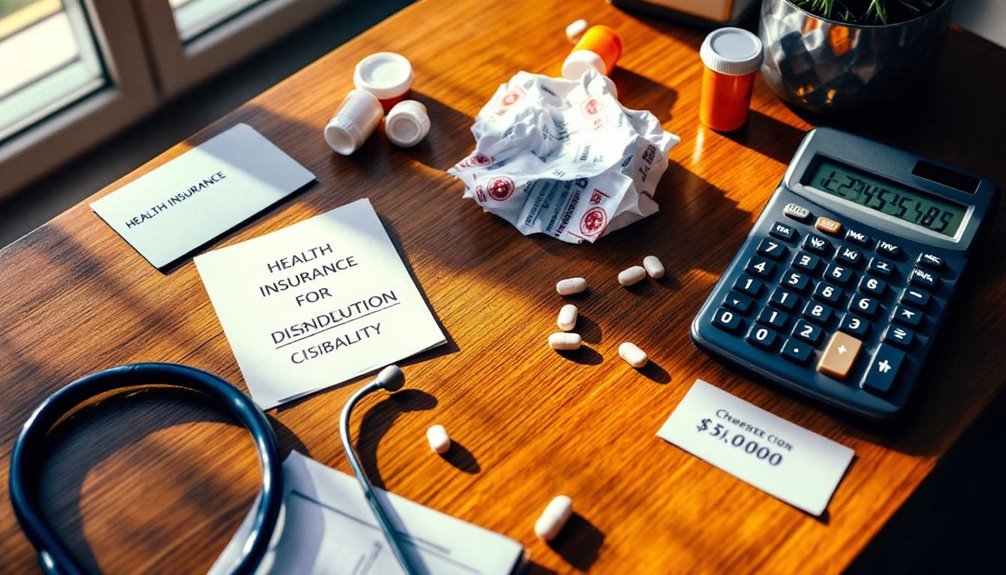
Short-term disability insurance replaces 40 to 70 percent of income when someone can’t work due to illness or injury. It’s not for work-related accidents—that’s workers’ comp territory. Coverage typically lasts 90 to 180 days, sometimes up to a year. Broken bones, surgeries, pregnancy complications, even mental health issues might qualify. There’s usually a waiting period of 8 to 14 days before benefits kick in. Most people get it through employer group plans at 1 to 3 percent of their salary. The finer details matter more than most realize.
Design Highlights
- Short-term disability insurance provides income replacement, typically 40-70% of salary, during temporary non-work-related illnesses or injuries.
- Coverage usually lasts 90 to 180 days, with benefits starting after an 8-14 day elimination period.
- Qualifying conditions include broken bones, surgeries, pregnancy complications, and some mental health issues requiring medical documentation.
- Most commonly obtained through employer group plans at 1-3% of annual salary, cheaper than individual policies.
- Does not cover work-related injuries, permanent disabilities, or injuries from illegal activities; workers’ compensation handles workplace injuries.
When life throws a curveball—a broken leg, an unexpected surgery, or a medical condition that makes clocking in impossible—short-term disability insurance is supposed to catch people before they hit financial rock bottom. It’s income replacement for when the body refuses to cooperate. The idea is simple: if someone can’t work because of a non-work-related illness or injury, they get a chunk of their paycheck. Usually somewhere between 40 and 70 percent of what they normally earn.
Short-term disability catches you mid-fall when injury or illness makes working impossible, replacing 40 to 70 percent of lost income.
The coverage doesn’t last forever. Most policies run between 90 and 180 days, though some stretch up to a year. It’s meant for temporary problems, not permanent ones. Broken bones, surgeries, pregnancy complications, serious illnesses—these typically qualify. Mental health conditions might too, if they fit the policy’s definition of disability. But there’s a catch. There’s always a catch.
Before benefits kick in, there’s an elimination period. A waiting game. Usually 8 to 14 days after the disability starts. During that time, bills keep coming. After that, payments arrive weekly or monthly, depending on the plan. The money can go toward anything—rent, utilities, groceries, medical bills, childcare. No restrictions there.
Most people get short-term disability through their employer. Group plans come with lower premiums and guaranteed coverage during enrollment periods. Individual plans exist but cost more and require stricter underwriting. Not exactly a fun shopping experience. Premium costs typically range from 1% to 3% of annual salary.
Medical documentation is required. A doctor needs to confirm the person genuinely can’t work. And here’s where things get messy: pre-existing conditions often aren’t covered unless someone’s had the policy long enough. Work-related injuries? Those don’t count either. That’s what workers’ compensation handles. Injuries from illegal activities or felonies? Denied. Cosmetic surgery? Only if it’s reconstructive and medically necessary.
Filing a claim means paperwork. Medical records. Proof of inability to work. The insurance provider reviews everything. Sometimes slowly. Benefits continue until the person returns to work or the benefit period ends, whichever comes first. If someone has multiple disabilities during this time, they’re usually treated as one continuous period. Not two separate payouts.
Short-term disability insurance isn’t designed to solve long-term problems. It’s a bridge. A temporary fix when the body temporarily quits. If the disability extends beyond the short-term policy’s coverage period, long-term disability insurance can take over and provide benefits for years or even until retirement. It replaces some income, not all of it. And it only works if the situation fits within the policy’s definitions and exclusions. Which, let’s be honest, can feel like maneuvering a minefield while hopping on one leg. It can also supplement other disability insurances already in place, adding an extra layer of protection when needed.
Frequently Asked Questions
Can I Purchase Short-Term Disability Insurance if I’m Already Pregnant?
Yeah, technically someone can purchase short-term disability insurance while pregnant.
But here’s the catch—most insurers will exclude coverage for that current pregnancy since it’s considered a pre-existing condition. The policy won’t pay out for this pregnancy or delivery.
Future pregnancies? Those are typically covered after about 12 months of continuous enrollment.
Some employer group plans might offer guaranteed acceptance, but they’ll still exclude the ongoing pregnancy.
It’s a frustrating situation, honestly.
Does Short-Term Disability Insurance Cover Mental Health Conditions Like Depression?
Short-term disability insurance may cover depression and other mental health conditions, but it’s not guaranteed. Coverage depends entirely on the specific policy.
Most plans cover conditions like depression, anxiety, bipolar disorder, and PTSD—but only if they’re severe enough to prevent work.
The catch? Mental health claims often face shorter benefit periods and stricter requirements than physical disabilities. A formal diagnosis and detailed medical documentation are必須.
State laws vary too. Check the policy terms directly, because assumptions lead nowhere.
Can I Have Both Short-Term and Long-Term Disability Insurance Simultaneously?
Yeah, holding both policies at once is totally normal—many employers bundle them together in benefits packages.
Here’s the thing though: the policies coordinate so you’re not double-dipping. Short-term usually wraps up before long-term kicks in, and if there’s overlap, total benefits get capped at around 60-70% of pre-disability income.
Insurance companies aren’t about to let anyone game the system. The shift is designed to be seamless, keeping income flowing continuously.
Are Short-Term Disability Benefits Taxable as Income?
Short-term disability benefits are taxable if the employer paid the premiums or the employee used pre-tax dollars.
If the employee paid premiums entirely with after-tax money, the benefits aren’t taxable.
Mixed payment situations? The taxable portion gets calculated pro rata.
The IRS requires benefits from employer-paid premiums to be reported as income on Form W-2.
It all comes down to who paid and how they paid—there’s no escaping that basic rule.
How Soon After Starting a Job Can I Enroll?
Most employers make employees wait about 30 days before they can enroll in short-term disability coverage.
Coverage typically kicks in on the first day of the month after that waiting period ends. Some companies are more generous and allow enrollment within 60 days of starting.
A few offer immediate enrollment through a new-hire window. It varies by employer, honestly.
The specifics are usually spelled out in the benefits summary during onboarding. No retroactive coverage, though.