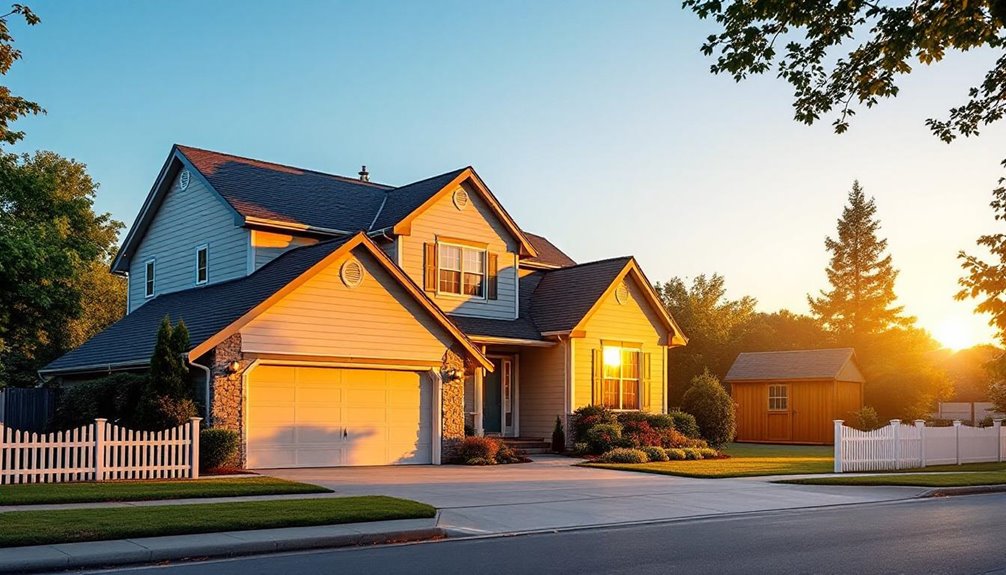

Homeowners insurance covers four main things: the dwelling itself (fire, wind, hail damage), other structures like sheds or detached garages, personal belongings inside the home, and liability if someone gets injured on the property. Most policies operate on an open-peril basis for the structure but named-perils for personal stuff. Floods and earthquakes? Not covered. Jewelry and high-value items hit limits fast. Medical payments handle guest injuries regardless of fault, though caps stay low. Different policy types offer varying protection levels depending on whether someone owns, rents, or lives in a condo—and understanding these distinctions matters more than most people realize.
Design Highlights
- Dwelling coverage protects your home’s structure from disasters like fire, wind, and hail, but excludes floods, earthquakes, and maintenance issues.
- Other structures coverage insures detached buildings like sheds and garages, typically limited to 10% of your dwelling coverage amount.
- Personal property coverage protects belongings such as furniture and electronics, with options for replacement cost or actual cash value reimbursement.
- Liability coverage defends against lawsuits for injuries or property damage you cause, with limits typically ranging from $100,000 to $500,000.
- Different policy types exist for various needs: HO-3 for standard homes, HO-4 for renters, HO-6 for condos, and specialized options.
A house is probably the biggest purchase most people will ever make, and yet many homeowners couldn’t explain what their insurance policy actually covers if their life depended on it.
Most policies start with dwelling coverage, which protects the physical structure itself. This includes attached garages and covers damage from fire, wind, or hail. It won’t cover floods or earthquakes, and it certainly won’t fix your peeling paint or worn-out roof from decades of neglect. The coverage typically works on an open-peril basis, meaning everything’s covered except what’s specifically excluded.
Dwelling coverage protects your home’s structure from specific disasters like fire and wind, but maintenance issues and natural floods are on you.
Then there’s other structures coverage. Sheds, fences, detached garages. The stuff not connected to your house. Usually capped at 10% of your dwelling limit, though you can pay more for higher coverage.
Business structures don’t count, so if you’re running a side hustle out of that shed, you’re out of luck.
Personal property coverage handles your actual stuff. Furniture, electronics, clothes. The policy might pay replacement cost or actual cash value depending on what you signed up for. High-value items like jewelry often hit coverage limits fast.
Some policies even cover items stolen when you’re away from home, which is something.
Loss of use kicks in when your home becomes unlivable after a covered loss. Hotels, meals, necessary expenses during repairs. It’s limited by time or a percentage of dwelling coverage.
And no, you can’t claim expenses unrelated to the actual damage.
Personal liability coverage protects against lawsuits when someone gets hurt or their property gets damaged because of you or your family. It covers legal defense and settlements, both on and off your property.
Intentional acts and business activities don’t count. Most policies start at $100,000 minimum. Coverage limits typically range from $100,000 to $500,000 depending on your needs and risk tolerance.
Medical payments to others covers guest injuries on your property regardless of fault. Minor stuff like cuts or broken bones.
Usually caps out between $1,000 and $5,000 per incident. Your own injuries don’t count.
The most common policy type is HO-3, which covers the dwelling broadly but personal property only against named perils.
HO-5 offers broader coverage for both. Renters get HO-4, condo owners get HO-6, mobile homes get HO-7, and historic homes get HO-8. HO-2 provides homes covered at replacement cost while personal property gets actual cash value, falling somewhere between basic and comprehensive protection. HO-1 is the most basic type with limited coverage available in few states and not widely accepted by mortgage companies.
Different policies for different situations. None of them particularly exciting to read through, but knowing the basics beats finding out what’s not covered after disaster strikes.
Frequently Asked Questions
Does Homeowners Insurance Cover Flood Damage From Natural Disasters?
No. Standard homeowners insurance doesn’t cover flood damage from natural disasters. Period.
Flooding—whether from river overflow, storm surge, or heavy rain saturating the ground—is specifically excluded.
Homeowners policies cover sudden water damage from *inside* the home, like burst pipes.
But water rising from outside? That’s flood insurance territory.
It has to be purchased separately through NFIP or private insurers.
The industry draws a hard line here. External flooding isn’t covered. Ever.
Are Home Business Equipment and Inventory Covered Under Standard Policies?
Standard homeowners policies offer pretty pathetic coverage for home businesses.
Business equipment gets only $2,500 in protection—not nearly enough for most operations.
Business property stored at home? Limited to about $1,500.
Stuff kept away from home? A measly $750.
Regular homeowners insurance simply wasn’t designed for business use.
No liability coverage for business activities either.
Bottom line: if someone’s running a legitimate home business with real equipment or inventory, they need additional coverage.
Standard policies won’t cut it.
Does My Policy Cover Damage Caused by Earthquakes or Sinkholes?
Standard homeowners policies don’t cover earthquake damage. Period.
That’s specifically excluded from base coverage, even indirect damage.
Sinkholes? Also excluded from earthquake insurance.
Here’s the twist: if an earthquake causes a fire, that’s covered under the regular homeowners policy, not earthquake insurance.
Want earthquake protection? Need a separate policy or endorsement.
California homeowners must get offered this coverage, but it costs extra.
The deductibles are brutal—typically 10-20% of coverage limits.
Will Insurance Pay for Temporary Housing During Home Repairs?
Yes, most standard homeowners policies include Loss of Use or Additional Living Expenses coverage when a home becomes uninhabitable from covered damage like fire or severe weather.
No deductible applies. Hotels, rentals, extra food costs, and increased commuting expenses get reimbursed.
But there’s a catch—insurance only covers the *difference* between normal living costs and temporary expenses, not everything.
Coverage lasts through the “period of restoration,” and policies may cap total benefits.
Keep those receipts.
Does Homeowners Insurance Cover Pest or Termite Damage?
Nope. Standard homeowners insurance doesn’t cover pest or termite damage—period.
Insurers consider infestations preventable maintenance issues since they develop over time with visible warning signs. Termites alone cause $5 billion in annual damage that falls entirely on homeowners.
The only exception? Secondary damage counts. If rodents chew through wires and start a fire, or pests enter through storm damage, that resulting destruction might be covered.
But the pest damage itself? That’s all on you.