
Design Highlights
- War-risk insurance premiums have surged to 5% of a ship’s value, reflecting heightened risks in the Strait of Hormuz.
- Hull war insurance rates have increased significantly, impacting the overall cost of oil shipments.
- Insurers’ withdrawal from coverage has left major carriers hesitant to operate in the region.
- The U.S. government has introduced a $20 billion reinsurance program to stabilize shipping operations in the Gulf.
- Ongoing geopolitical tensions create uncertainty, threatening the long-term viability of the Hormuz shipping route.
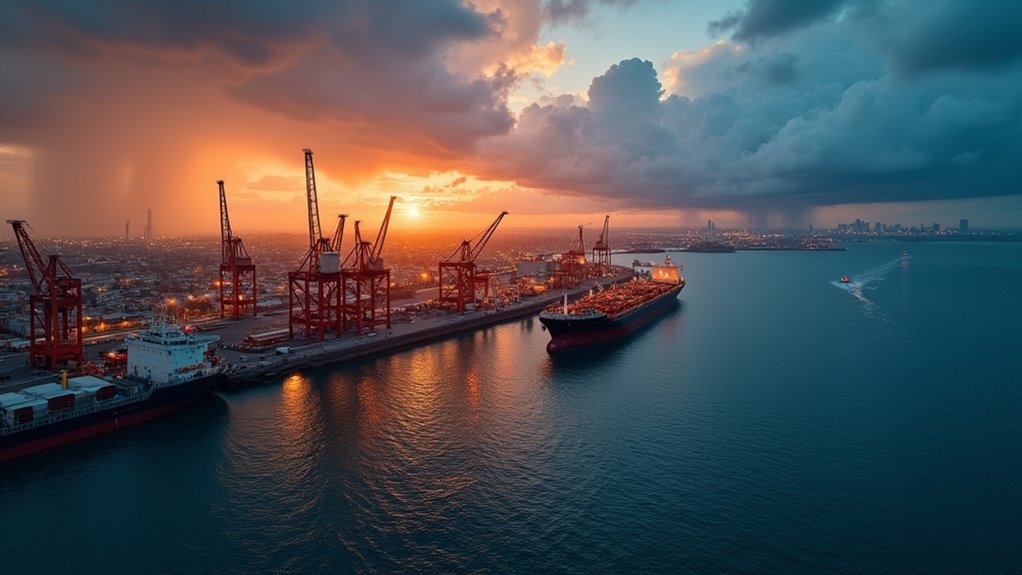
In a world where safety feels like a distant dream, the Strait of Hormuz has morphed into a high-stakes battleground for oil shipping. Once a bustling artery for global energy trade, it’s now a nerve-wracking gamble. War-risk insurance premiums have skyrocketed, hitting record levels after Iran’s attacks on commercial vessels. It’s not just a little bump; coverage now costs a whopping 5% of a ship’s value. That’s right—five times higher than it used to be. Talk about a budget buster.
And if you think that’s wild, hull war insurance has jumped from a mere 0.25% to 1% for seven-day contracts. For those who thought shipping oil was just about filling up the tank, think again: the effective insurance costs for a single oil shipment could reach 2-3% of the vessel’s value, especially with port congestion. Good luck finding insurers willing to cover your tanker while crossing this minefield.
The market’s response? Well, it’s a bit of a disaster. Major carriers have hit the brakes, effectively making the Strait “de-facto closed.” Insurers have halted coverage, and daily charter rates for oil supertankers have quadrupled to nearly $800,000. That’s right—just a week ago, a VLCC was chartered for $770,000 by an Indian petrochemical firm. It’s safe to say the thrill of sailing through Hormuz has turned into a costly nightmare.
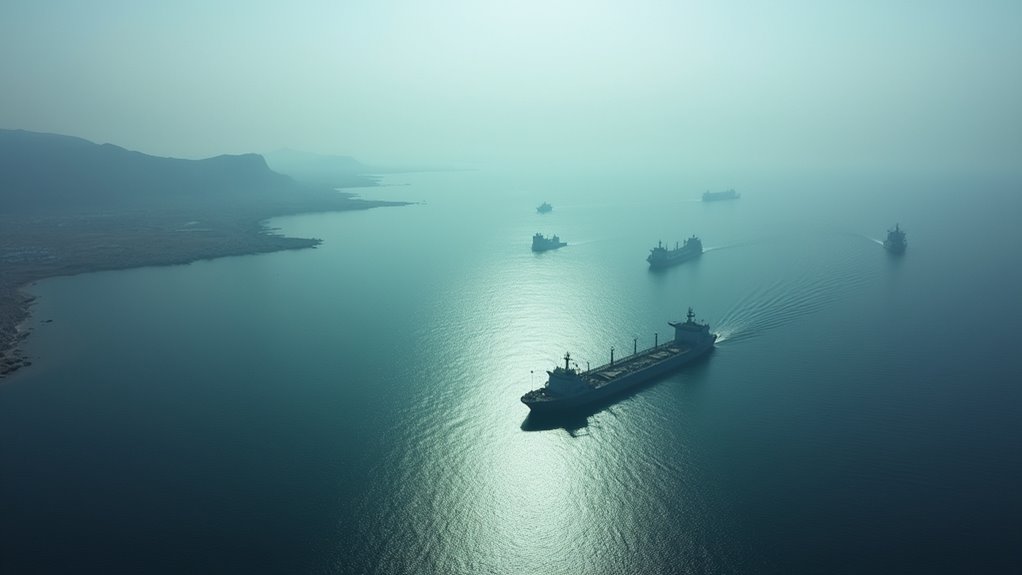
There’s a reason this waterway is essential: it carries about 20% of the world’s seaborne oil and gas. If the Strait gets obstructed, ships could find themselves stuck in the Persian Gulf, triggering complicated blocking and trapping claims under war policies. But hey, don’t worry. They just need to be stuck for six months or longer. No big deal, right? The Strait of Hormuz is a critical access point for global oil transportation, making these disruptions even more concerning. Approximately 20% of global crude oil is exported through this narrow passage, underlining its significance.
In a bid to stabilize the situation, the U.S. government is stepping in. The U.S. International Development Finance Corporation is set to provide $20 billion in reinsurance for vessels in the Gulf region, with Chubb as the lead underwriter. Because nothing says “we’ve got your back” like a government bailout for shipping. Shipping companies operating in the region must also ensure continuous coverage is maintained to avoid catastrophic financial exposure in the event of sudden policy lapses during escalating conflicts.
But let’s not kid ourselves. Full resumption of traffic remains uncertain. Cargo owners still have to negotiate their own war risk insurance. With geopolitical tensions escalating, the outlook is murky. In this high-stakes game, the only certainty is uncertainty. Welcome to the new normal of oil shipping.