Design Highlights
- Central Vietnam has experienced devastating floods, leading to at least 90 confirmed deaths and 12 individuals still unaccounted for.
- Severe rainfall has submerged over 116,000 homes, displacing many families and creating urgent needs for temporary housing.
- The Dak Lak province is the hardest hit, reporting over 60 fatalities amidst widespread flooding across 800 kilometers.
- Approximately 7,200 hectares of crops have been destroyed, significantly impacting food security and local farmers’ livelihoods.
- Infrastructure damage, including 16 national highways and local roads, hampers rescue operations and disrupts daily life in affected areas.
In a shocking turn of events, floods and landslides in Central Vietnam have claimed at least 90 lives, with 12 more people still unaccounted for. It’s a disaster that escalated alarmingly. Just days ago, the death toll stood at 41. But as heavy rainfall began to pummel the region in late October, the numbers shot up. It’s like a grim game of “how high can it go?” This year, climate-linked disasters have already caused nearly 300 deaths across the country, painting a dire picture of Vietnam’s environmental struggles.
The sheer volume of rain is staggering. Some provinces recorded over 1,500 mm in just a few days. That’s like taking a massive bucket of water and dumping it over entire towns. The soil couldn’t handle it, and floodwaters quickly overwhelmed waterways.
The sheer volume of rain is staggering, with some provinces drowning under over 1,500 mm in just days.
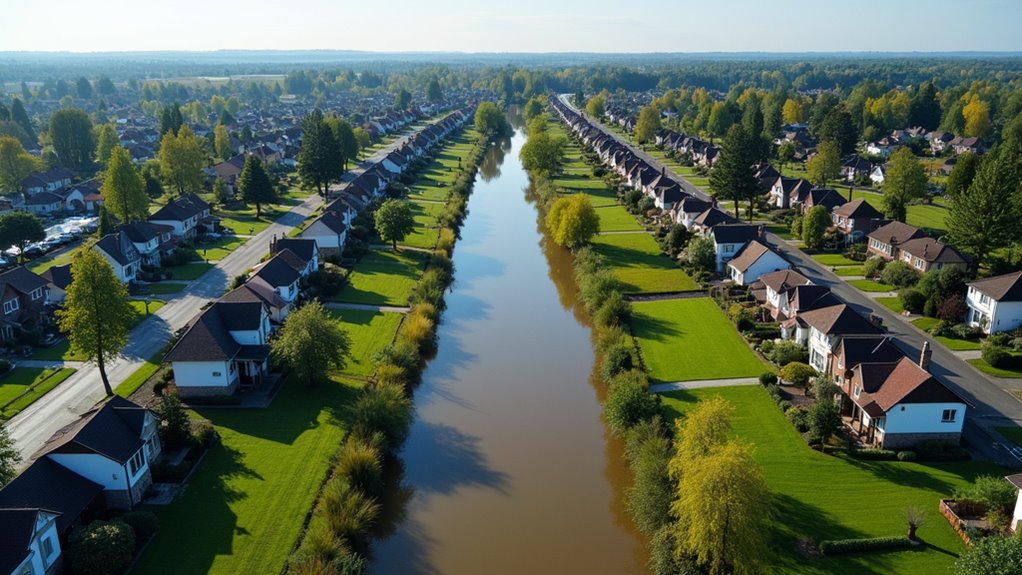
What’s worse? More than 116,000 homes are now underwater. Mass evacuations became a necessity, leaving families scrambling for safety. Cities like Hue, Hoi An, and Da Nang, normally bustling with life, found themselves submerged, with rivers bursting their banks in an uninvited deluge. For displaced residents seeking temporary housing, the situation mirrors the additional living expenses coverage that helps people maintain their standard of living during crises.
The geographic scope is shocking. The floods have hit the south-central and Central Highlands regions, affecting provinces like Dak Lak and Khanh Hoa. It’s not just urban areas that are suffering; rural communities are cut off, isolated by blocked roads and landslides. Talk about a nightmare scenario. Additionally, the Central Highlands province of Dak Lak suffered the highest fatalities, with over 60 confirmed deaths, and the flooding affected a stretch of 800 kilometers along central Vietnam.
And if you thought it couldn’t get worse, think again. The agricultural sector is in shambles. With about 7,200 hectares of crops destroyed and over 691,000 cattle and poultry dead, food security is now a major concern. It’s hard to imagine the long-term impacts on local farmers and their livelihoods.
Infrastructure? It’s in ruins. Sixteen national highways and nearly 162 km of local roads have sustained damage, making rescue operations a Herculean task. Urban flooding has wreaked havoc on daily life and tourism—good luck trying to enjoy a beach vacation when the waves are crashing into your hotel room.
To top it all off, power outages and communication breakdowns have left isolated communities in the dark, both literally and figuratively.
In response, authorities have launched large-scale rescue operations. The Prime Minister has called for better forecasting and enhanced rescue efforts. But with the situation as dire as it is, one can’t help but wonder: is it enough? As Central Vietnam grapples with this devastation, the path to recovery is looking long and arduous.