
Design Highlights
- Flooding risks in the UK are pushing homeowners into mortgage prisons, limiting their ability to refinance due to uninsurable properties.
- Banks face mounting pressure to reassess lending strategies as a significant portion of their mortgage portfolios is at flood risk.
- Low-income homeowners in flood-prone areas experience disproportionate financial strain, exacerbating their vulnerability to economic disadvantages.
- Properties in high-risk zones may see value drops of up to 20%, impacting market stability and homeowner equity.
- Rising insurance costs and limited coverage options for high-risk areas further complicate financial recovery for affected homeowners.
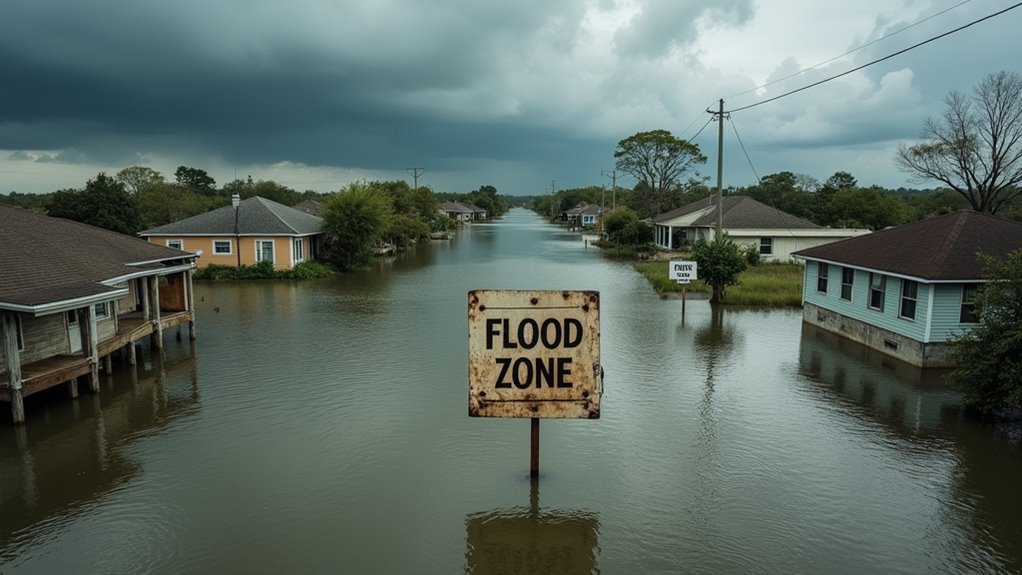
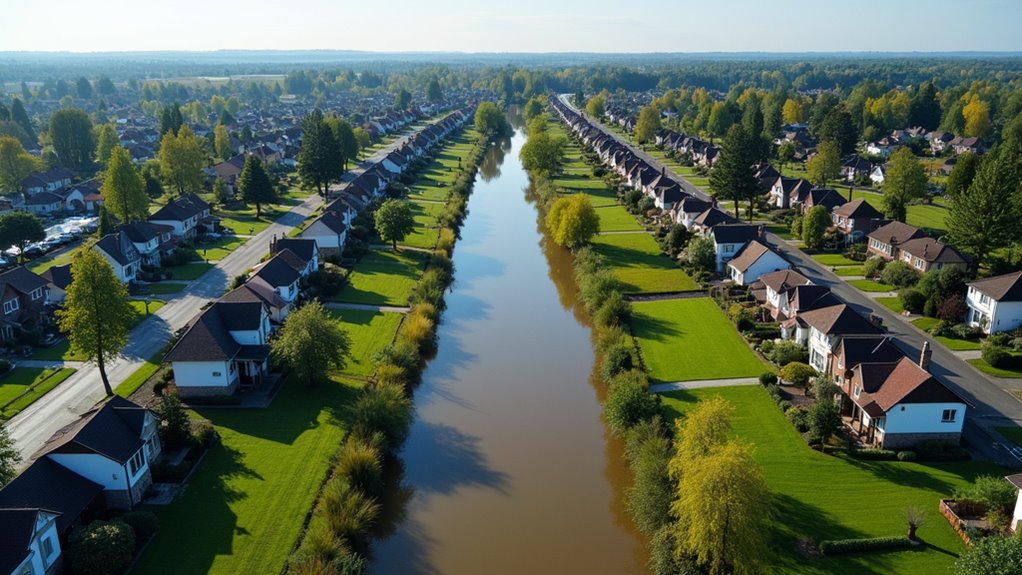
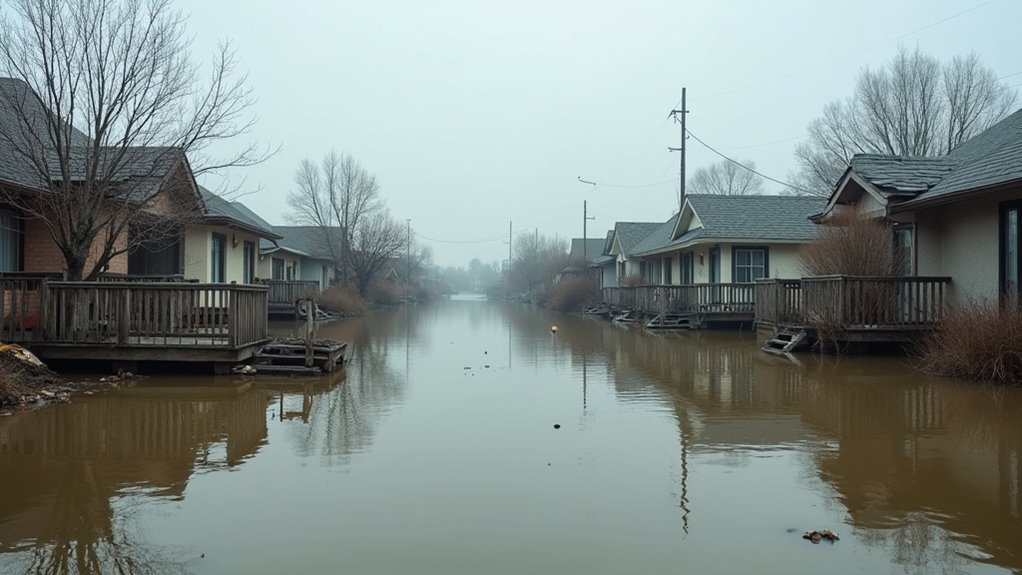
In a country that’s infamous for its rain, it’s almost ironic that millions of homes are sitting ducks for floods. A staggering 6.3 million properties in England are at risk from surface water, coastal swells, and overflowing rivers. Talk about a soggy situation! Among those, 4 million British homes are categorized in medium to high flood risk areas.
In a country known for rain, 6.3 million homes stand vulnerable to floods—now that’s a soggy irony!
And guess what? In the thrilling real-estate adventure of 2022-2024, 11% of new homes are popping up in those same risky zones. It’s like building a sandcastle right by the tide and hoping for the best.
The banks are feeling the heat too. Lloyds Banking Group found that one in six properties in their portfolio is at flood risk. That’s right—3.7% of their mortgage book is sitting in high or very high-risk areas. Meanwhile, NatWest’s numbers aren’t much better, with 3.4% of their home loans tangled up in high flood risk.
It’s no wonder that Nationwide has stopped lending to some properties in flood-prone regions. With climate change ramping up the risk, the mortgage landscape is looking murky.
Now, let’s not forget the economic implications. Flooding is becoming a regular guest at the party, with an average repair cost of £33,600 from 2020 storms. Homeowners are facing extra costs that make mortgage payments feel like a cruel joke. Additionally, banks are now facing regulatory pressure to reevaluate their lending strategies as flood risks escalate. Moreover, low-income homeowners are facing an average annual loss that is 3.7% higher than their wealthier neighbors.
And if you think it’s just the homeowners suffering, think again. The banks are on the hook for higher losses when property values plummet. It’s a messy game, and no one’s winning.
Then there are the “mortgage prisoners.” These are the unfortunate souls who can’t refinance because their homes are uninsurable or un-mortgageable due to flood risks. Low-income homeowners in flood zones? They’re hit the hardest.
The reality is harsh: homes in the 1% most exposed could lose 20% of their value in the worst-case scenarios. It’s bleak, and it’s no surprise that prospective buyers are asking for discounts on properties with flood risks.
Even the insurers are tightening their belts. Flood Re covers a large chunk of residential properties, but they’re not covering commercial ones, leaving a significant protection gap. Similar to renters insurance, homeowners insurance costs are influenced by regional variations, with high-risk areas facing significantly higher premiums.
The numbers are staggering. Between 2015 and 2024, there’s been a £1.5 billion loss due to uninsured natural catastrophes.
As the Environment Agency continues to track those 6.3 million at-risk properties, it’s clear that the flood crisis is not just a homeowner’s problem; it’s a ticking time bomb for banks and the entire property market.
Welcome to the new normal, where rain isn’t the only thing flooding the landscape.