
Design Highlights
- Your homeowners insurance typically covers damage from a falling tree if it strikes your structure, regardless of tree ownership.
- Claims for tree removal are usually covered up to $500 to $1,000 if the tree damages your home.
- If the tree falls due to neglect (e.g., rot), your insurance may deny the claim.
- Proving your neighbor’s negligence could shift liability to their insurance for tree damage.
- Always review your policy for specific terms regarding tree damage and claims processes.
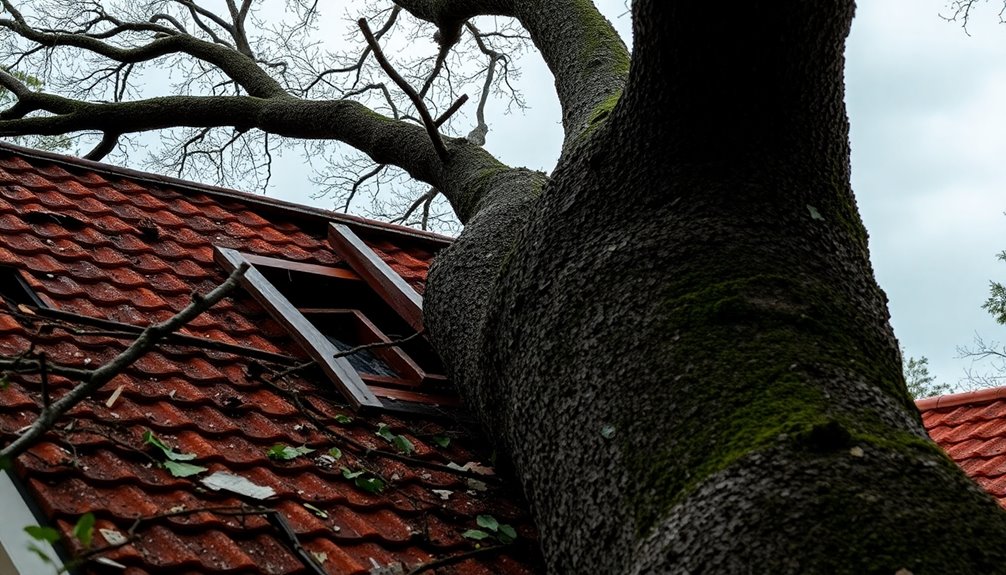
When a tree crashes down on a house, it’s not just a bad day for the homeowner; it’s a potential insurance nightmare. The chaos unfolds quickly. One minute, everything is fine. The next, a massive trunk has smashed through the roof. But here’s the kicker: the coverage decisions that follow can be more complicated than deciphering a toddler’s crayon drawing.
A fallen tree transforms a home into an insurance puzzle, where chaos meets the complex world of coverage.
Insurance coverage kicks in if that tree falls due to a windstorm, lightning, hail, or even the weight of snow or ice. So, if Mother Nature decides to wreak havoc, homeowners may have some backup. But if the tree’s demise is due to neglect—think rot or decay—good luck with that claim. Sorry, no payout for negligence.
And let’s not forget about those trees that only damage the yard. No coverage there either. Seems a tree can be a real diva when it comes to insurance.
Now, if that tree is lucky enough to hit an insured structure like a house, garage, or fence, homeowners could see a payout for repairs, minus that pesky deductible. So, if a neighbor’s tree crashes into the home, it doesn’t matter who owns the tree; the covered peril does the talking.
But beware: hurricane damage plays by its own rules. Windstorm deductibles come into play, leaving homeowners scratching their heads over the fine print. Standard homeowners policies also exclude floods and earthquakes, meaning separate coverage is required for those natural disasters.
Tree removal is another can of worms. If the tree squashes the house, insurers will generally cover removal, but only up to $500 to $1,000 per tree. If it just falls in the yard? Too bad. Homeowners are on their own unless it’s blocking something crucial, like a driveway or handicap ramp. Homeowner’s insurance may cover costs if the fallen tree blocks driveways or ramps for disabled individuals.
Cleanup? Sure, that’s included if damage occurs. But remember, policies have limits, and the specifics can vary wildly. Specific limits may apply to tree removal expenses, which typically range between $500 to $1,000.
Personal belongings? They might be covered if the tree strikes them, but fences and sheds also qualify for reimbursement. And if a neighbor’s tree falls due to their negligence, their insurance may step in.
It’s a tangled web of who pays what, and it’s not always pretty. In this insurance dance, homeowners must file claims with their own insurers first. Proving negligence can shift the burden to the neighbor’s policy.
But if a homeowner ignores obvious hazards, that’s on them. So, as the dust settles, the question remains: who’s paying for the mess? It’s never just about the tree; it’s about traversing the murky waters of insurance. Good luck with that.