
Design Highlights
- Texas homeowners should check their policies for coverage on sudden water damage from pipe bursts, but slow leaks often result in denials.
- Ice damage from storms, including structural damage and ice dams, may be covered, but deductible amounts can vary.
- Tree damage is typically covered if trees fall during storms, but neglected trees might not qualify for claims.
- Homeowners should understand the differences between HO-3 and HO-5 policies to ensure adequate protection against various risks.
- Regularly reviewing insurance policies and considering additional coverage options can help prevent uncovered damages from ice, pipes, and tree falls.
When it comes to insurance for Texas homeowners, understanding coverage can feel like maneuvering through a maze with a blindfold on.
Take water damage, for instance. Homeowners might think they’re covered when a pipe bursts. Surprise! They usually are—if it’s sudden and accidental. That’s right, frozen pipes or unexpected bursts get the green light. But that slow, sneaky leak? Nope. Insurers often throw up a big fat “denied” for those. So, if you’ve got a pipe that’s just too comfortable leaking away, don’t expect your policy to bail you out.
Let’s not forget about the joys of water backup. Sewage and drain backups are a common headache in Texas, and while some homeowners pray for coverage, they might have to opt for additional endorsements. Because who doesn’t want to pay extra for peace of mind when the toilet backs up?
And hidden wall leaks? They might be covered too, but good luck finding a policy that doesn’t treat them like a mythical creature. Maintenance-related damage? Forget it. If your plumbing is shot because you ignored it, your policy is as useless as a raincoat in a hurricane.
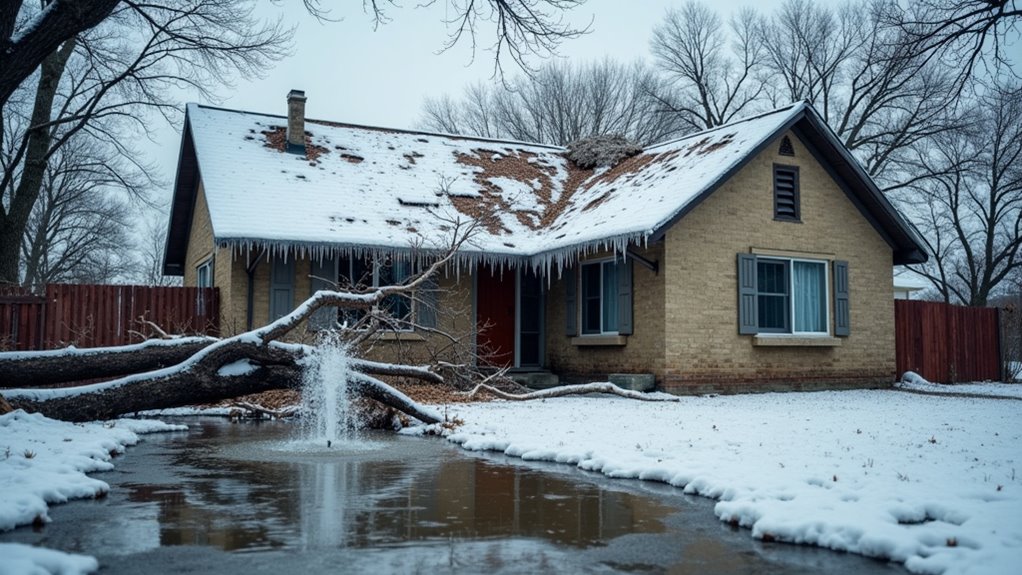
Now, onto ice damage. Texas winters can be brutal, and while wind and hail are typically covered, homeowners might find themselves facing hefty deductibles that have doubled in recent years. A 2% deductible means you’re shelling out more cash when the ice wreaks havoc. Ice dams and structural damage? Usually included. Heavy rain penetrating through storm-damaged roofs can also trigger coverage, though insurers will scrutinize whether the damage resulted from sudden storm damage rather than years of neglect. But read the fine print. Not all policies are created equal. Some offer solid protection, while others—well, they leave you shivering in the cold. It’s crucial to remember that percentage-based deductibles can significantly impact your financial responsibility during a claim.
Tree damage is another can of worms. If a tree falls during a storm, you’re likely covered. But if that tree was leaning like the Tower of Pisa due to neglect? Good luck. Coverage limits for tree removal due to specific perils are capped at $1,000 for any one loss, making it essential to understand your policy’s specifics.
And debris removal? It better be explicitly included in your policy. If a wildfire sweeps through, you don’t want to be left holding the bag. Many policies limit tree removal coverage, so if your neighbor’s tree takes out your roof, you might be stuck with the cleanup bill.
In Texas, homeowners need to be savvy. HO-3 policies provide basic protection against many risks, while HO-5 offers the broadest coverage.
But maneuvering through these options can feel like trying to find a needle in a haystack. Homeowners should get familiar with the ins and outs—because when disaster strikes, there’s little time for confusion.