
Design Highlights
- Roll your pennies into $0.50 increments to facilitate easy deposits at banks or credit unions.
- Avoid coin machines; instead, manually roll coins to save on counting fees.
- Use rolled coins for small purchases or as cash tips to maximize their utility.
- Consider exchanging coins for e-gift cards to put your pennies to work without fees.
- Regularly sort and count your coins to keep track of your savings and ensure proper deposits.
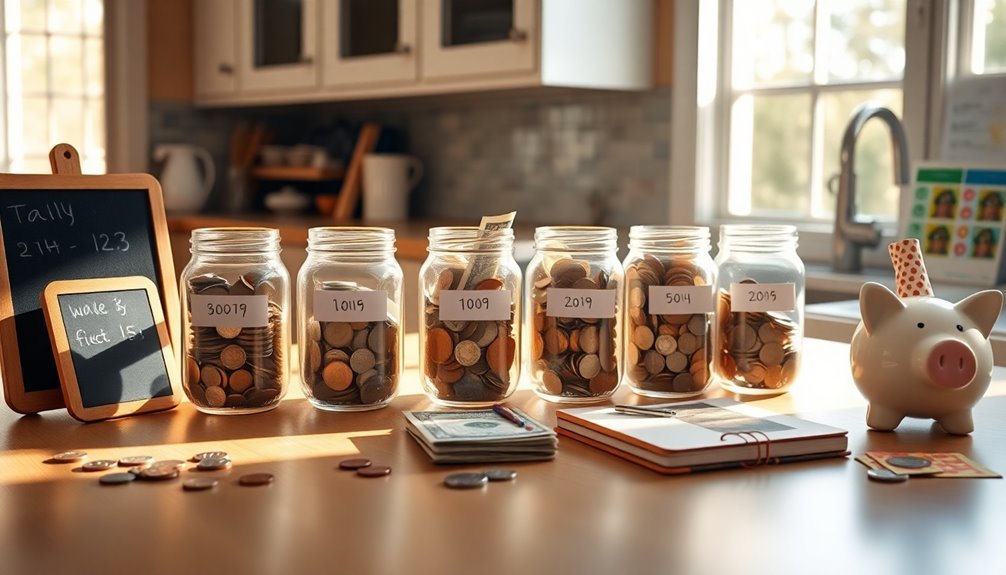
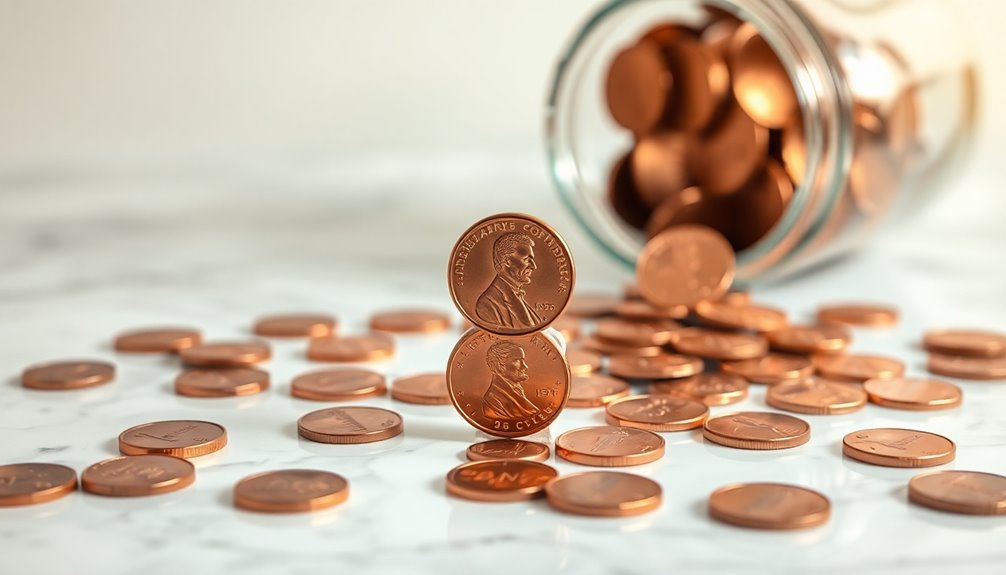
Put those pennies to work! Seriously, what are you doing letting them gather dust in a jar? FreeBankDeposit options abound. Some banks even accept rolled pennies without fees, as long as you give them a quick call first. Local credit unions? They often have a variety of policies that allow free deposits too. So, why not take advantage of that? Paper rolls are available cheaply or even free at many bank branches. Grab a few! Just make sure you label those rolls in $0.50 increments to make the deposit process smoother. Loose pennies? Forget about it. Banks usually reject those.
Put those dusty pennies to work! Many banks and credit unions accept rolled coins for free deposits—grab some wrappers and start rolling!
Now, let’s talk coin rolling technique. Fifty pennies fit perfectly into one roll, equaling a whopping $0.50 value. How do you roll them? First, fold the wrapper into a square before you start stuffing it with coins. Stack ten pennies at a time, using your finger to hold them in place—easy peasy. Just remember to align those coins flat, no vertical nonsense allowed. After packing them in, seal both ends tightly. You want those rolls to stay intact.
And please, for the love of all that is good, avoid coin machines that charge fees for counting. Why waste your hard-earned change? Instead, some machines allow you to trade coins for e-gift cards, effectively waiving those pesky fees. If you only have a portion of coins, process just that. Rolled coins are your ticket to the bank, not those automated services.
What do you do with these rolled coins? Targeted spending is the name of the game. Accumulate those rolls to $5 increments for essentials like salt or yeast. Got a few monthly rolled pennies? Apply them to your smallest debt balances. Use them for exact change at local shops or garage sales. Even toss them into cash tips to round up amounts. Think of pennies as tiny coupons for small daily upgrades. Bundling small financial habits, like rolling pennies and raising your deductible, can collectively save you hundreds of dollars each year on household expenses.
Before you can do any of this, though, you need to sort them. Gather your coins, wrappers, and a pencil to a flat surface. Sort into piles by denomination: quarters, nickels, dimes, and, of course, pennies. Count your rolls—50 pennies per roll. Learn to identify each coin type and multiply the total value across all denominations, and remember to check with your bank about accepted rolled coins.
When you exchange those full rolls at the bank, you’re not just getting bills; you’re putting those coins back into the economy. So, stop letting those pennies collect dust! Get rolling!