
Design Highlights
- Property Damage Liability Insurance covers costs for damages to others’ property, but low limits can leave you financially liable for excess amounts.
- Major accidents can exceed typical state minimum coverage, resulting in significant out-of-pocket expenses for the insured driver.
- Inadequate coverage may lead to lawsuits, wage garnishment, or property liens, threatening your financial stability.
- Umbrella liability policies can provide additional protection, but require sufficient underlying PD limits to be effective.
- Regularly reviewing and increasing your PD coverage can help mitigate risks and prevent potential financial disaster.
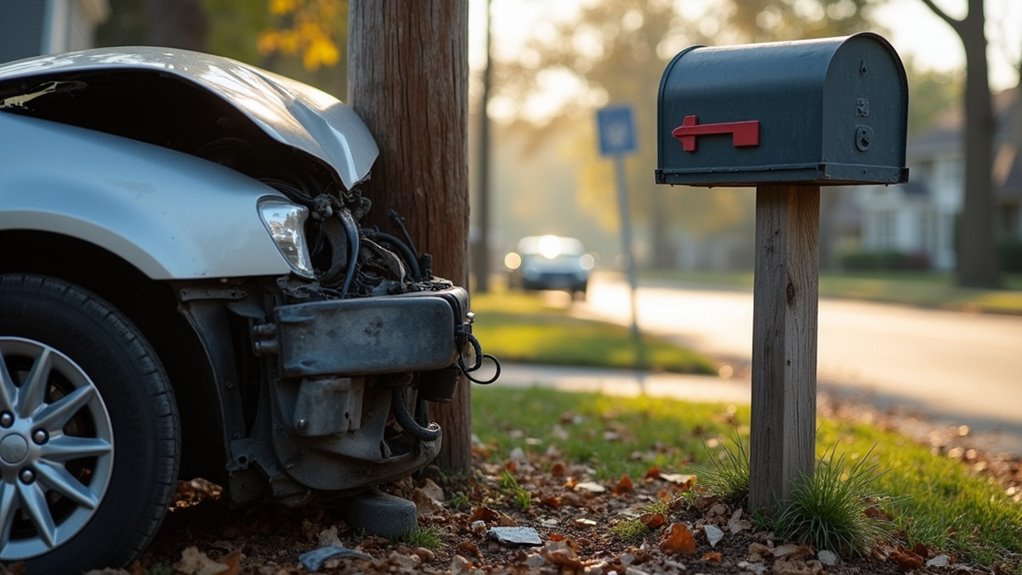
When it comes to driving, accidents happen—often when you least expect them. One moment you’re cruising down the road, and the next, BAM! You’ve just smashed into someone’s prized pickup truck or, let’s say, a fancy mailbox. Enter Property Damage Liability Insurance (PD), your supposed safety net in these chaotic moments.
Accidents strike when you least expect them—one moment you’re cruising, the next, you’ve wrecked someone’s prized possession.
But hold on a second—this coverage could also lead you straight to bankruptcy court if you’re not careful.
So, what exactly does PD cover? Basically, it handles the repair or replacement costs for other people’s stuff that you wreck while driving. Think other vehicles, buildings, fences, and even those pesky utility poles. Yep, the very things you might not even think about until you accidentally demolish them.
And guess what? PD operates per accident. That means it pays up to a certain limit for each incident. Just one massive crash could eat up your entire policy limit faster than you can say “oops.” Property damage coverage is crucial in covering costs associated with repairs to someone else’s property due to a car accident caused by the insured. Additionally, it’s important to note that PD is required by law in most states, ensuring that drivers maintain a responsible level of coverage.
Now, here’s the kicker: states require PD on almost every auto policy. Minimum limits vary, of course. Some states want as little as $5,000, while others feel that $25,000 is the sweet spot. If you don’t maintain those required limits, you could face penalties, fines, or even a license suspension. That’s right, the law doesn’t take kindly to those who think they can drive around uninsured.
But let’s get real. The typical PD limits often match those minimum requirements. What happens when you cause a major crash? If damages exceed your policy limit, you’ll be left holding the bag. You could be sued for the excess, facing wage garnishment or a lien on your house. Talk about a nightmare! Picture it: you’re enjoying a quiet evening, and suddenly, you’re hit with a lawsuit that could ruin your financial future.
Sure, you can increase your PD limits to mitigate this risk, and it’s usually a modest bump in your premium. But if you’re thinking about relying solely on PD, think again. Umbrella liability policies can extend your coverage, but don’t get too cozy. They require adequate underlying PD limits and might not cover everything. Just like homeowners need dwelling coverage to protect the physical structure of their homes, drivers need sufficient PD to safeguard their financial futures.
When the dust settles and claims come in, the at-fault driver’s insurer processes the claims. But don’t forget—intentional damage and your own property aren’t covered.
You might end up wishing you’d paid a bit more attention to your insurance policy. In the end, PD is a necessary evil. Get it, but don’t let it bankrupt you overnight.