
Medicare might be taking a step forward with the MiniMed Flex™—a compact insulin pump that claims to make living with diabetes a bit easier. It’s sleek, smartphone-controlled, and holds enough insulin for a week. But let’s be real: you’ll need a diabetes diagnosis and proof that you check your blood sugar like clockwork. Oh, and your doctor better be on board too. Stick around, there’s more to unpack about this potential game changer.
Design Highlights
- Medicare Part B covers MiniMed Flex™ as durable medical equipment, typically paying 80% after the deductible.
- Beneficiaries are responsible for a 20% coinsurance, with suppliers required to accept assignment for lower costs.
- Eligibility requires documented diabetes diagnosis and regular blood glucose checks, along with clinical evidence of insulin deficiency.
- The MiniMed Flex™ features SmartGuard™ technology, providing real-time insulin adjustments for better glucose management.
- Its compact design allows for discreet carry and smartphone control, enhancing user convenience and lifestyle compatibility.
Key Features of the MiniMed Flex™ System
When it comes to managing diabetes, the MiniMed Flex™ System is shaking things up. This isn’t your grandma’s insulin pump. It features SmartGuard™ technology, which adjusts basal insulin and delivers correction boluses in real time—yes, every five minutes if needed.
The MiniMed Flex™ System revolutionizes diabetes management with real-time insulin adjustments and a sleek, discreet design.
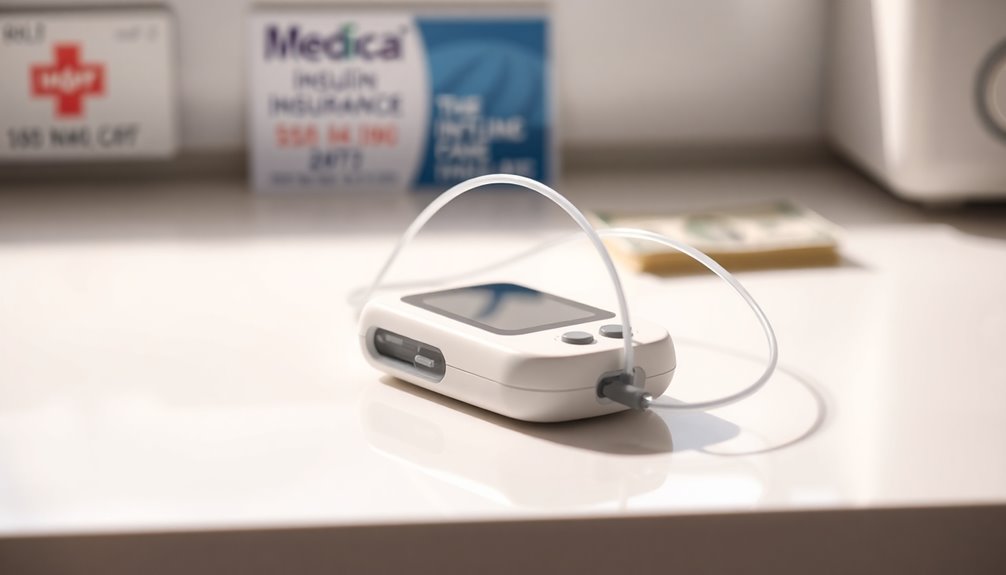
And guess what? It’s the smallest insulin pump yet, about half the size of its predecessor. Discreet? Absolutely. You can hide it in your pocket without a second thought.
Plus, it holds up to 300 units of insulin and can work for up to seven days—all while being smartphone-controlled. No more bulky screens! This device is the company’s smallest insulin pump, making it a perfect fit for those who prefer a lifestyle-friendly form factor.
With integrated CGM support, it’s like having a personal assistant for your diabetes. Auto basal adjusts to continuously bring glucose back to target levels, ensuring optimal management. Who knew managing diabetes could be this high-tech and sleek?
How Medicare Covers MiniMed Flex
Maneuvering Medicare coverage can feel like trying to solve a Rubik’s Cube blindfolded.
The MiniMed Flex™ is covered under Medicare Part B as durable medical equipment, which is great—if you meet the criteria. Medicare typically kicks in 80% of the approved amount after you clear the Part B deductible. Lucky you, right? But don’t forget the 20% coinsurance. Ouch!
You’ll need documentation from your healthcare provider, like proof you’re checking blood glucose levels regularly. And yes, that fasting C-peptide test may come into play, too. Additionally, the MiniMed Flex™ is a fully connected insulin pump that can be controlled from your phone, making it a convenient option for many users. To ensure coverage, make sure your treating practitioner is enrolled as a Medicare provider.
Just when you think it’s straightforward, remember: suppliers must accept assignment, or you might face higher costs. So, grab your paperwork and brace yourself; it’s a wild ride to insulin delivery!
Medicare Coverage Eligibility Criteria for MiniMed Flex™
Piloting Medicare coverage for the MiniMed Flex™ isn’t exactly a walk in the park. It’s a maze of criteria that can leave anyone scratching their head. Here’s what you need to know:
Navigating Medicare coverage for the MiniMed Flex™ can be complicated, with criteria that might leave you confused.
- Must have a documented diabetes diagnosis—Type 1 or Type 2.
- Blood glucose checks? You better be doing it at least four times a day.
- Clinical evidence is a must—like fasting C-peptide tests to prove insulin deficiency.
- Training? Yeah, your provider needs to show you how to handle this tech.
- Additionally, Medicare coverage for MiniMed 780G is expected to enhance patient access in the U.S. External insulin pumps are classified as durable medical equipment (DME) under Medicare Part B, which may also support the case for MiniMed Flex™ coverage.
Manufacturers seeking faster Medicare coverage for innovative devices may pursue the FDA breakthrough designation, which can expedite the path to a National Coverage Determination under CMS’s TCET program in as little as six months following FDA approval.