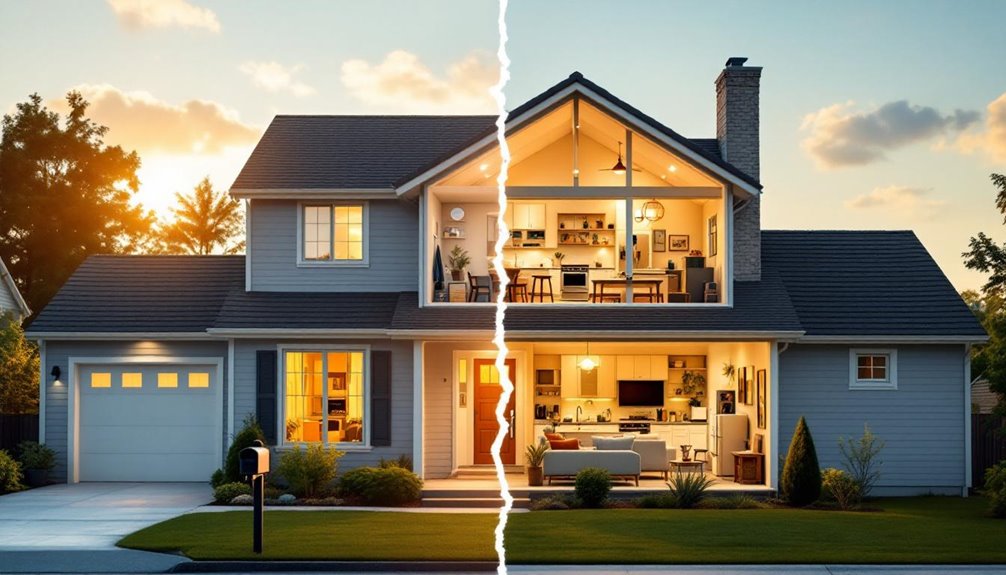

No, hazard insurance and homeowners insurance aren’t the same thing—though people mix them up constantly. Hazard insurance only covers the physical structure of a home from specific disasters like fire, wind, hail, and vandalism. That’s it. Homeowners insurance, on the other hand, is the full package deal that includes hazard coverage plus personal property protection, liability coverage, and additional living expenses if disaster strikes. Mortgage lenders require hazard insurance specifically because your home is their collateral. Understanding the distinction matters more than most homeowners realize.
Design Highlights
- Hazard insurance covers only the physical structure of your home against specific perils like fire, wind, and vandalism.
- Homeowners insurance is a comprehensive policy that includes hazard insurance plus personal property, liability, and additional living expenses.
- Hazard insurance is a component within homeowners insurance, specifically called dwelling coverage or Coverage A.
- Mortgage lenders require hazard insurance to protect their collateral, but most homeowners purchase full homeowners insurance.
- Hazard insurance alone is rarely sold separately today; most policies are complete homeowners insurance packages.
When homeowners start shopping for insurance or talking to their mortgage lender, they often hear two terms thrown around like they mean the same thing: hazard insurance and homeowners insurance. But here’s the thing. They’re not identical, even though they’re closely related. Think of hazard insurance as one piece of a larger puzzle.
Hazard insurance covers only the physical structure of a home. Fire damage? Covered. Windstorms tearing off shingles? Yep. Hail pummeling the roof? That too. Lightning strikes, theft of structural elements, vandalism to the building itself—all part of hazard insurance. It’s also called dwelling coverage or Coverage A in insurance speak. The key word here is structure. Your actual house.
What hazard insurance doesn’t cover is basically everything else. Personal belongings inside the home? Not included. Someone slips on your icy driveway and sues you? Hazard insurance won’t help. Need to stay in a hotel while your fire-damaged home gets repaired? You’re on your own with hazard insurance alone.
That’s where homeowners insurance comes in. It’s the full package. Homeowners insurance includes hazard insurance as one component, then adds personal property coverage, liability protection, and additional living expenses coverage. It protects the stuff inside your home, covers medical expenses if someone gets hurt on your property, and pays for temporary housing if disaster strikes. It even covers detached structures like garages.
Here’s something important: hazard insurance is rarely sold separately anymore. Most people get it bundled into an all-encompassing homeowners insurance policy without even realizing the distinction exists.
Mortgage lenders care deeply about this topic. They require proof of hazard insurance before handing over loan money because the home serves as collateral. If the structure burns down and there’s no insurance, the lender loses its security. That’s why they mandate coverage. And if a borrower doesn’t get it voluntarily, lenders can impose forced-place insurance at astronomical costs. Lenders typically require coverage up to the rebuilding value of your home to ensure their investment is fully protected. Fun times.
Both types of insurance have notable exclusions. Floods aren’t covered by standard policies—that requires separate flood insurance. Same goes for earthquakes. These disasters need their own specialized coverage. Standard policies also exclude wear and tear, which means gradual deterioration from aging or lack of maintenance won’t trigger a payout. Understanding policy specifics helps homeowners avoid surprises when filing claims, as coverage varies depending on individual policy terms and conditions.
Frequently Asked Questions
How Much Does Hazard Insurance Typically Cost per Year?
The search results don’t contain specific pricing data for hazard insurance.
Here’s the deal though: most homeowners can’t buy hazard insurance separately anyway. It’s bundled into standard homeowners policies.
So asking about hazard insurance costs is basically asking about homeowners insurance costs—which vary wildly based on location, home value, and coverage limits.
Want actual numbers? You’ll need to consult insurance pricing sources or get quotes directly from insurers.
Can I Purchase Hazard Insurance Separately From My Mortgage Lender?
Technically, yes—but good luck finding it.
Standalone hazard insurance policies are rare as hen’s teeth. Most major insurers don’t bother offering them separately. They bundle hazard coverage into standard homeowners policies instead.
And here’s the kicker: even if someone tracks down a standalone policy, their mortgage lender probably won’t accept it. Lenders want thorough homeowners insurance, not just bare-bones structure coverage.
Does Hazard Insurance Cover Damage From Earthquakes and Floods?
Nope. Standard hazard insurance doesn’t cover earthquakes or floods—they’re explicitly excluded.
Want protection from those disasters? You’ll need separate policies. Earthquake coverage requires its own add-on policy, and flood insurance is a completely different beast altogether.
Doesn’t matter how severe the water damage is from flooding, standard hazard coverage won’t touch it. Homeowners in earthquake-prone or flood-prone areas have to shell out extra cash for that protection.
It’s just how the insurance game works.
What Factors Affect My Hazard Insurance Premium Rates?
Location matters most—living in hurricane alley or wildfire country will absolutely jack up premiums.
Home value and replacement costs factor in heavily too. The deductible chosen makes a real difference; lower deductibles mean higher premiums, obviously.
Building characteristics count: newer roof, security systems, fire-resistant materials can score discounts.
Crime rates in the neighborhood play a role. Even square footage and construction materials influence what homeowners pay.
It’s all about calculated risk.
Is Hazard Insurance Tax Deductible for Homeowners?
Nope. Hazard insurance premiums aren’t tax deductible for homeowners living in their own place—the IRS treats them as personal expenses. Period.
Mortgage lenders require it, sure, but that doesn’t change anything tax-wise.
However, if the home’s rented out or used for business, the rules flip. Then hazard insurance can be deducted as a business expense.
Same goes for home offices that meet IRS requirements.
Personal residence? No deduction.
Business or rental? Deductible.