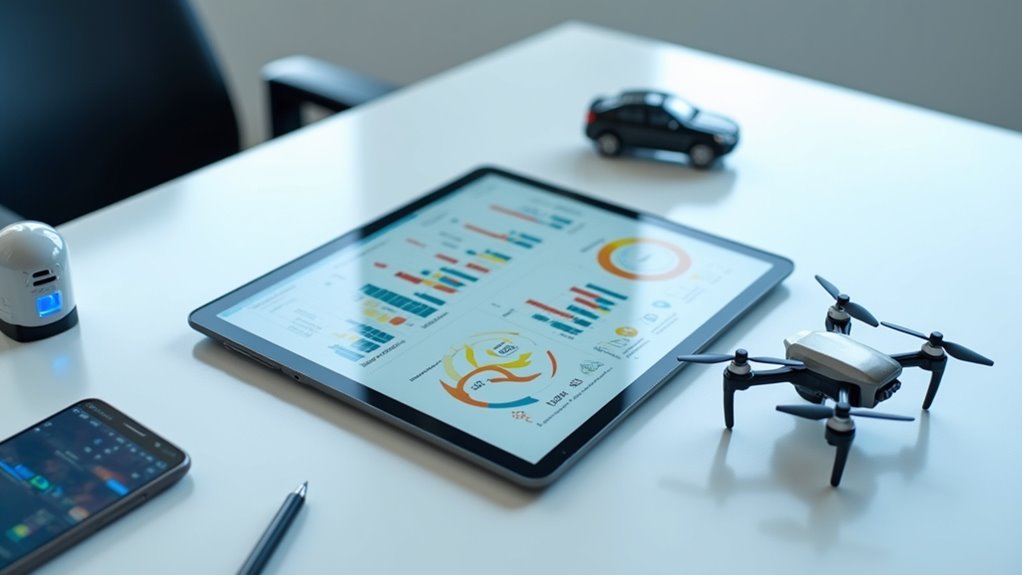

Design Highlights
- Continuous underwriting uses IoT sensors for real-time risk evaluation, replacing annual assessments with ongoing monitoring and adaptive policy management.
- Predictive analytics enables insurers to forecast claims, prevent customer churn, and detect fraud before incidents occur through data-driven insights.
- AI-powered fraud detection monitors claims lifecycles in real-time, significantly reducing discovery time and enabling proactive intervention against fraudulent activity.
- Big data analytics transforms telematics and IoT information into comprehensive risk profiles, improving pricing fairness and operational efficiency across insurers.
- Usage-based insurance adjusts premiums dynamically based on real-time behavioral data, offering personalized coverage through telematics and health monitoring integration.
Insurance Technologies Reshaping the Industry
The insurance industry isn’t exactly known for moving fast. But by 2026, AI and automation are forcing insurers to finally catch up with the rest of the digital world. And it’s changing everything.
Forget the old days of static policies and annual renewals. Insurers are shifting to continuous underwriting, pulling real-time data from IoT sensors, connected vehicles, and commercial assets. The idea is simple: why assess risk once a year when you can assess it constantly? AI systems now combine this streaming data with policy and claims management, creating adaptive risk assessment that actually responds to what’s happening right now. The result? Faster, more transparent customer experiences that don’t feel like you’re dealing with a company stuck in 1995.
Continuous underwriting replaces annual snapshots with real-time risk assessment, finally dragging insurance out of the analog era.
Predictive analytics is moving from niche experiment to enterprise-wide standard. By 2026, these models will be core to underwriting, claims triage, and fraud detection across the board. Companies like Chubb are already using environmental IoT sensors for property risk, basically trying to predict disasters before they happen. Insurers can also identify which customers are likely to bail, then deploy retention strategies before it’s too late. It’s predictive instead of reactive. Novel concept.
The fraud detection game is changing too. AI-enabled systems now work throughout the entire claims lifecycle, not just after someone files. Continuous monitoring means catching fraud in real time instead of discovering it months later when the money’s already gone.
Then there’s the data itself. Insurers are drowning in information from telematics, IoT devices, and socio-demographic sources. Big data analytics, ranked second only to cloud computing in digital innovation importance, transforms this flood into thorough risk profiles. Static risk assessment is dead. Real-time predictive updating is the new normal, enabling fairer pricing and better operational efficiency.
Remote imagery and computer vision are eliminating the need for physical inspections. Drones survey disaster sites, cutting adjustment times from weeks to hours. Satellite images assess property risks continuously, monitoring wildfire hazards without sending someone out with a clipboard. Vehicle damage claims that once took days now resolve in minutes through photo analysis.
And customers are getting policies that actually reflect their behavior. Usage-Based Insurance models use telematics and health data to price premiums dynamically, adjusting coverage in real time. It’s personalized, it’s continuous, and it rewards good behavior instead of lumping everyone into demographic buckets. For an industry built on actuarial tables and historical averages, that’s practically revolutionary. Data-driven personalization also means factors like driving record can have immediate impacts on premiums rather than waiting for annual renewal cycles. Insurance is also embedding itself into larger digital ecosystems, partnering with automotive manufacturers and fintech firms to deliver coverage right at the point of purchase. The operational shift is equally dramatic, with carriers moving from “detect and repair” to predict and prevent models that catch problems before they escalate.