
Design Highlights
- HDI Global partners with the Hellenic Olympic Committee to enhance climate resilience at Panathenaic Stadium, addressing marathon finish line risks.
- Lars Regner leads the initiative, supported by specialists Wiebke Cundill and Olaf Kopper, focusing on expert-driven solutions.
- The project aims to mitigate increasing climate-related threats to sports venues in Athens and beyond.
- HDI Global’s Climate Consulting service, launched in 2025, provides vulnerability assessments using data-driven climate scenarios.
- Proactive measures are essential as hazard exposure is projected to worsen significantly by 2050.
HDI Global is diving headfirst into the messy world of climate risks, and let’s be real—it’s about time. The stakes are high, especially when it comes to stadiums. Take Oaka Stadium, for instance. It’s facing surface flooding as its primary threat, alongside the not-so-friendly risk of river flooding. Projections show that losses could reach a staggering 8.79% of replacement costs by 2050. That’s not a small number. In fact, it tops the list for total loss percentage, coming in at 8.85%. Not exactly a trophy to be proud of, right? Oaka Stadium ranks among the top three most vulnerable stadiums globally.
HDI Global is tackling climate risks in stadiums, with Oaka Stadium facing a staggering 8.79% loss by 2050—an alarming wake-up call!
But it’s not just Oaka. Climate risks threaten stadiums worldwide, with an estimated $800 million in losses anticipated by 2050. Six stadiums will face four hazards each. And guess what? Half of these high-risk venues are located in sunny Florida. Who knew that sunshine could be so dangerous? Inter&Co Stadium and Camping World Stadium are already sitting pretty at the highest risk levels. Meanwhile, the Velodrome in Marseille is gearing up for future hazard exposure. Climate X’s analysis indicates that nearly 40% of projected losses in 2050 will be concentrated in just three high-risk venues.
To tackle these challenges, HDI Global launched its Climate Consulting service in 2025. This isn’t just some half-baked idea; it employs a data-driven approach with three climate scenarios to help businesses analyze their climate-related challenges. It’s essential for those needing to manage physical climate risks today and tomorrow. Their new online Climate Risk Reporting Service is a welcome change, supporting vulnerability assessments and addressing required evaluations.
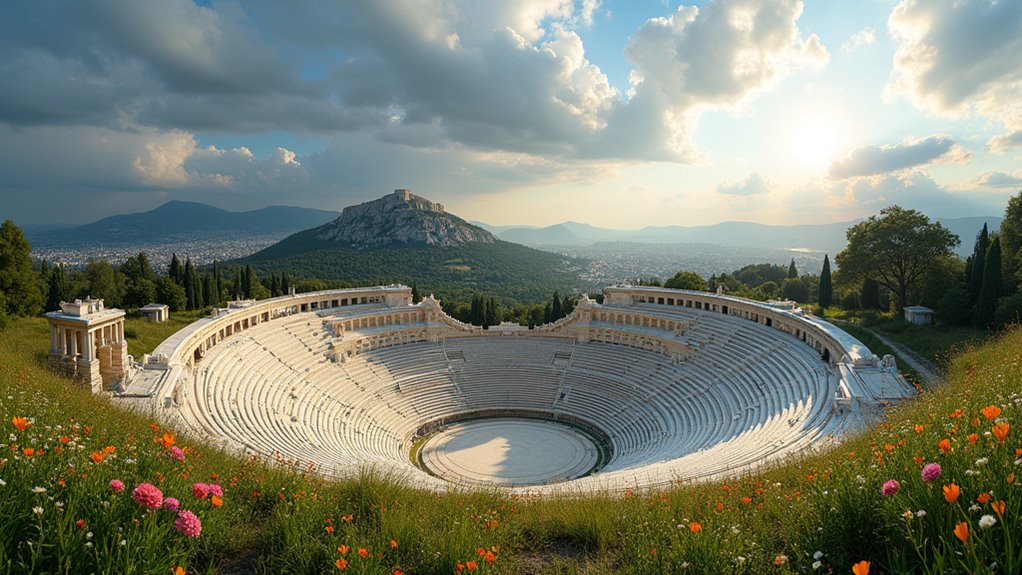
In Athens, HDI Global is teaming up with the Hellenic Olympic Committee. They’re launching a climate resilience initiative for the Panathenaic Stadium, targeting the increasing risks at the marathon finish line. The site of Olympic Flame handover ceremonies is set for an upgrade. Lars Regner leads the charge in this battle against natural hazards and climate risks. He’s not alone; he collaborates with Wiebke Cundill and Olaf Kopper. Together, they specialize in business interruption assessments and supply chain resilience. This initiative marks a significant step in addressing increasing climate-related risks that threaten the stadium’s future.
The future isn’t looking rosy. Hazard exposure is expected to worsen from now until 2050. For instance, Lincoln Financial Field and Principality Stadium are under threat, while Estadio Benito Villamarín in Seville is definitely on the radar. The Rose Bowl isn’t escaping either, facing a 5.22% replacement loss. If that doesn’t wake you up to the dangers of climate change, what will? The battle is on, and HDI Global is leading the charge.