
Ice storms can turn your cozy home into a moldy disaster zone. After one such storm, a homeowner faced hidden damage that spiraled her repairs out of control. Shingles gone, gutters sagging, and leaks hiding where you’d least expect them. Mold? Oh, that’s just the cherry on top, sprouting within days if you’re not quick about it. Ignoring these signs? A recipe for financial headache. Want to know what else to look out for? The details might surprise you.
Design Highlights
- Homeowners should inspect for hidden leaks, especially in attics and basements, to catch issues before they worsen after ice storms.
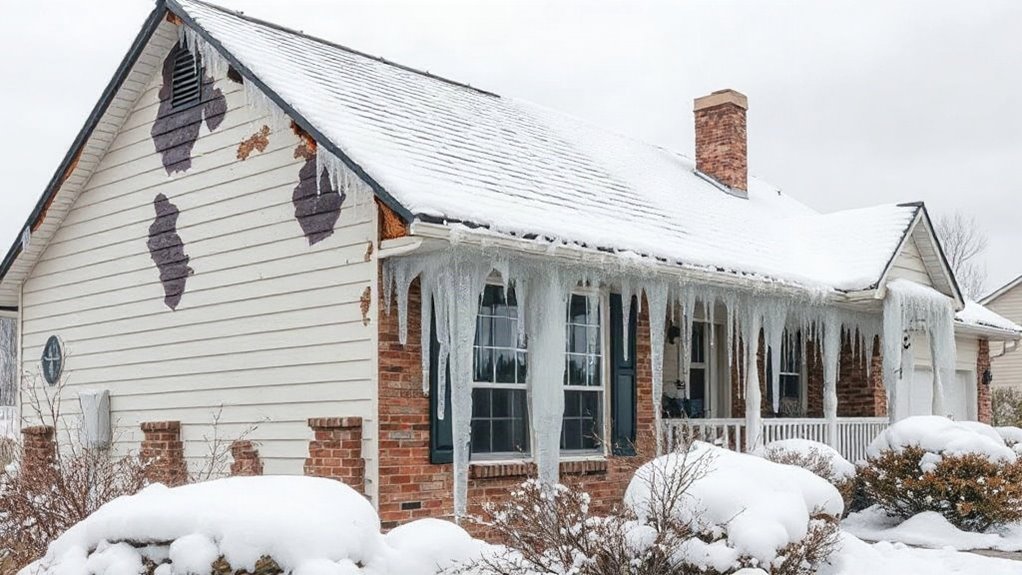
- Ice dams can lead to water intrusion under shingles, causing unseen damage that may not surface until thawing occurs.
- Regular roof checks for missing or damaged shingles can prevent significant water damage and reduce repair costs.
- Dehumidifiers and fans are essential for drying wet materials within 48 to 72 hours to prevent mold growth after storms.
- Awareness of potential hidden damage is crucial, as it can lead to costly repairs and increased insurance premiums if neglected.
Steps to Prevent Mold After Ice Storms
When ice storms wreak havoc, the last thing anyone wants is a mold party in their home. Quick drying is essential. Wet materials? They need to be cleaned and dried within 48 to 72 hours, or else mold starts throwing a wild bash. Fans? They’re your best friends, circulating air and speeding up evaporation. Dehumidifiers? Yup, they help too. Keep that indoor humidity below 50%. It’s not a spa; it’s a home.
Check those hidden spots—attics, basements, and crawl spaces. Hidden moisture can linger undetected and becomes mold’s VIP invitations. Condensation issues can occur when warm indoor air meets cold surfaces, so ensure proper air circulation to mitigate this risk. If materials are soaked beyond saving, toss them. Better to say goodbye than deal with mold’s nasty aftermath.
Clean up, dry out, and keep mold at bay. That’s the game plan. Keep in mind that mold visible to the naked eye is typically excluded from standard homeowners insurance coverage, making prevention all the more critical.
Ice Storm Damage: Signs to Watch For?
How can one tell if their home survived an ice storm unscathed? Look up! Missing shingles or lifted tabs? That roof is begging for water damage.
Cracked or curled shingles? Time for a reality check—ice did a number on it. Granules in the gutters? That’s just your shingles crying for help.
Check those gutters, too. If they’re sagging or pulling away, the ice weight is no joke. Water spilling over? It’s not a waterfall, it’s a disaster in disguise.
Inside, beware of brown stains on ceilings—they’re not just artistic expressions. Damp spots near walls? They scream “leak!” Regular checks for roof age and pitch are crucial to prevent severe damage from ice dams.
And don’t forget the attic. Musty smells or wet insulation? That’s just the house’s way of saying, “Help me!” Regular attic insulation upgrades can significantly reduce the risk of water intrusion due to ice dams.
Filing a claim for ice storm damage can affect future premiums, as homeowners insurance costs nationally average $2,424 annually and vary widely based on coverage level and location.
Understanding Hidden Risks of Ice Storms
Ice storms can leave a trail of destruction that’s not always visible at first glance.
Sure, your roof looks fine, but what about those sneaky ice dams? They can force water right under your shingles and into your attic.
And let’s not forget about hidden leaks that wait until thawing to make their grand entrance. Great, right?
Then there are the foundation cracks—tiny at first but ready to widen with ice expansion. After a storm affecting over 230 million Americans, the potential for widespread issues increases dramatically.
Who doesn’t love a surprise basement flood? The financial strain of unexpected home repairs can mirror the burden faced by the 85 million uninsured Americans who struggle to cover costly medical treatment for storm-related injuries.
And frozen pipes? They burst after thawing, just for kicks.
Electrical systems? Moisture and shorts waiting to wreak havoc.
Delayed damage is the name of the game, folks. Hidden risks abound, just lurking, ready to cost you a fortune.