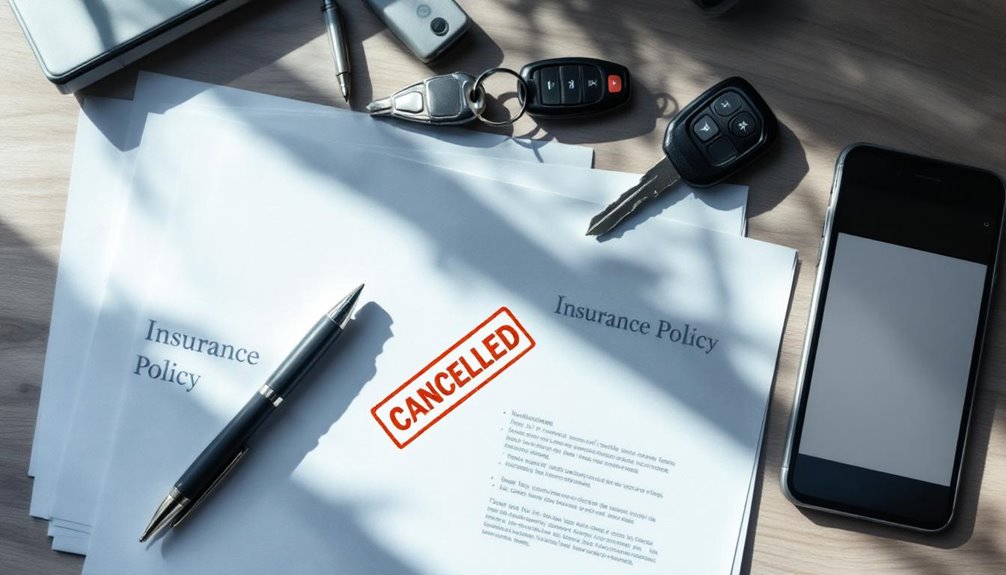

Canceling auto insurance means contacting the insurer directly—via phone, email, or certified mail—and requesting termination on a specific date. Most companies require written confirmation, a policy number, and sometimes a formal cancellation letter. The tricky part? Timing matters. Canceling mid-term usually triggers a prorated refund minus fees, while end-of-term cancellations yield nothing since premiums are prepaid. Never cancel before securing new coverage unless someone enjoys driving uninsured, which is illegal in most states. Documentation, refund tracking, and stopping automatic payments prevent messy surprises. The process has nuances worth understanding.
Design Highlights
- Secure new insurance coverage before canceling your current policy to avoid any gaps in protection.
- Contact your insurer via phone, email, or certified mail, specifying your desired cancellation date clearly.
- Request written confirmation of cancellation as proof and retain all correspondence for your records.
- Mid-term cancellations typically yield prorated refunds minus fees; end-term cancellations usually provide no refunds.
- Stop automatic payments after cancellation and follow up to ensure refunds for unused premiums are processed.
Canceling auto insurance isn’t rocket science, but it’s not exactly a walk in the park either. There’s paperwork involved. Rules to follow. Hoops to jump through. The first order of business? Review the current policy terms. Cancellation fees might be lurking in there. Refund policies too. And those pesky required notice periods that insurers love to enforce.
Before canceling anything, dig through your policy for hidden fees, refund terms, and those notice requirements insurers definitely won’t remind you about.
Here’s the thing nobody wants to hear: get new coverage first. Before canceling anything. Coverage gaps are bad news. They can jack up rates later. Having proof of new insurance ready makes the whole process smoother anyway. Gather the essentials—policy number, valid ID, vehicle information like make, model, and year. Some states have their own quirky rules about license plates or DMV notifications when insurance gets canceled. Fun times.
The actual cancellation process varies wildly between companies. Some allow it online through websites or mobile apps. Others require a phone call to customer service, complete with IVR menus that may or may not help. Written requests via email or certified mail might be necessary. Whatever the method, specify the exact cancellation date. Crystal clear. No room for misunderstandings. And always, always request written confirmation or a cancellation notice. That’s the official proof.
Timing matters more than most people realize. Mid-term cancellation—meaning before the policy expires—usually triggers a prorated refund for unused premiums. Less any cancellation fees, of course. Because there’s always a catch. End-term cancellation is simpler. No refund typically, since the whole term was prepaid. But it’s cleaner. Either way, make absolutely certain the cancellation happens after new coverage starts. Otherwise, hello uninsured motorist status.
Documentation is everything in this game. Many insurers require a formal cancellation letter or specific form. Templates exist online for those who need them. Include full policy details, name, contact information, vehicle specifics, and that all-important effective date. Proof of new insurance helps demonstrate continuous coverage. Complete all paperwork accurately to avoid processing delays that could extend the cancellation timeline unnecessarily.
Keep records of everything—emails, letters, call logs, confirmation notices. All of it. The money side can get complicated. Prorated refunds depend on eligibility and whether cancellation fees apply. Confirm these details upfront. Stop automatic payments after the cancellation date to avoid surprise charges. Track when the refund arrives. If it doesn’t show up in a reasonable timeframe, follow up. Insurers aren’t always prompt about returning money. Follow up with the insurer to confirm the cancellation was processed correctly. Remember that your premium payment covered the policy period you selected, so refunds should reflect any unused time.
Final statements and refund notifications should be saved for records. Just in case.
Frequently Asked Questions
Will I Receive a Refund for Unused Premium After Cancellation?
Most people get something back, but don’t expect the full amount.
If the premium was prepaid—annual or semi-annual—there’s usually a prorated refund for unused days. Monthly plans? Maybe a few bucks for the current cycle.
Here’s the kicker: administrative fees of $25 to $150 get deducted first. Some insurers hit policyholders with short-rate penalties, slashing another 10 percent.
Refunds typically show up in 7 to 14 days, assuming the insurer doesn’t drag their feet.
Does Canceling Auto Insurance Affect My Credit Score?
Canceling auto insurance won’t tank a credit score. Insurance companies don’t report cancellations to credit bureaus. Simple as that.
But here’s the catch—if someone skips out on unpaid premiums and the insurer sends it to collections, that’s a different story.
Collections agencies *will* report the debt, and credit scores take a hit.
Bottom line: the cancellation itself? Harmless. Leaving a balance unpaid? That’ll cause damage.
Keep payments current when switching insurers to avoid credit headaches.
Can I Cancel My Policy if I Have an Open Claim?
Yes, a policyholder can legally cancel their auto insurance even with an open claim. The original insurer remains on the hook for that claim—it doesn’t just vanish.
However, canceling might mean losing policy-linked benefits like rental car coverage while the claim’s still processing. Some insurers slap on early cancellation fees.
The claim stays with the old company, doesn’t transfer to a new one. It’s allowed, just potentially annoying.
How Long Does a Coverage Gap Affect Future Insurance Rates?
A coverage gap can haunt drivers for three to five years, depending on the insurer. That’s how long most companies look back at insurance history when calculating rates.
The damage isn’t permanent, but it’s not quick to fade either. Short lapses under 30 days cause less lasting pain—around an 8% rate hike. Longer gaps? Expect a brutal 35% increase that sticks around.
Insurers treat gaps like scarlet letters, and they don’t forget easily.
Do I Need to Return My Insurance Card After Canceling?
Most insurers don’t want the card back. It just becomes worthless plastic after cancellation anyway.
The card’s automatically invalid once coverage ends, regardless of whether someone keeps it or mails it back.
Here’s the thing though: keeping it around is pointless and potentially confusing. Better to shred it.
Why? Personal info is on there, and having an expired card floating around might create false confidence about coverage status.
Toss it and move on.