
Design Highlights
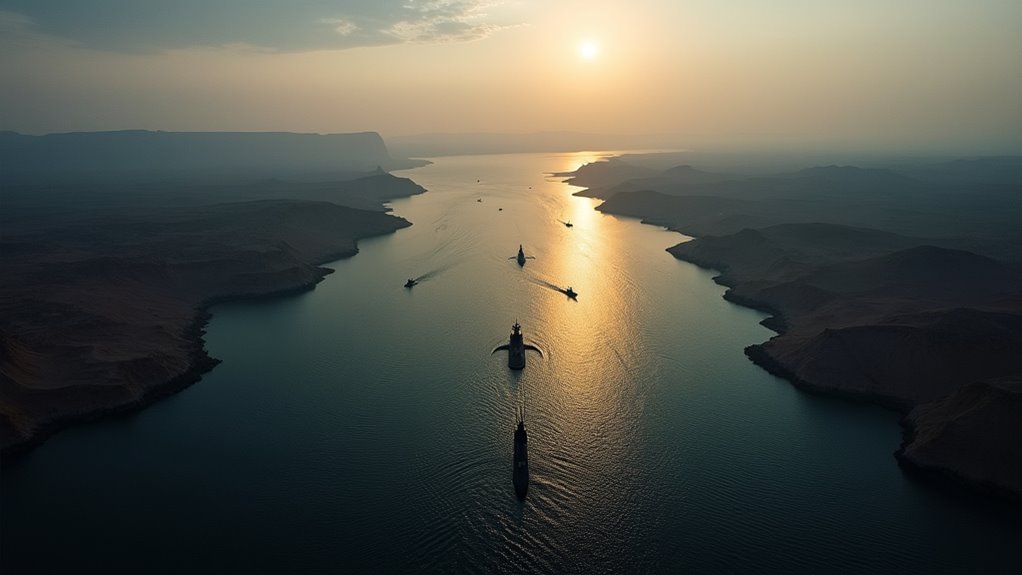
- Iran can implement a blockade using small boats and submarines, effectively disrupting shipping routes in the strait.
- Targeted attacks on commercial vessels would signal Iran’s intent and escalate tensions in global trade.
- Closure would result in daily economic losses exceeding $4 billion, stranding over 150 vessels.
- Major economies, including South Korea and China, heavily depend on energy supplies from the strait, facing severe import challenges.
- Increased shipping costs and insurance premiums would ripple through global markets, driving up oil prices and destabilizing economies.
While the Strait of Hormuz might seem like just another stretch of water, it’s actually the world’s most critical oil chokepoint. This narrow passage connects the Persian Gulf to the Gulf of Oman and is sandwiched between Iran and Oman. Iran, with its significant maritime territory, holds a lot of power here. The United Nations has some rules about how far countries can claim sovereignty—14 miles from the coastline. Iran signed the treaty but never bothered to ratify it. Go figure.
Every year, around 21% of the world’s crude oil supply traverses this strait. That’s a hefty chunk. So, when Iran flexes its muscles, the whole world feels it. With a strategic position like that, Iran can hold the energy markets hostage. It’s like having a VIP pass to a concert where everyone else is begging to get in. They’ve even claimed they can blockade the strait. Experts might roll their eyes, thinking, “Sure, good luck with that,” but Iran has some tricks up its sleeve.
When Iran flexes its muscles at the Strait of Hormuz, the entire world feels the pressure.
Forget about fancy naval fleets; they can send small boats to disrupt shipping or lay mines with submarines. On March 11, they made their intentions clear by targeting commercial vessels. Just a little nudge, and suddenly, the strait becomes a no-go zone. Their Supreme Leader, Mojtaba Khamenei, announced plans to keep the blockade going, and that’s enough to keep global trade on high alert. In 2024, approximately one-fifth of global liquefied natural gas (LNG) trade also crossed the strait, primarily involving exports from Qatar.
Countries like South Korea, Japan, and China would be hit hard if the strait were to close. The U.S. isn’t exempt either, importing about 0.5 million barrels per day from this region. Since the closure on February 28, 2026, over 150 vessels have been stranded. That’s a real traffic jam. The daily economic cost? Over $4 billion. No big deal, right?
Historically, Iran has threatened to close the strait before. Remember the Iran-Iraq War? The U.S. had to escort oil tankers just to keep things flowing. Now, insurance premiums for shipping have skyrocketed, reaching 16 times the normal rates. Shipping companies operating in the region have been forced to confront missed premium payments on their marine insurance policies, risking coverage lapses at the worst possible time. The throughput? Down to a staggering 2% of what it usually is. The conflict has caused Brent crude prices to surge, leaving everyone wondering just how long this game can last.