
Design Highlights
- Dalton, Georgia, became notorious for PFAS contamination from carpets, leading to severe environmental and health issues in local communities.
- Wastewater from carpet mills polluted rivers, significantly impacting drinking water supplies in Northwest Georgia and Alabama.
- The carpet industry prioritized profit over safety, continuing to use PFAS despite known health risks and environmental damage.
- Documentaries and investigative journalism exposed the toxic legacy of the carpet industry, highlighting the long-term consequences of pollution.
- The ongoing debate about accountability between manufacturers and suppliers emphasizes the lack of responsibility in addressing the contamination crisis.
What happens when a carpet capital becomes a toxic wasteland? In Dalton, Georgia, the answer is a disturbing tale of pollution and neglect. Known as America’s carpet capital, this town thrived on the production of carpets, generously treated with PFAS—so-called “forever chemicals” that resist stains but wreak havoc on health and the environment. Those fancy carpets, boasting the Scotchgard logo, had a hidden cost. After years of use, they washed away into the drains, entering the local water systems like an unwanted houseguest that just won’t leave.
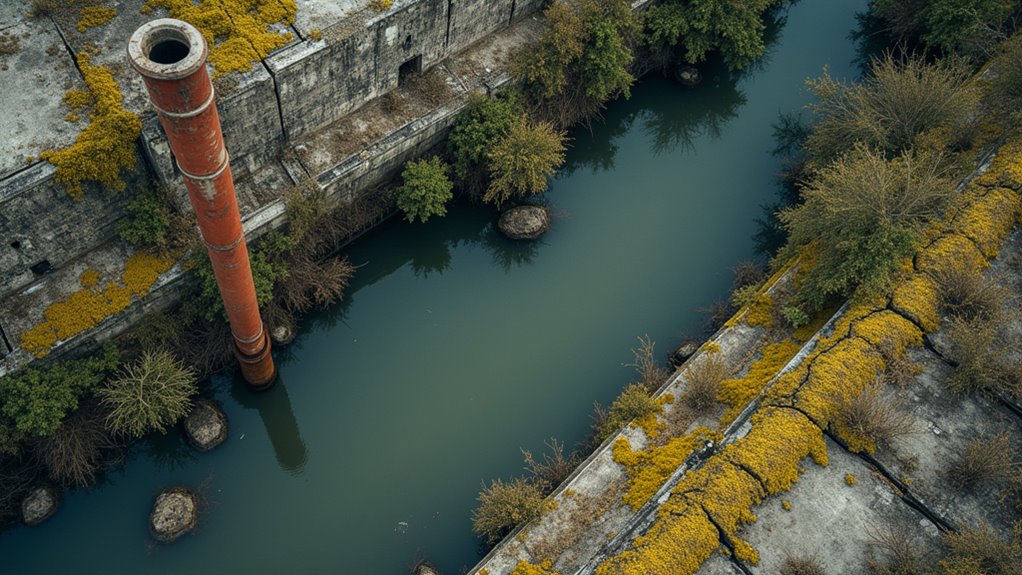
For decades, wastewater from carpet mills flowed unchecked into rivers. Yes, you read that right. The very water that nourishes the region’s ecosystems became a toxic brew, contaminating drinking supplies across Northwest Georgia and even creeping into Alabama. Local communities were left to grapple with the consequences of this chemical cocktail, a cocktail they never ordered. A 2008 University of Georgia study found PFAS levels in the rivers near the mills that ranked among the highest ever recorded. Talk about a legacy!
Wastewater from carpet mills turned vital rivers into toxic brews, leaving communities to face a legacy of contamination.
As the carpet industry flourished, so did the pollution. The economic impact was multibillion-dollar, but at what price? Bob Shaw, CEO of the world’s largest carpet company, even confronted 3M about the Scotchgard logo, which had become a glaring symbol of contamination. It raised questions about who’s responsible—the suppliers or the manufacturers. Spoiler alert: the debate is still raging. Carpet makers continued using PFAS alternatives despite scientific warnings about health effects, revealing the industry’s disregard for safety.
The health impacts of PFAS are no joke. Linked to serious human health issues, these chemicals are notorious for sticking around in the environment like that one friend who crashes on your couch for weeks. Communities have voiced their concerns, and the EPA has stepped in, pressuring companies like 3M to reformulate their products. The irony? The very products designed to protect carpets ended up poisoning the land. Much like how property crime rates influence insurance costs in different regions, environmental risks from industrial contamination also carry long-term financial consequences for communities.
Documentaries like “Contaminated: The Carpet Industry’s Toxic Legacy” have shone a light on this grim reality. Journalists have painstakingly uncovered the extent of the contamination, revealing a story of irresponsibility that sprawls across both Georgia and Alabama.
The rivers that once flowed freely are now reminders of a past steeped in pollution. Dalton’s carpet empire, once a symbol of American ingenuity, now stands as a haunting reflection of what happens when profit trumps responsibility. The legacy is clear: polluted rivers and a glaring need for accountability.
And the carpet? Well, it’s just another reminder of a mess that won’t be easy to clean up.