
Design Highlights
- Vessel crossings in the Strait of Hormuz have plummeted, with only 28 reported in 24 hours compared to a historical average of 138.
- Shipping companies are advised to adopt umbrella insurance to cover international liabilities amid escalating geopolitical risks.
- U.S. intelligence reports indicate potential Iranian mine deployment, posing significant threats to commercial shipping and oil tankers in the region.
- Oil prices have surged nearly $10 per barrel, with Brent crude potentially exceeding $100 if tensions persist.
- Continuous monitoring of vessel activity is essential due to increased maritime aggression and high-risk warnings in the region.
Sounds dramatic, right? Well, it is.
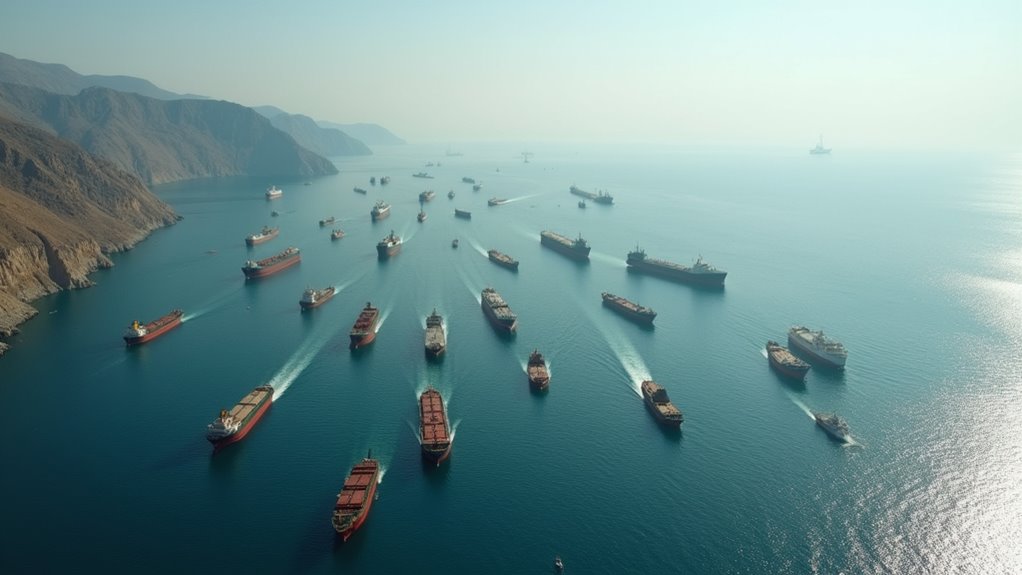
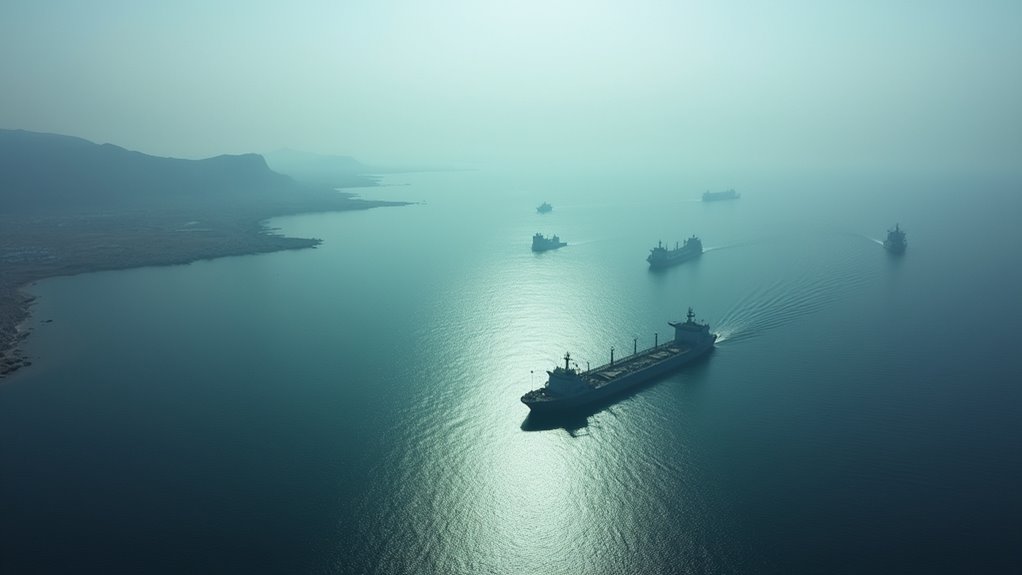
Vessel activity has collapsed, too. During late February, only about 28 vessels crossed in a 24-hour period. Historical averages? A comfortable 138. So, what gives? A surge in tension has made shipowners rethink their plans. They’re steering through a minefield—literally and figuratively.
Vessel activity has plummeted, with only 28 crossings in a day—far below the usual 138, as tensions rise.
And while some data shows a slight uptick to about 110 vessels, this still falls way short of normalcy. The waters of Hormuz are looking more like a ghost town than a bustling maritime highway. Shipping companies operating in these volatile regions may want to consider that umbrella insurance coverage can extend to foreign operations, protecting businesses from specific international liabilities that exceed standard policy limits.
Speaking of ghosts, there are dark vessels lurking in the shadows, operating outside the visible AIS tracking system. How comforting. The U.S. intelligence community has reportedly warned that Iran is gearing up to deploy naval mines in the Strait. That’s right, folks—landmines at sea.
Initial estimates suggest a few dozen mines could be deployed, though Iran holds a stockpile of around 2,000. Even a handful of these could turn the Strait into a no-go zone for commercial shipping. Good luck getting your oil tankers through there anytime soon.
Now, let’s talk dollars and cents. Oil prices have jumped by almost $10 per barrel thanks to all this drama. If this situation doesn’t stabilize soon, we could see Brent crude prices soaring past $100. [Recent reports indicated partial normalization with approximately 110 vessels in a 24-hour period, but the risk remains high due to heightened security threats. Imagine that!
Energy markets are on edge, and Saudi Arabia is already pivoting crude exports to bypass Hormuz-dependent infrastructure.