
Design Highlights
- Homeowners are increasingly suing insurers over denied claims, reflecting a growing trend in disputes unrelated to hurricanes.
- Insurers are perceived as prioritizing claim denials over fair resolutions, contributing to rising litigation rates.
- Over 60,000 claims in Florida became litigated in 2024, highlighting significant challenges within the insurance system.
- Claims related to climate events, including building collapses, often face insurer reluctance to pay, intensifying disputes.
- Homeowners are seeking legal recourse as insurer delays and denials strain trust and financial stability.
In a dramatic showdown that’s becoming all too common, a Florida homeowner has decided enough is enough and is dragging their insurer to court. The case is just one of many, highlighting a troubling trend in the Sunshine State. Since 2018, homeowners’ insurance cases, excluding hurricanes, have been on a steady rise. In 2024 alone, federal district courts recorded over 3,500 suits—the highest number since 2009. This homeowner, like many others, is fed up with the endless back-and-forth with an insurer that seems more interested in denying claims than paying them.
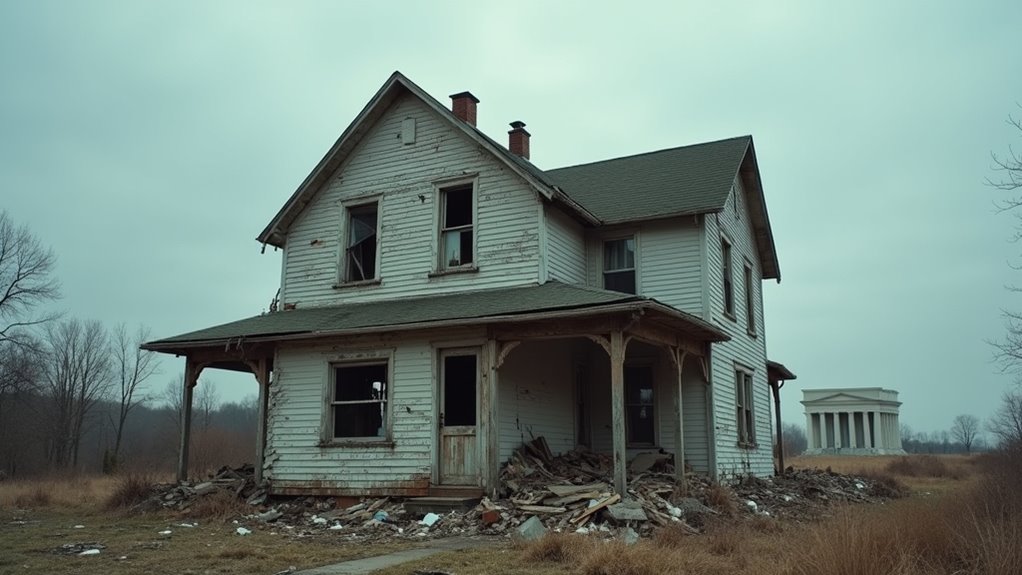
A Florida homeowner takes a stand against insurers, highlighting a troubling rise in denied claims and legal battles.
More than half of the disputes don’t even involve hurricanes. Instead, they revolve around everyday weather events: rain, flooding, high winds, and storms. In fact, the sheer volume of claims filed in 2023 showed that 5.3 percent of insured homes sought assistance. That’s a lot of folks dealing with damage, theft, and water issues, which can include mold problems. Yet, insurers are increasingly reluctant to pay up. Recent data indicates that more than 50% of recent cases involve losses due to climatic events. Additionally, this trend echoes the increasing financial burden on homeowners facing rising homeowners insurance premiums, as highlighted by recent legal actions against major oil companies.
The numbers are staggering. In 2024, Florida’s closed claims totaled nearly 700,000, with over 60,000 of those turning into litigated claims. That’s right—8.6 percent of claims went to court. The average loss-adjustment expenses (LAE) for those litigated claims skyrocketed to $12,701, while non-litigated claims managed to keep it down to a mere $1,778. Talk about a discrepancy!
And what’s the cost of this legal drama? A whopping $15 billion in indemnity paid for claims in 2024 alone. That’s serious cash. Yet, the median time for insurers to close claims stretched to 57 days. So much for quick resolutions. It’s clear that many insurers are living in a different reality, one where they can afford to delay payouts while homeowners are left in limbo.
With climate-related losses driving premiums sky-high, many homeowners are feeling the pinch. It’s no surprise, then, that the combined ratio for U.S. homeowners has exceeded 100 percent for five of the last six years.
And while the severity of claims is increasing, insurers seem to be tightening their belts, leading to more nonrenewals and cancellations for nonpayment.