
Design Highlights
- A North Dakota judge issued a $345 million judgment against Greenpeace, reduced from an initial $660 million, over Dakota Access Pipeline protests.
- The lawsuit accused Greenpeace of conspiracy, trespass, nuisance, and defamation related to their support for pipeline protests.
- Greenpeace argued that their actions were non-violent and aimed to support Indigenous-led protests, contesting the lawsuit as a SLAPP.
- The ruling raises concerns about free speech and Indigenous rights, with critics viewing it as an attempt to suppress activism.
- Greenpeace plans to appeal the decision to the North Dakota Supreme Court while continuing its advocacy for environmental justice.
In a staggering turn of events, a North Dakota judge has slapped Greenpeace with a $345 million judgment, a hefty reduction from the original jury award of over $660 million. Judge James Gion made the call on February 27, 2026, targeting Greenpeace International, Greenpeace USA, and Greenpeace Fund Inc.
So, what happened? Well, the jury found the evidence from Energy Transfer more credible. Shocking, right?
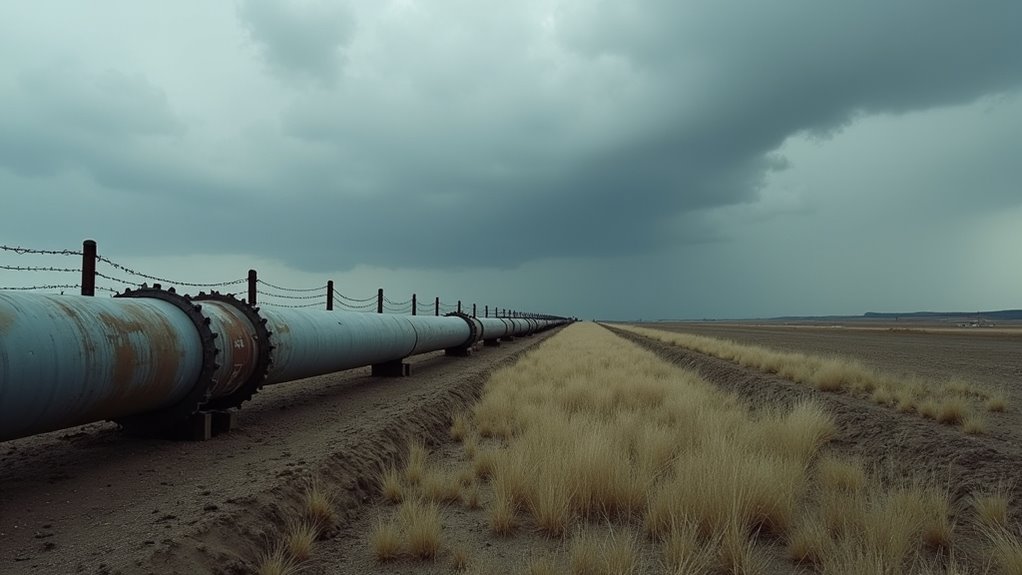
The lawsuit traces back to the 2016-2017 protests against the Dakota Access Pipeline, a massive 1,172-mile project that transports crude oil from North Dakota to Illinois. Indigenous groups led the charge, arguing that the pipeline threatened their water supply near the Standing Rock Sioux Tribe reservation.
Energy Transfer accused Greenpeace of orchestrating criminal behavior, claiming they trained protesters and provided financial support. A real “who done it?” scenario, but without the thrilling plot twist.
Energy Transfer’s accusations were serious: conspiracy, trespass, nuisance, tortious interference, and defamation. They claimed Greenpeace didn’t just sit back and watch; they allegedly organized protesters, sent supplies for blockades, and made untrue statements that hindered the pipeline’s construction and refinancing efforts. Talk about taking activism to a whole new level.
The jury trial wrapped up last year, and the verdict was delivered in March 2025, with Greenpeace USA found liable on all counts. Ouch.
Greenpeace, on the other hand, had a different story. They denied orchestrating anything and insisted they were merely supporting non-violent Indigenous-led actions. They argued that the lawsuit was a Strategic Lawsuit Against Public Participation (SLAPP) aimed at silencing free speech.
Their defense? They claimed there was no evidence linking them to any construction delays or criminal acts. But the court didn’t seem to buy it. Inflammatory evidence got admitted while their defense evidence was tossed out. Good luck winning a case like that.
Now, Greenpeace plans to seek a new trial and appeal to the North Dakota Supreme Court. They’re not going down without a fight. Meanwhile, Energy Transfer is feeling pretty smug, stating this isn’t about free speech—it’s about law violations.
The broader implications? This judgment could potentially bankrupt Greenpeace. Critics are calling it an attack on free speech and Indigenous rights, a corporate strategy to chill activism through litigation. The case is viewed as an erasure of Indigenous leadership in the ongoing struggle for environmental justice. Additionally, Greenpeace noted that the judgment could lead to potential bankruptcy due to their reliance on individual contributions for funding.
The pipeline itself? Still lacking full legal authority to operate as of 2026. So, what’s next? The battle is far from over, folks.