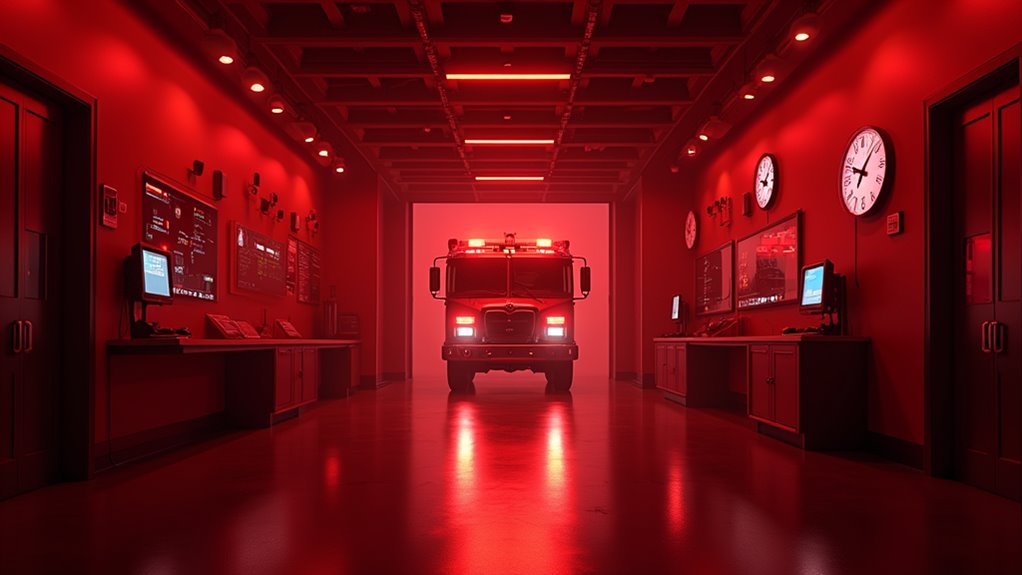

Design Highlights
- Gentle dispatch systems use soft-start alerting tones to reduce panic and improve response times for firefighters.
- Computerized voice announcements create calm communication, minimizing emotional stress during emergencies.
- Red ambient lighting helps avoid disorientation, fostering a more comfortable environment in firehouses.
- Adoption of these systems has shown significant health benefits, such as lower heart rates and reduced physiological stress among firefighters.
- Efficient dispatching with gentle alerts supports quicker response times while prioritizing firefighter well-being and focus.
In the high-stakes world of firefighting, where every second counts, the last thing responders need is a heart-pounding, ear-splitting alarm that sends them into a panic. You know, that classic blaring noise that jolts them awake and sends their heart rates skyrocketing? Yeah, not the best way to start an emergency response.
Enter the gentle firehouse dispatch systems, a major game-changer for those who rush into burning buildings while the rest of us are still hitting snooze.
Gentle firehouse dispatch systems are transforming emergency responses, ensuring firefighters wake up ready, not panicked.
These new systems rely on soft-start alerting tones that begin at lower volumes and gradually ramp up. It’s like a wake-up call that doesn’t feel like a slap in the face. The computerized voice announcements keep it cool and collected, delivering emergency info without emotional drama. No one needs a dispatcher who sounds like they’re auditioning for a horror movie.
Instead of blinding white lights, red ambient lighting creates a softer environment. Because who wants to be blinded while trying to save lives?
With multiple speakers spread throughout the station, the volume can stay low. It’s like having a personal concert instead of blasting music through one huge, overwhelming speaker. And those integrated computer-aided dispatch systems? They send call info directly to monitors, firefighter phones, and watches, making it faster and easier to get the scoop.
The health benefits are pretty impressive, too. Heart rates dropped from a median of seven beats per minute with traditional alarms to just five beats with these phased-volume systems. Loud alarms contribute to increased stress on the nervous system, meaning firefighters can focus better on what really matters—putting out fires, not freaking out over blaring alarms. Additionally, the physiological responses to sudden loud sounds can significantly disrupt their ability to respond effectively.
Plus, the potential for hearing damage is reduced since alerting tones operate at safer frequencies. Just as driving record impacts insurance premiums for those behind the wheel, a firefighter’s long-term health record can be significantly shaped by the cumulative stress of repeated exposure to jarring alarm systems.
Danbury, Connecticut, adopted this system across five stations, and Greensboro, North Carolina, is still basking in the praise two years later. Thousands of fire departments worldwide are hopping on this bandwagon. The Phoenix G2 system is just one of the many options making waves.
With quicker response times, automated dispatch alerting, and a solid two-minute response goal, these systems are not just about being gentle. They’re about efficiency, too. Firefighters deserve a dispatch that doesn’t add to their stress. Gentle alerting isn’t just a nice idea; it’s a lifesaver—literally.