
Design Highlights
- A powerful winter storm in the Northeast has led to over 1,800 flight cancellations by US airlines, disrupting holiday travel plans.
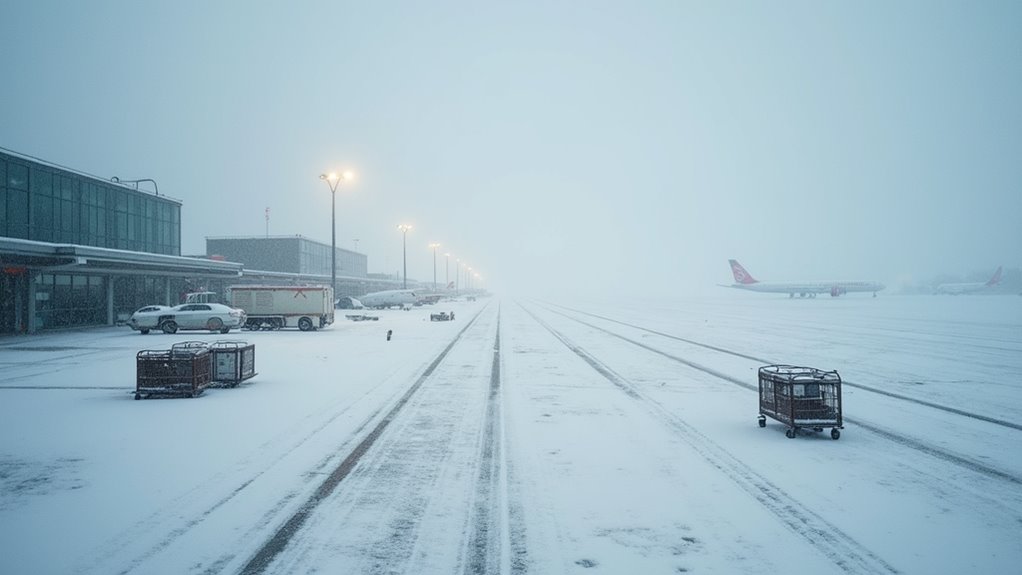
- Airports transformed into ghost towns as heavy snowfall and ice accumulation caused significant delays and suspensions in major travel hubs.
- Thousands of travelers found themselves stranded, facing long waits and crowded terminals, with many unable to secure alternative travel arrangements.
- Airlines prioritized passenger safety by preemptively canceling flights, but logistical challenges hindered the restoration of normal flight operations.
- Financial burdens increased for passengers, with trip cancellation claims constituting over 40% of paid claims, further dampening holiday spirit.
As travelers across the Northeast braced for the holiday rush, a powerful winter storm decided to crash the party, leaving chaos in its wake. With over 1,800 flights canceled by US airlines, the scene at airports was nothing short of a disaster movie. The storm, packing heavy snowfall and ice accumulation, turned once-busy terminals into ghost towns. Major airports in the region were hit hard, with delays and suspensions becoming the norm rather than the exception. It was, quite frankly, a perfect storm of holiday travel misery.
A powerful winter storm wreaked havoc in the Northeast, canceling over 1,800 flights and turning airports into ghost towns.
The weather conditions were rapidly deteriorating, making airport operations a nightmare. Airlines had to make the tough call to preemptively cancel flights, prioritizing passenger safety over schedules. But that didn’t stop the thousands of stranded travelers from feeling the brunt of it all. Instead of cozy family reunions, many faced long waits, crowded terminals, and the grim reality of managing alternate travel arrangements. Not exactly the festive scene anyone had in mind, right?
As the storm raged on, it became clear that the Northeast was the primary impact zone. Snow and ice blanketed key travel hubs, leaving chaos not just in the airports, but also rippling through surrounding airline routes. The airlines scrambled to manage logistical challenges, trying to restore operations while keeping a close eye on the weather. Spoiler alert: it wasn’t going well. Airlines preemptively canceled flights for passenger safety, resulting in a significant disruption to airline operations.
Travelers, already on edge during peak holiday travel, were left to cope with the impacts. Many found themselves stuck with canceled flights and no eligibility for compensation. Just think about that for a second—stuck in an airport, no money back, and no clear path forward. Merry Christmas, right? With trip cancellation accounting for over 40% of paid claims, having proper coverage could have made a significant difference for many stranded passengers.
Authorities and airlines were in emergency mode, collaborating on recovery efforts and emphasizing communication. Updates were flying out, urging passengers to check their flight statuses. Yet, for many, the holiday spirit had dimmed under the weight of snow. Flexible planning? More like “good luck with that.”
In the end, this furious winter storm didn’t just disrupt air travel; it put a damper on holiday cheer. A stark reminder that while everyone dreams of a white Christmas, sometimes it turns into a nightmare at the airport.