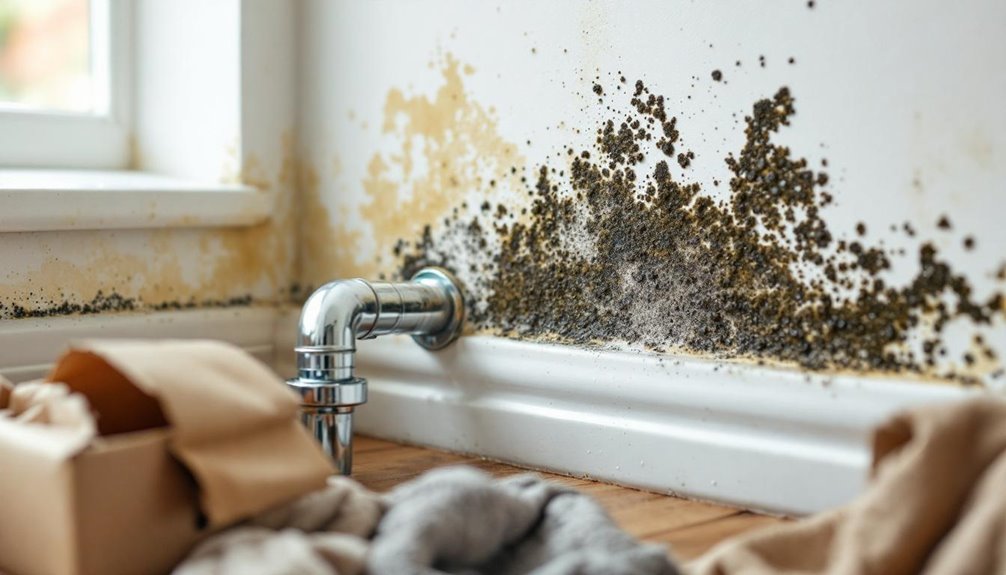

Renters insurance covers mold damage, but only if it results from a sudden, accidental event like a burst pipe or storm damage. Gradual mold from poor ventilation or long-term leaks? Not covered. Neglect or shoddy maintenance? Definitely excluded. The policy protects personal belongings damaged by covered events, not structural issues—that’s the landlord’s problem. Most policies cap mold claims, and some nasty varieties like black mold might need extra coverage. Timing matters too, since delayed discovery raises red flags. There’s more to this moldy situation than meets the eye.
Design Highlights
- Renters insurance covers mold only if it results from a covered peril like burst pipes, fire, or storm damage.
- Mold from gradual leaks, poor ventilation, neglect, or lack of maintenance is excluded from coverage.
- Coverage applies to personal belongings damaged by mold, not structural damage, which is the landlord’s responsibility.
- Policies often cap mold claims; additional endorsements may be needed for comprehensive protection or specialty mold types.
- Tenants must report water damage promptly and maintain proper ventilation to avoid claim denials due to negligence.
Mold—it’s the unwanted houseguest nobody asked for, and dealing with it through renters insurance gets complicated fast. The basic rule? Coverage exists only when mold results from a covered peril explicitly listed in the policy. Think burst pipes, accidental appliance leaks, fire, wind, or storm-related water damage. If mold shows up directly because of one of these sudden events, there’s a chance the policy kicks in. But gradual mold growth creeping along without a triggering event? That’s a hard no.
Renters insurance covers mold only when it stems from sudden, covered events—not from gradual growth or neglect.
What actually gets covered matters too. Renters insurance protects personal belongings—furniture, clothing, electronics—not the building itself. Structural mold damage falls squarely on the landlord’s insurance, not the tenant’s. So if mold ruins a couch after a pipe bursts, the policy might reimburse repair or replacement costs, minus the deductible. If the unit becomes uninhabitable during remediation, additional living expenses could be covered under Loss of Use provisions. That’s hotel bills and meals, basically.
The exclusions list reads like a cautionary tale. Mold caused by neglect, poor maintenance, long-term leaks, or lousy ventilation? Excluded. External flooding and storm surge mold damage typically aren’t covered unless separate flood insurance exists. Some policies even cap mold-related claims or require special endorsements for full protection. Black mold and other specialized types might need extra coverage entirely. Mold from sewage backup requires an additional endorsement to the policy for coverage consideration.
Timing matters more than people realize. Sudden, accidental water damage incidents trigger coverage. Gradual moisture buildup from unresolved issues results in claim denials. Delayed mold discovery after extended absence—like summer vacation—complicates things further because insurers scrutinize whether the damage was truly sudden or preventable through proper maintenance.
Landlord versus renter responsibilities create another layer of confusion. Mold on structural elements or permanent fixtures belongs to the landlord’s problem list. Tenants must maintain proper ventilation and report water damage promptly. Mold from landlord negligence might justify landlord liability for remediation. But mold stemming from tenant neglect? That’s on the renter, and insurance won’t help.
Reimbursement stays limited to personal property coverage limits. Preventive mold remediation costs might get covered if prompted by sudden damage from a covered peril. But don’t expect blank checks. Policies impose caps, deductibles apply, and claim approval depends heavily on proving the mold originated from a covered event rather than maintenance failures. Cleaning of personal property becomes a viable option when mold damage stems from an approved claim scenario. Most policies require tenants to pay out of pocket first and then submit a claim for reimbursement of covered mold-related expenses.
The takeaway? Renters insurance offers selective mold protection tied strictly to sudden, covered events affecting personal belongings. Everything else—neglect, gradual buildup, structural issues—falls outside coverage boundaries. It’s conditional, limited, and requires documentation proving the mold’s origin story.
Frequently Asked Questions
How Much Does Renters Insurance Typically Cost per Month?
Renters insurance runs about $14 to $18 monthly on average in 2025, which breaks down to roughly $170 to $216 yearly. Not bad, honestly.
Location matters big time—North Dakota residents pay around $114 annually while Mississippi hits $222. Coverage amount, deductible choice, and local risk factors like crime and weather drive the price.
Some cities like LA average $21 monthly but range wildly from $9 to $35 depending on the insurer.
Can I File a Mold Claim if I Caused the Damage?
No. If a tenant caused the mold damage through negligence, their renters insurance won’t cover it. Period.
Insurance companies don’t pay out when someone ignores a leaking shower, leaves windows open during rainstorms, or fails to report water damage. That’s considered poor maintenance, not an accident. The claim gets denied.
Coverage only kicks in when mold results from a covered peril—like a burst pipe—not from someone’s failure to take basic care of their rental.
What Documentation Do I Need to File a Mold Damage Claim?
Filing a mold claim requires solid proof. Start with photos and videos of the damage before cleanup begins. Document how it happened—burst pipe receipts, maintenance requests, that sort of thing.
Make an inventory of ruined stuff with values. Get a certified mold inspector’s report and remediation estimates from licensed contractors. Include all repair receipts and communications with the landlord.
The insurance company wants evidence showing the mold came from a covered peril, not neglect.
Does Renters Insurance Cover Mold in Storage Units?
Renters insurance typically doesn’t cover mold in storage units. Period.
Most policies exclude mold and mildew damage outright. The only exception? If mold results from a covered peril, like a sudden pipe burst.
But gradual moisture buildup or humidity issues? Forget about it. Those claims get denied fast.
Anyone wanting protection against mold damage needs separate mold or flood insurance. Standard renters policies just won’t cut it for storage unit mold situations.
How Long Does a Mold Damage Claim Take to Process?
A mold damage claim typically takes a few weeks to two months to fully process.
The timeline depends on how quickly the insurer investigates, confirms coverage, and schedules remediation. Initial reviews happen within days, but the whole shebang—investigation, approval, actual cleanup, and final payment—stretches things out.
Complicated cases drag longer, especially when landlord negligence muddies the waters. Delays happen when documentation’s incomplete or contractors are booked solid.
Bottom line: expect at least a month, maybe more.