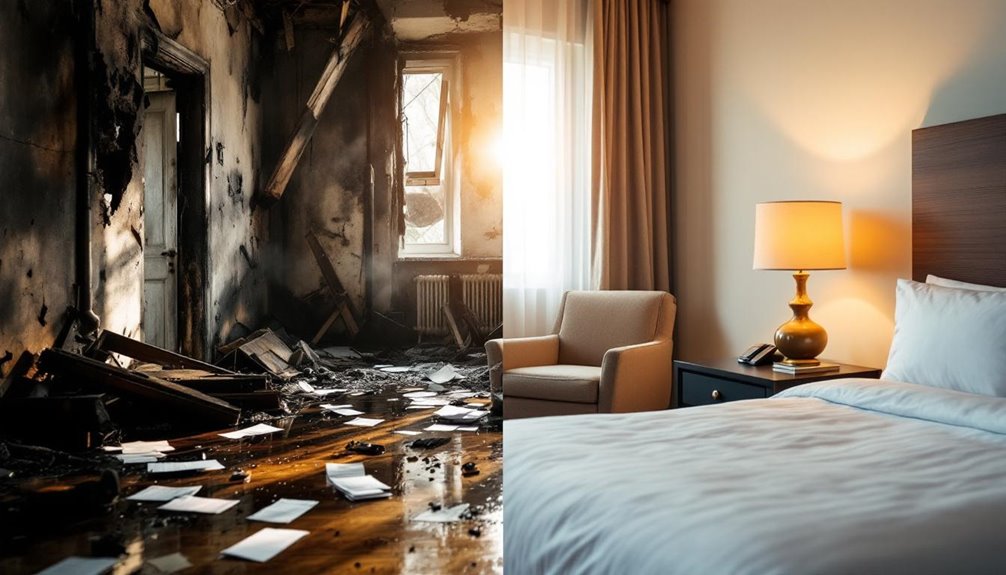

Yes, renters insurance covers hotel stays when a covered peril makes your apartment uninhabitable. Fire damage, burst pipes, vandalism—these disasters trigger “loss of use” coverage that pays for temporary accommodations. The insurance won’t cover routine maintenance issues or luxury hotel suites, but it handles reasonable expenses while your place gets repaired. Policyholders pay upfront, keep receipts, and file claims for reimbursement. Coverage stops once the apartment becomes livable again. Understanding policy limits and documentation requirements makes the difference between sleeping comfortably and scrambling for shelter.
Design Highlights
- Renters insurance covers hotel stays under “loss of use” when covered perils like fire or burst pipes make your rental uninhabitable.
- You must pay hotel costs upfront, keep all receipts, and file a claim with documentation for reimbursement.
- Coverage includes reasonable accommodations only, not luxury hotels, and ends once your rental unit becomes livable again.
- Additional expenses like meals, laundry, pet boarding, and storage fees may also qualify for reimbursement during displacement.
- Confirm coverage details with your insurance agent before booking and ensure damage qualifies as a covered peril under your policy.
When a rental unit becomes uninhabitable—think fire, burst pipes, or storm damage—renters insurance can step in to cover temporary hotel stays. This falls under what insurers call “loss of use” or “additional living expenses” coverage.
But here’s the catch: the damage has to be from a covered peril, and the place actually has to be unlivable. No luxury vacations disguised as displacement.
Covered perils typically include fire damage, water damage from burst pipes, vandalism, theft that renders the unit uninhabitable, and storm-related destruction.
Fire, burst pipes, vandalism, and storms typically qualify—sudden disasters that make your rental genuinely unlivable, not just uncomfortable.
Basically, sudden and unexpected disasters that make staying in the rental impossible or unsafe. What doesn’t count? Routine maintenance, landlord-initiated repairs, or that annoying power outage from the grid failing three blocks away.
The rental has to be genuinely uninhabitable, not just inconvenient.
The coverage comes with limits, naturally. Most policies cap loss of use as either a dollar amount or a percentage of personal property coverage.
Translation: there’s a ceiling on what the insurer will pay per claim. And no, they won’t bankroll a five-star resort stay. Accommodations need to be comparable to the rental unit—reasonable, not extravagant.
Only expenses above normal living costs get reimbursed anyway.
Hotels and motels are the obvious choices, but short-term apartment rentals or Airbnb stays might qualify too.
The insurer may need to approve the accommodation first. Vacation resorts? Forget it. This isn’t a free holiday.
Beyond the hotel room itself, additional living expenses might include restaurant meals if there’s no kitchen access, laundry services, storage fees for displaced belongings, pet boarding costs, and increased transportation expenses from the temporary relocation.
Not everything, but more than just the bed. Policies may even reimburse food loss in refrigerators during power outages or appliance failures resulting from covered events.
The reimbursement process requires patience.
Policyholders pay upfront, keep receipts, and file a claim. Reimbursement happens after approval, covering only expenses incurred while the rental remains uninhabitable.
Once the place is livable again, coverage stops. No dragging it out for extra hotel nights.
Filing a claim is mandatory before any reimbursement begins. Documentation matters—receipts, photos, reports.
The insurer needs proof the damage happened and that expenses were necessary. Policyholders should confirm coverage details with their insurance agent regarding specific hotel choices before booking anything.
Bottom line: renters insurance can cover hotel stays when disaster strikes and makes the rental unlivable.
But coverage applies strictly to legitimate emergencies from covered perils, not routine hassles. Keep in mind that the landlord’s insurance won’t protect tenants’ belongings or cover their temporary housing costs, which is why having renters insurance proves essential.
Know the policy limits, keep receipts, and understand what qualifies.
It’s not a blank check, but it beats sleeping in a car.
Frequently Asked Questions
How Long Can I Stay in a Hotel With Renters Insurance Coverage?
Loss of use coverage typically runs until repairs are done or the policy’s time limit hits—whichever comes first.
Most policies cap it at 12 or 24 months. The clock stops when the rental becomes livable again, even if there’s time left.
Some insurers add dollar limits too, often tied to personal property coverage percentages.
Every policy’s different, so checking the fine print matters. It’s not unlimited, despite what anyone might hope.
Does Renters Insurance Cover Hotel Meals During Displacement?
Yes, renters insurance typically covers hotel meals during displacement through additional living expenses (ALE) coverage.
But here’s the catch—it only reimburses costs *above* what someone normally spends on food. So if they usually drop $50 daily on takeout, they can’t claim that.
The displacement must stem from a covered peril like fire or vandalism. Insurers want receipts, won’t pay for lavish steakhouse dinners, and cap reimbursements based on policy limits.
Keep it reasonable.
What Documentation Do I Need to File a Hotel Claim?
The paperwork pile is real.
First up: the official claim form from the insurer. Then proof of what went wrong—fire department reports, police reports, whatever fits.
Hotel receipts showing dates and costs are mandatory. The landlord needs to confirm the place is actually uninhabitable in writing.
Credit card statements backing up those receipts help too. Photos of the damage seal the deal.
Basically, document everything or expect pushback from the insurance company.
Can I Choose Any Hotel or Are There Coverage Limits?
No free pass to the Ritz, unfortunately. Hotels must match the insured’s normal living situation—comparable price and amenities. Luxury suites? Not happening.
Most insurers require pre-approval and only cover the difference between regular rent and hotel costs. They’re looking for reasonable accommodations, not vacation upgrades.
Pick something extravagant without approval, and good luck getting reimbursed. Coverage limits apply, typically 20-30% of personal property coverage.
The insurer sets the boundaries, not the displaced renter’s five-star dreams.
Does Renters Insurance Cover Hotel Stays for Pest Infestations?
Nope. Most renters insurance won’t cover hotel stays for pest infestations—unless the bugs or rodents cause actual structural damage or trigger a covered peril.
Think rodents chewing through wires and starting a fire. That might qualify. But a roach problem or bedbug scare? Just an inconvenience.
The unit has to be legitimately uninhabitable due to a covered event. Policies vary by insurer, so some severe cases might get limited coverage.
Generally though, pests alone won’t cut it.