Design Highlights
- In 2025, 23 billion-dollar weather disasters occurred in the U.S. despite no hurricanes making landfall.
- Severe storms accounted for 21 out of 23 disasters, with tornadoes, hail, and high winds causing $115 billion in damages.
- Three Category 5 hurricanes formed but remained in the Atlantic, preventing significant U.S. impact.
- The gap between billion-dollar disasters has decreased significantly, averaging 16 days in 2025 compared to 82 days in the 1980s.
- Climate change is intensifying storm systems, leading to increased frequency and severity of weather-related disasters.
In a shocking twist, 2025 saw a staggering 23 billion-dollar weather disasters in the U.S., yet not a single hurricane made landfall. You read that right. Not one. It’s almost like the weather was playing a cruel joke. While the Atlantic churned out three Category 5 hurricanes, those storms decided to skip the U.S. entirely.
In an unprecedented twist, 2025 brought 23 billion-dollar disasters, yet the U.S. dodged all hurricanes.
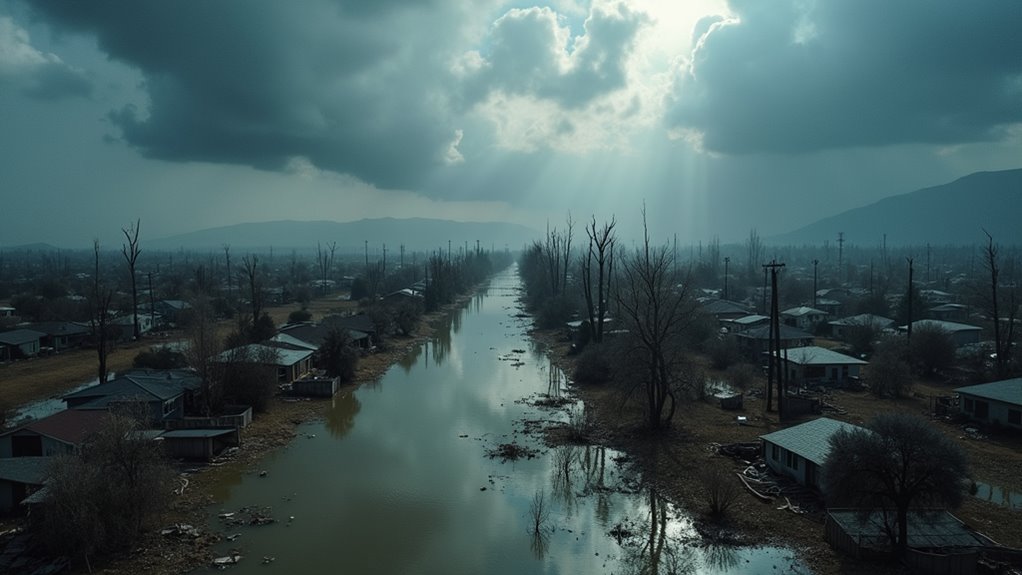
Instead, the nation was battered by tornadoes, hail, and high winds, resulting in a shocking $115 billion in damages and the tragic loss of 276 lives. Imagine that. A billion-dollar disaster striking every ten days. It’s like clockwork, only instead of a watch, everyone just got a reminder of how fragile life can be. The year ended up being the third-highest on record for billion-dollar weather disasters.
And yet, while the skies were angry, they somehow spared the U.S. from hurricane chaos. That’s a twist worthy of Hollywood. Meteorological conditions, a quirky atmospheric anomaly over the Southeastern states, acted like a force field, deflecting storms out to sea. Lucky break, right? Had those Category 5 storms made landfall, experts estimate damages could have hit a staggering $215 billion.
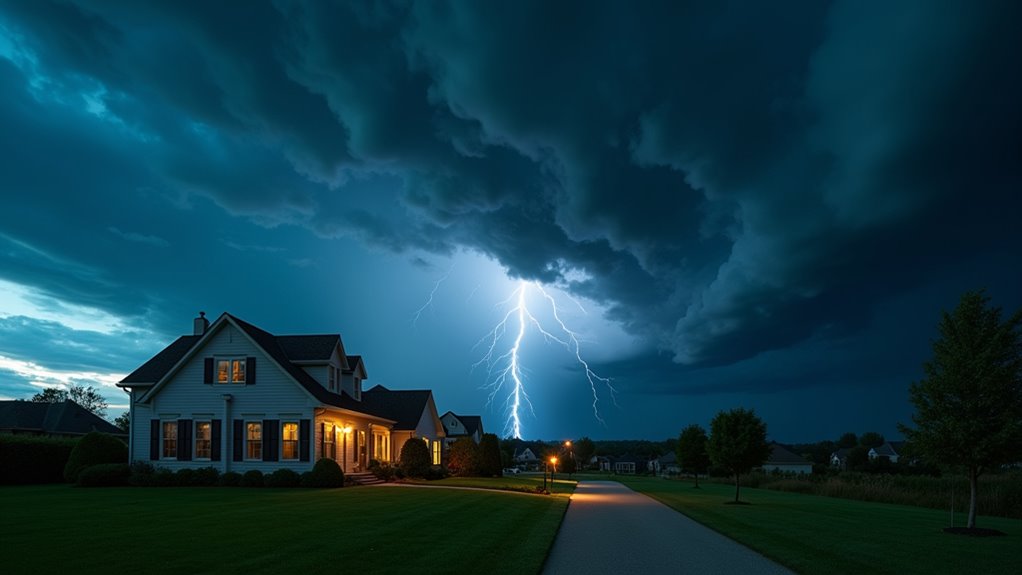
Instead, they ended up just swirling harmlessly in the Atlantic. But let’s not kid ourselves; no landfall doesn’t mean the risk just vanished. Tropical storms are still a ticking time bomb. Of the 23 disasters, 21 were tied to severe storms. Hailstorms wreaked havoc in Texas and Colorado, while other regions faced the wrath of high winds.
It’s like Mother Nature was sending a message: “I may not be hurling hurricanes at you, but I’m still here, and I’m not happy.” The frequency of these billion-dollar disasters has been accelerating. Back in the 1980s, the average gap between billion-dollar disasters was 82 days. Now it’s down to just 16. That’s a significant uptick.
Over the last decade, disasters have killed over 6,300 people and resulted in about $1.4 trillion in damages. Severe weather events are increasingly becoming the leading cause of these disasters, with 91% of the billion-dollar events in 2025 being attributed to such phenomena. Climate change continues to exacerbate the situation, leading to more intense and frequent storms. It’s a vicious cycle, and communities have less time to prepare. The storm systems are intensifying, weakening more slowly inland, and causing damage over wider areas.
The built environment in hazardous areas isn’t helping either, just racking up those costs. Much like how pre-existing conditions can’t increase your health insurance costs under the Affordable Care Act, the pre-existing vulnerabilities in our infrastructure don’t reduce disaster damages—they amplify them. The future looks stormy, and not in a good way.