
Design Highlights
- Car warranties cover mechanical failures, while car insurance protects against accidents, theft, and external damages.
- Warranties do not cover wear-and-tear or routine maintenance, unlike insurance, which addresses various types of damage.
- Understanding the duration and renewal terms of both protections is crucial to avoid coverage lapses.
- Fine print in warranties and insurance policies often contains exclusions that can lead to unexpected costs.
- Confusing these protections can result in significant financial surprises, especially when accidents occur after warranty expiration.
What’s the difference between a car warranty and car insurance? A lot, actually. Yet, many drivers mix them up. Insurance is your safety net for accidents, theft, or a hostile encounter with a tree. It’s mandatory in most states. You crash your car? Insurance covers it. A tire gets slashed? Insurance to the rescue. But if your engine suddenly decides to throw in the towel? Well, that’s a whole different ballgame.
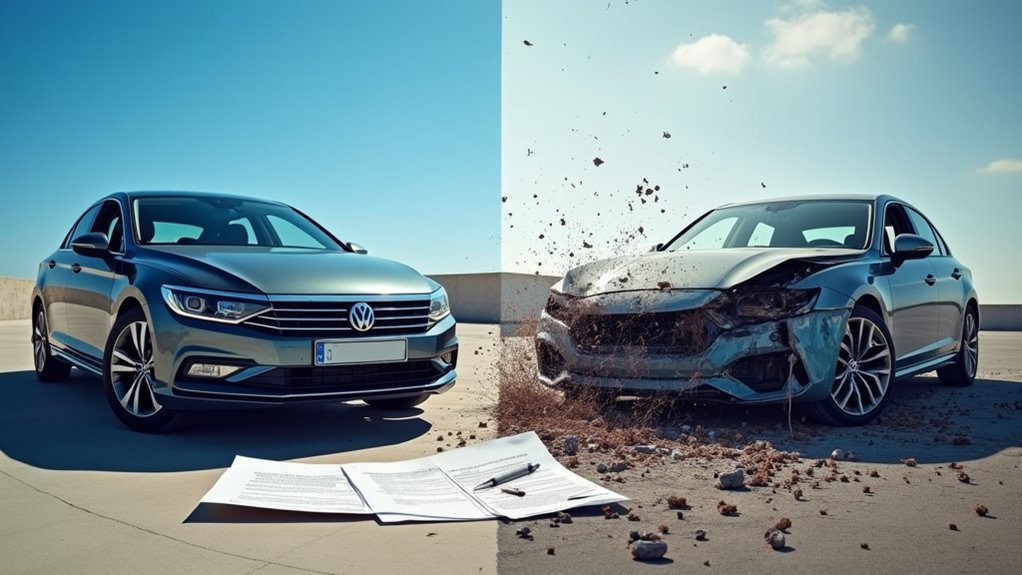
Car insurance is your safety net for accidents and theft, while a warranty covers mechanical failures—two totally different players in the game.
Car warranties? They’re like that friend who promises to fix your broken stuff. They cover mechanical breakdowns and defects. Think of a warranty as your car’s “get out of jail free” card for parts that fail due to manufacturing issues. But guess what? It doesn’t cover wear-and-tear or those routine oil changes. You’re on your own for that.
Insurance comes with a buffet of coverage types: liability, collision, extensive—you name it. If someone rear-ends you, your insurance has your back. But if your car decides to malfunction, too bad. Warranties don’t kick in for accidents or external damage. They’re strict about it. And don’t even think about getting a warranty to replace your insurance. They don’t overlap. They cover different risks. It’s not that complicated, folks. Your driving record and location can significantly influence how much you pay for that coverage, so it pays to shop around.
Now, let’s talk duration. Insurance is renewable every 6-12 months, while most warranties last around 3 years or 36,000 miles. Some warranties stretch longer, but good luck figuring out when yours expires. Spoiler alert: Missing that expiration can lead to some nasty surprises. Additionally, warranties may come with age and mileage restrictions that could limit coverage based on how long you’ve owned the vehicle. Insurance provides financial protection in accidents, making it crucial for all drivers.
And the exclusions? Oh boy. Insurance won’t touch mechanical failures or wear items like brake pads. Warranties? They’ll leave you hanging if you try to file a claim for damage from an accident. The fine print can be a minefield. Forget to read it? You might as well be throwing your money down the drain.