Design Highlights
- Assembly Bill 2647 aims to exempt advanced reactor designs from California’s longstanding nuclear moratorium, reflecting a shift in regulatory attitudes.
- Diablo Canyon, producing significant zero-carbon electricity, is pivotal to California’s energy supply and has received support for operational extensions.
- A bipartisan coalition, including labor and environmental groups, is emerging to back the modernization of California’s nuclear energy policies.
- Recent approvals for waste discharge permits at Diablo Canyon indicate potential for extended operations, despite conflicting local initiatives against nuclear energy.
- California’s ambitious clean energy goal of 100% by 2045 is driving renewed interest in nuclear energy as a sustainable solution.
California’s long-standing nuclear ban, a relic from 50 years ago, is finally showing signs of cracking. The Assembly Bill 2647, spearheaded by Lisa Calderon, aims to exempt advanced reactor designs from the state’s nuclear moratorium. That’s right, folks. California, one of only 12 states with such restrictions, is considering a shake-up. This bill targets reactors licensed by the Nuclear Regulatory Commission after January 1, 2005, and it cleverly removes some regulatory barriers without actually forcing anyone to put their money where their mouth is. Isn’t that nice?
This nuclear moratorium was enacted by California voters decades ago, a time when the idea of nuclear energy had more than a few skeptics. Back then, folks wanted a verifiable high-level waste disposal strategy before even thinking about new plants. Fast forward to today, and critics are calling the ban outdated. And who can blame them? With a looming clean energy target of 100% by 2045, the state can’t afford to keep looking backward.
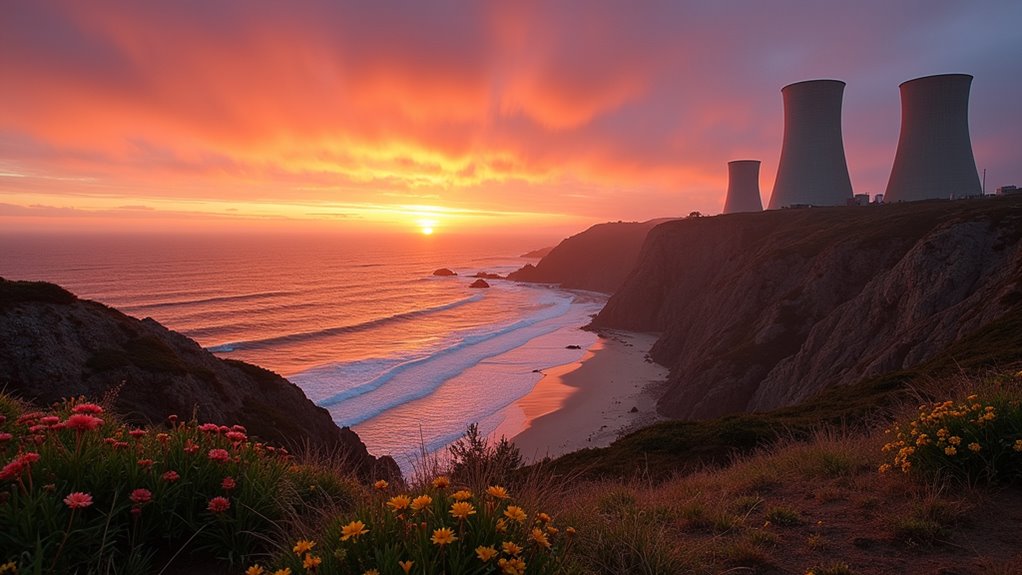
Now, let’s talk about Diablo Canyon. This facility generates a whopping 2,240 megawatts of zero-carbon electricity, accounting for nearly 9% of the entire state’s electricity. Diablo Canyon provides 17% of the state’s zero-carbon electricity supply, highlighting its pivotal role in California’s energy landscape. Governor Newsom signed an extension for this powerhouse to keep running through 2030. Yep, it seems like California is just as torn as a teenager deciding whether to go to prom or stay home binge-watching Netflix. Even PG&E is in on this, filing for a 20-year license renewal. Meanwhile, the legislation reflects a broader nuclear energy movement across the country aimed at modernizing outdated regulations.
Recent permitting advances have also cleared some significant hurdles. The Central Coast Water Board approved waste discharge permits, allowing the facility to renew its license through 2045. But here’s the kicker: the state law caps operations at 2030, even though there’s an interest in extending that. Talk about mixed signals. With nursing home rates in California having increased over 5% annually for the past 20 years, planning for long-term energy infrastructure becomes even more critical as aging facilities require significant financial commitments.
There’s a growing bipartisan coalition supporting this nuclear renaissance. Calderon leads the charge, with support from some Democrats and even a Republican. Labor, environmental, and academic groups are all on board, echoing a national trend toward modern clean energy goals. Meanwhile, local initiatives like the Nuclear Free Berkeley Act are trying to keep the ban alive, but they’re facing stiff competition.