Aging in place shouldn’t feel like negotiating a minefield. Clear hallways, rearrange furniture, and fix those pesky carpets to eliminate trip hazards. Lighting? More is better. Seniors need brighter bulbs—think stadium lighting for safety. Add grab bars and handrails; they’re not just for show. Oh, and don’t forget non-slip mats in wet areas. It’s all about reducing risks without turning homes into obstacle courses. Want to uncover more strategies? There’s plenty to explore.
Design Highlights
- Remove trip hazards by keeping hallways and stairs clear, fixing carpets, and securing cords to create safe walking pathways.
- Enhance lighting with higher lumen bulbs and layered fixtures to meet seniors’ visibility needs and reduce glare in high-traffic areas.
- Install support features like grab bars, handrails, and non-slip mats to provide stability and reduce slip risks in bathrooms and stairways.
- Prioritize modifications in high-risk areas such as bathrooms and stairs, ensuring they are well-lit and free of obstacles at all times.
- Utilize home equity loans for safety upgrades and recognize that small changes can lead to insurance discounts and improved overall safety.
How to Remove Trip Hazards for Safer Movement
To make homes safer, removing trip hazards is a must. Seriously, clutter is a villain.
Hallways, stairs—they should be clear, not obstacle courses. Books, shoes, clothes? They don’t belong on the floor. Furniture needs to play nice too, leaving those walking routes wide open.
And let’s talk rugs. If it can slide, toss it. Fix carpets to the floor—no one wants a surprise faceplant.
Cords and wires? Out of sight, out of mind. They don’t belong in walkways; they’re just waiting to trip someone.
Stairs should be free of junk, and handrails? Essential, folks. Remember, more than one in four people aged 65 years or older fall each year, so keeping pathways clear is crucial!
Funding these safety upgrades doesn’t have to be a financial stretch—homeowners sitting on significant equity can tap into home equity loans starting at rates around 7.97%, far below what credit cards typically charge.
Enhancing Movement With Better Lighting
Bright lights aren’t just for disco parties; they’re essential for safe movement at home, especially for seniors. Aging eyes? They need 2–3 times more light than younger folks. Yes, really. Higher lumen bulbs or extra fixtures can turn dim corners into bright havens.
Bright lights are crucial for seniors at home; they need 2–3 times more light. Illuminate those dark corners!
Forget one central fixture; layered lighting is key. Ambient, task, and accent lighting work together like a well-rehearsed band. Well-lit high-traffic areas and hazards increase visibility to reduce the risk of injury. Proper lighting also supports good balance, which is crucial for maintaining stability while moving.
Hallways and stairs? They shouldn’t be dark mazes. Motion-activated lights and step lighting make all the difference. Glare is a no-go—indirect lighting keeps things smooth and easy on the eyes.
Finally, match light quality to tasks. Reading, cooking, grooming—these all benefit from focused, well-placed lighting. Small, incremental improvements to home safety—like upgrading lighting—can translate into insurance premium discounts when paired with broader home resilience measures. Because who needs more falls in their life?
Install Support Features for Better Balance
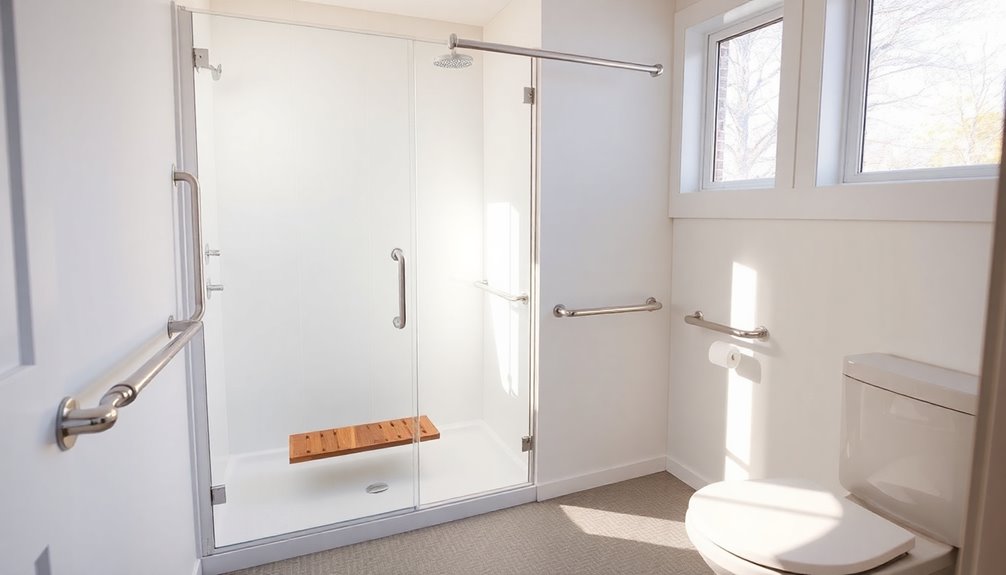
In the quest for stability at home, installing support features is a game changer. Grab bars? Absolutely essential. They’re lifesavers during tub entries and toilet transfers. Handrails on both sides of stairs? A no-brainer. They help prevent that heart-stopping moment when balance wavers. And let’s not forget non-slip mats and flooring; they’re like insurance against slips in wet areas.
Shower chairs and raised toilet seats? Game on—who wants to risk a slip while bathing? Alongside these features, remember that inner ear problems can affect balance, making these installations even more crucial. Additionally, making small environmental adjustments can significantly reduce fall and injury risk, enhancing overall safety.
Cluttered walkways? Clear that mess out! Reflective tape on stairs? Genius! It catches the eye when vision isn’t what it used to be. Upgrading to curbless walk-in showers removes a common tripping hazard and significantly reduces fall risk in one of the most dangerous rooms in the home.
Install these features where they matter most. When it comes to safety, every little detail counts. No one wants to go down like that.