
Design Highlights
- Long-term care costs can exceed $10,000 per month, significantly impacting family budgets and savings.
- Private nursing home rooms average $10,646 monthly, with costs projected to rise substantially over the years.
- About 70% of seniors will require long-term care, often leading to unexpected financial burdens for families.
- Home care costs can escalate quickly, currently averaging $66,000 annually, with a projected 7.9% annual increase.
- Regional disparities in care costs can wipe out decades of savings, leaving families financially exposed.
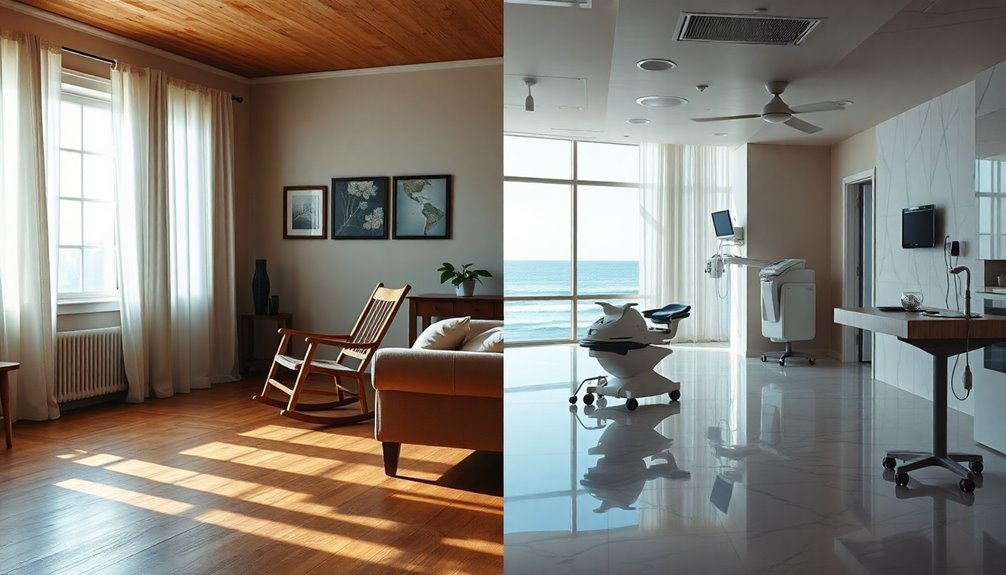
The harsh reality of long-term care costs looms large over many families. Imagine staring down a bill that could exceed $10,000 a month. Sounds like a nightmare, right? In 2024, a private nursing home room averages a staggering $10,646 each month. A semi-private room is only slightly cheaper at $9,277. Sure, you could opt for assisted living for a mere $70,800 per year, but who has that kind of cash just lying around?
The staggering reality of long-term care costs can hit families hard, with bills soaring to over $10,000 a month.
Families are often blindsided by this “$10,000-a-month problem.” It’s easy to think home care is a budget-friendly alternative. But, if you need a full-time home health aide, at $34 an hour, the costs can pile up just as fast. A few hours here and there? No biggie. But soon, those hours turn into a hefty monthly sum that can rival nursing home costs. In New York, average annual nursing home costs hover around $159,000. Home care isn’t much better, averaging about $66,000. Additionally, the projected rise in home health aide rates could reach $50 per hour by 2060.
Here’s the kicker: about 70% of seniors are expected to need some form of long-term care, and women tend to need care longer than men. Three years in a private nursing home? You’re looking at roughly $350,400. Need in-home care instead? That’s still about $226,512. Talk about a financial black hole.
And as if that wasn’t enough, inflation is a cruel joke. Nursing home costs rose by 7% for semi-private rooms and 9% for private ones just this year. Assisted living jumped 10%. Home care is following suit with a 7.9% annual increase. So, if you think you can delay planning, think again. The longer you wait, the higher those costs climb. In 20 years, a nursing home bill could skyrocket to nearly $186,000, reflecting the impact of inflation.
Geography adds another layer of complexity. Costs vary drastically. In Texas, you might pay around $190 a day, while in Alaska, it could hit over $1,000. It’s like a cruel game of “where’s the most expensive nursing home?” Families caught off guard by these regional disparities often discover too late that operating without a financial safety net can result in significant financial exposure that wipes out decades of savings.
Most Americans are in denial. Who can dish out $100,000 for a year of care? According to a KFF survey, 90% say it’s impossible. The reality is harsh and unforgiving, and families are left to pick up the pieces.