
Design Highlights
- Ukraine’s military actions in the Black Sea have led to a dramatic rise in war-risk insurance premiums for vessels operating in the region.
- Insurance rates for Black Sea ports have increased over 250%, significantly impacting shipowners’ financial viability.
- Shipowners are reevaluating shipping strategies, often delaying voyages or rerouting to mitigate high insurance costs.
- The increased premiums contribute to elevated freight rates, complicating the transportation of essential commodities like grain and oil.
- Underwriters are adopting conservative pricing models, reflecting rising claims risks and stricter coverage terms amid ongoing regional conflicts.
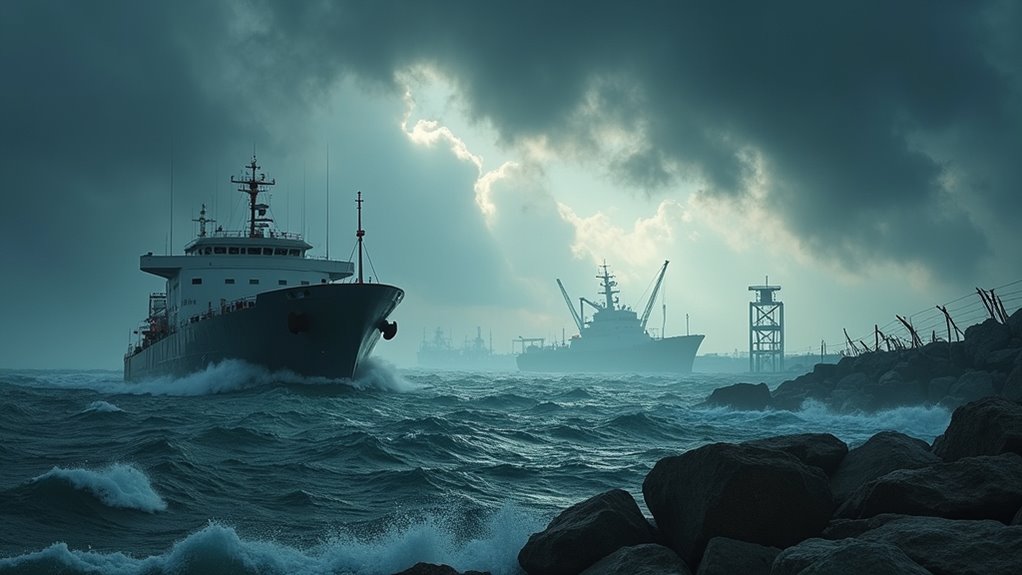
As Ukraine ramps up its attacks on Black Sea vessels linked to Russia, the maritime insurance landscape is in complete disarray. War-risk insurance premiums have skyrocketed, leaving shipowners clutching their wallets. Once upon a time, premiums hovered around a modest 0.25%-0.3% of a ship’s value. Now? They’ve been blasted up to as high as 1% for some Ukrainian and Russian Black Sea ports. That’s a leap of over 250%. Talk about a financial punch in the gut!
Underwriters wasted no time in raising rates. They reacted swiftly to the escalating threats from ongoing regional maritime conflicts. With each attack, insurance premiums seem to morph into a game of musical chairs—only, when the music stops, someone’s always left standing with an empty pocket. The increased war risk insurance is pushing shipowners to rethink their strategies and consider alternative routes.
Underwriters are quick on the draw, raising rates as maritime conflicts escalate—it’s a game of musical chairs with empty pockets waiting.
These shifts are hitting both cargo shipping and tanker insurance hard, which means everyone from grain exporters to oil traders is feeling the pressure. Higher insurance premiums don’t just make life expensive; they alter shipping operations entirely. Shipowners are looking at inflated costs and thinking twice about sailing into Black Sea ports.
Some are even rerouting their ships or delaying voyages, all to avoid those nasty spikes in insurance expenses. Yes, that’s right, the cost of moving essential commodities like grain and oil is climbing, thanks to these insurance hikes. Welcome to the world of elevated freight rates and supply chain headaches.
Marsh, the big cheese of insurance brokerage, has been watching this unfold. They provided insights on the dramatic shifts in war-risk insurance rates. Brokers are on high alert, monitoring the landscape as Ukraine’s military actions take center stage. They know that as the risk changes, so do the premiums. Regional variations in insurance costs have always existed, but the Black Sea conflict has amplified disparities to unprecedented levels. This isn’t just about numbers on paper; it’s about real-world consequences affecting maritime operations.
Insurance rate increases are especially pronounced in both Ukrainian and Russian-controlled ports, with premiums surging in conflict zones. The stakes are high, and the unpredictability of military actions is sending shockwaves through the insurance market. Russian military is considering action in response to attacks on tanker fleets, which further complicates maritime operations.
Underwriters are wrestling with rising claims risks and are adopting more conservative pricing models—this means higher premiums and tighter coverage terms. As marine insurers recalibrate their risk assessments, the future of shipping in the Black Sea looks more uncertain than ever. Buckle up; it’s going to be a bumpy ride.