
Winter can be brutal, especially for seniors. Hypothermia is no joke—it causes about 600 deaths annually, mostly among folks 65 and older. Avoiding falls on ice? Big priority. Take short steps and rock those nonskid shoes. And fire safety? Keep heaters three feet from curtains—seriously. Carbon monoxide is a silent killer; install alarms, and keep an eye on symptoms. Finally, be storm-ready; stock up on essentials. Want more ways to stay alive this winter? Keep going.
Design Highlights
- Dress in layers, including hats and mittens, to maintain warmth and prevent hypothermia during colder months.
- Use nonskid shoes and take short, careful steps to avoid falls on icy or snowy surfaces.
- Keep space heaters away from flammable items and ensure proper ventilation to prevent fire hazards.
- Install carbon monoxide alarms and regularly check heating systems to guard against poisoning from this odorless gas.
- Prepare a winter outage kit with essentials and monitor weather alerts to stay safe during storms and power outages.
Winter Safety: Preventing Hypothermia and Staying Warm
When winter hits, it’s not just the snowflakes that pose a threat—hypothermia can sneak up on seniors faster than a surprise snowstorm. With inadequate food, clothing, or heating, the risk skyrockets. Each year, around 600 Americans die from hypothermia, and half of them are 65 or older. Yikes.
Certain illnesses and some medications can make cold exposure feel like a slap in the face. Wind, damp conditions, and prolonged outdoor time? A recipe for disaster. Keeping indoor temps cozy—at least 68°F—should be a no-brainer. Layer up! A hat, scarf, and mittens aren’t just fashion statements; they’re lifesavers. Remember, it’s better to be warm and snug than to risk turning into a popsicle. Staying active is also crucial for seniors as it helps maintain strength and mobility, particularly during winter months when movement can be limited. Stay alert, folks! Simple home modifications like grab bars and ramps can support safe indoor mobility and help reduce the risk of falls when venturing outside feels too risky.
Moving through icy sidewalks and snow-covered streets can feel like a high-stakes game of chance for seniors. One wrong step, and it’s a one-way ticket to the ER. Here’s how to navigate like a pro:
- Plan routes. Check conditions; icy paths are not your friends.
- Wear nonskid, rubber-soled shoes. Leave those cute but slippery shoes at home.
- Take short, careful steps. Long strides? Not today.
- Use assistive devices. Canes and walkers are not just for show; consider using walking aids for extra stability in slippery conditions.
When the weather is bad, just stay indoors. Seriously. No one needs to be a hero on an ice rink disguised as a sidewalk. Staying indoors can significantly reduce the risk of falls and injuries during winter conditions. Inside your home, ensure that non-slip flooring is in place in high-traffic areas to reduce fall risks even when navigating indoors during winter months.
Fire Safety: How to Keep Your Home Warm and Secure
Fire safety isn’t just a good idea; it’s essential—especially for seniors trying to keep warm during the frigid months. Keep that space heater at least three feet away from everything flammable. Yes, everything. Curtains, blankets, even that old chair your grandma loves. A sturdy screen for the fireplace? Non-negotiable.
And for goodness’ sake, don’t cook your dinner on the stove and call it heating.
Plug those space heaters directly into the wall—no extension cords, please. Inspect heating systems yearly. Clean out those vents. Smoke alarms? Yes, you need them. Test them monthly like it’s a new hobby. To prevent carbon monoxide poisoning, install a CO detector with a working battery and have your heating systems checked by a qualified professional. Remember, older adults are at increased risk for hypothermia, so keeping your home at a comfortable temperature is crucial.
Create a fire escape plan and practice it. Because, let’s face it, it’s better than being caught off guard. Assembling a home emergency kit with essentials like a flashlight, bottled water, and nonperishable food ensures you’re covered if a fire or other disaster disrupts your routine. Stay warm, stay safe!
Carbon monoxide isn’t just some boring gas; it’s a silent killer. This odorless, colorless menace creeps into homes, often unnoticed. When it builds up, it can cause serious harm—or worse. Seniors are particularly vulnerable.
Here’s what to know:
- Sources include furnaces, stoves, and even cars.
- Symptoms? Think flu-like feelings without the fever. Confusion? Check. Dizziness? You bet.
- Older adults may misread these signs, mistaking them for something less sinister. CO can build up in enclosed or semi-enclosed spaces, especially when fuel burns in confined areas.
- Hundreds die each year from CO poisoning—don’t be a statistic. Accidental CO poisoning kills more than 400 people each year in the U.S.
Stay vigilant. Inspect heating systems, use CO alarms, and keep an eye on loved ones. Ignoring the signs can lead to tragic consequences.
Remember: awareness is your best defense.
Prepare for Winter Storms and Power Outages
When winter storms roll in, they don’t just bring snow—they bring chaos. Seniors need to be ready.
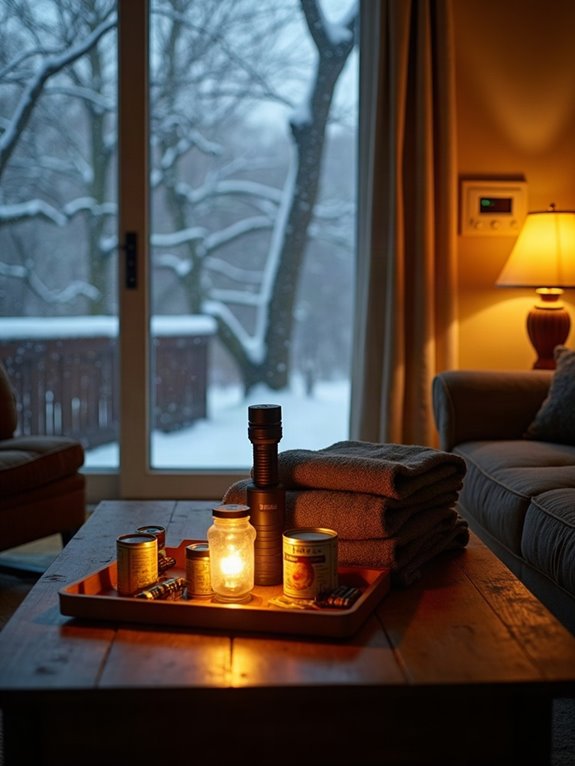
Build a winter outage kit, packed with three days of non-perishable food, water, and those oh-so-cozy blankets. Forgetting the flashlights? Bad idea. And don’t skimp on the batteries!
Before the storm hits, charge every gadget you own. Clear the yard of anything that could become a projectile. Seal drafts and keep your rooms warm—no one wants to freeze.
Plan for medical needs too. Have a list of medications and a stash of spare batteries.
Stay informed! Local radio, weather alerts—these are your lifelines. And for heaven’s sake, avoid unnecessary travel. When it snows, stay put.
Set your thermostat to 50–55°F when away to prevent pipes from freezing and causing costly water damage inside your home.