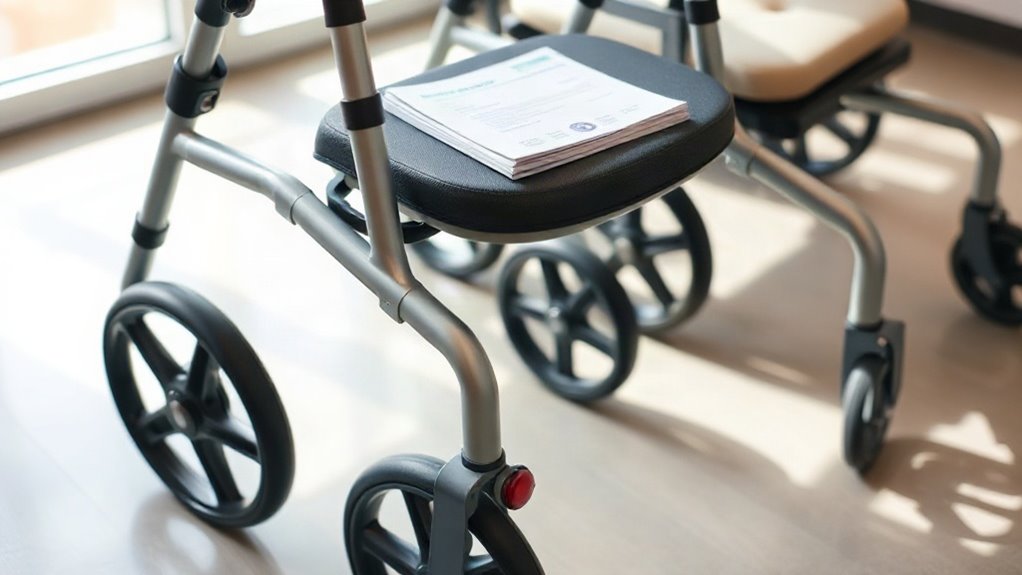

Medicare’s finally covering the combination walker-transport chair, but don’t pop the confetti just yet. It won’t be eligible until October 1, 2026. Until then, forget about it. You need a doctor’s prescription showing you genuinely need it for home mobility. A Swiss Army knife won’t cut it. Expect costs too—20% after a $283 deductible. Documentation? Absolutely essential, or you might end up with a denial letter. Stick around to get the full scoop on what this means for you.
Design Highlights
- Starting October 1, 2026, the combination walker-transport chair qualifies as Durable Medical Equipment (DME) under Medicare.
- Coverage requires a healthcare provider’s prescription and documentation of medical necessity for home use.
- The device must assist with daily activities and cannot be deemed for convenience over necessity.
- Beneficiaries are responsible for a $283 deductible and 20% of the approved amount, depending on supplier participation.
- Ensure the supplier is Medicare-approved and accepts assignment to avoid unexpected costs.
How Medicare Covers the Combination Walker-Transport Chair
How does Medicare handle the combination walker-transport chair? Well, it’s complicated. For services between October 1, 2025, and September 30, 2026, forget about coverage. That thing doesn’t even meet the Durable Medical Equipment (DME) definition. But hold onto your hats: starting October 1, 2026, it qualifies as DME. Yay! Medicare Part B might cover it if a provider says you need it at home—because, obviously, having a walker-transport chair is a medical necessity. However, you must also meet the Medicare reasonable and necessary criteria to ensure coverage. But don’t get too excited; documentation is key. You need a prescription, and the supplier must be Medicare-approved. Additionally, ensure that the supplier accepts assignment to avoid unexpected costs. Research shows that policies reducing financial hardship for beneficiaries by as much as 34% demonstrate how coverage decisions can meaningfully affect seniors’ ability to afford essential medical equipment. So, if you thought getting this device was simple, think again. It’s all about jumping through hoops, folks. Welcome to Medicare!
Do You Qualify for Coverage?
Do seniors really understand if they qualify for coverage? Not always. Medicare Part B isn’t a free-for-all. To snag that wheeled walker with a seat, seniors must show it’s medically necessary. A doctor’s order isn’t a golden ticket; it has to detail a genuine need for home use. Mobility issues? They better affect daily living—think toileting or dressing, not just strolls in the park. If a cane suffices, forget it.
Plus, the device must fit in the home, not double as a fancy outdoor chair. The rules are clear: it’s not about age; it’s about need. Medically necessary DME must be prescribed by a healthcare provider, and if Medicare deems it more for convenience than necessity, that denial letter will come faster than a speeding ticket. Additionally, coverage applies when devices are medically necessary and prescribed by a doctor. Modern insurers are also increasingly using AI-generated reports to validate equipment claims with objective, data-backed documentation that is difficult to dispute.
Understanding Costs and Documentation
Exploring the costs and documentation for Medicare coverage isn’t exactly a walk in the park. It’s a bit of a maze, really. Here’s what you need to know:
- Medicare Part B kicks in after a $283 deductible.
- Beneficiaries pay 20% of the approved amount—if the supplier plays nice.
- Documentation? You’ll need a doctor’s order, stating the medical necessity.
- Ensure your supplier is Medicare-enrolled; otherwise, good luck getting paid.
Oh, and if your health changes? Get ready for more paperwork. It’s like a never-ending dance with bureaucracy. Just remember, without proper documentation, that shiny walker isn’t going anywhere. So brace yourself, seniors—Medicare’s got rules, and they’re not shy about enforcing them. For broader financial protection against unexpected medical-related costs, some seniors and their families explore umbrella insurance coverage that extends beyond standard policy limits to safeguard personal assets.