
A staggering 90% of seniors are now hitting barriers that make aging in place feel more like a mission impossible. Seriously, that’s a huge number. Many homes are basically obstacle courses, with stairs and tight spaces just waiting to trip someone up. Bathrooms? Forget it—they’re often missing grab bars and space for walkers. It’s no surprise that nearly 70% struggle to stay safely at home. Curious about the specific challenges and solutions? Keep going.
Design Highlights
- Ninety percent of U.S. seniors encounter at least one barrier that hinders their ability to age in place safely.
- Many homes lack essential safety features, with only 10% deemed “aging ready.”
- Financial strain affects 30% of older adults, limiting their ability to make necessary home upgrades.
- Transportation limitations increase social isolation and dependency, complicating seniors’ independence.
- A growing number of seniors express the need for grab bars and better entryways to enhance safety.
Barriers to Aging in Place
But here’s the kicker: only 10% of American homes are “aging ready.” That’s a shocker!
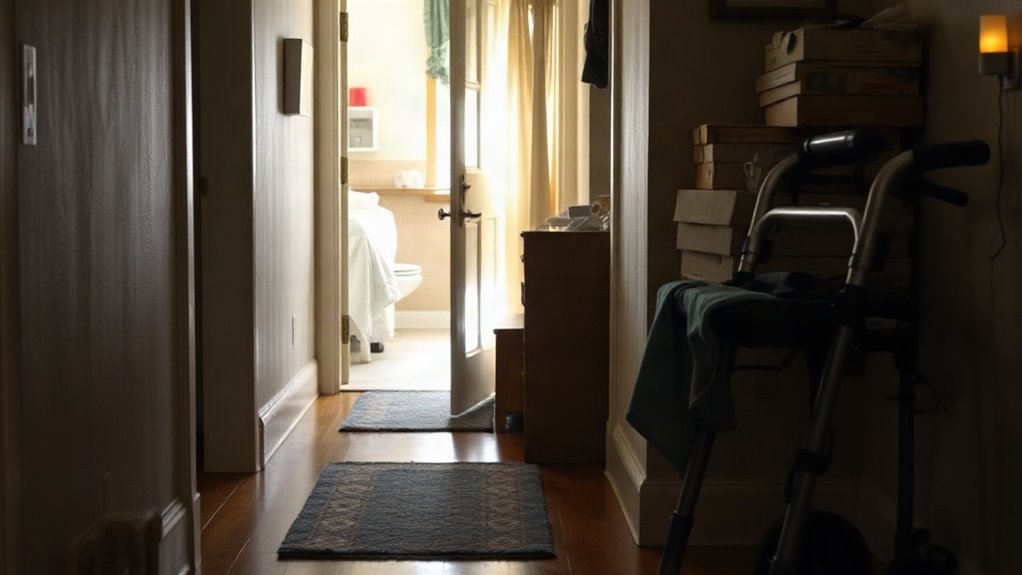
Most houses are like obstacle courses, filled with stairs and tight spaces that scream “fall risk.”
Bathrooms? Good luck. They often lack grab bars or even enough space for a walker. In fact, curbless walk-in showers can dramatically reduce fall risk in what is considered the highest-risk room in the home.
And if you’re on a fixed income, forget costly modifications.
About 30% of older adults are drowning in housing costs.
Transportation? Don’t get started. Without it, seniors are stuck, isolated, and dependent.
In fact, 90% of U.S. seniors face at least one social barrier that complicates their ability to age in place.
It’s a tough reality.
Aging in place should be a dream, not a nightmare filled with barriers that keep people from living safely and independently.
2026 Survey Findings on Senior Challenges
What’s keeping seniors from living their best lives at home? A lot, it turns out. Ninety percent of U.S. seniors face at least one barrier to health, independence, or care.
Almost 70% struggle just to stay safely at home. The numbers jumped this year—aging-in-place challenges rose by 7 percentage points. Ouch.
Home safety? Yeah, 72% need grab bars, while 71% want better entryways. Programs like the Elderly Services Program provide in-home support across select counties, though access varies significantly depending on where a senior lives.
And let’s talk money—67% feel the pinch of rising living costs, with many unable to afford necessary home upgrades. Economic insecurity is also a significant concern, with 56% of seniors ranking it as a top issue.
Transportation woes? They’re real, with access to medical services ranking high on the frustration list.
It’s not just about wanting to age in place; it’s about the reality of making it happen.
Effective Solutions for Aging in Place Seniors
Many seniors find themselves in a tricky spot when it comes to aging in place. It’s not just about the nostalgia. It’s about safety, too. So what can be done? Here are three effective solutions:
- Home Modifications: Install grab bars, swap out slippery floors, and make those showers safe. Seriously, who wants to risk a tumble?
- Fall Prevention: Clear pathways and improve lighting. And hey, no more throw rugs! They’re just trip traps waiting to happen. Falls identified as the most serious concern among everyday risks can be mitigated with these changes.
- Technology Support: Use smart home devices and medical alert systems. If a fall happens, let’s not wait for the cat to find you. Ageing-in-place is encouraged by the Dutch government as a means to support seniors in living independently in their own homes.
These adjustments can be lifesavers. Aging shouldn’t mean compromising safety, right? For additional peace of mind, homeowners insurance may sometimes extend liability coverage to incidents involving in-home caregivers, offering an extra layer of financial protection. Let’s get it sorted!