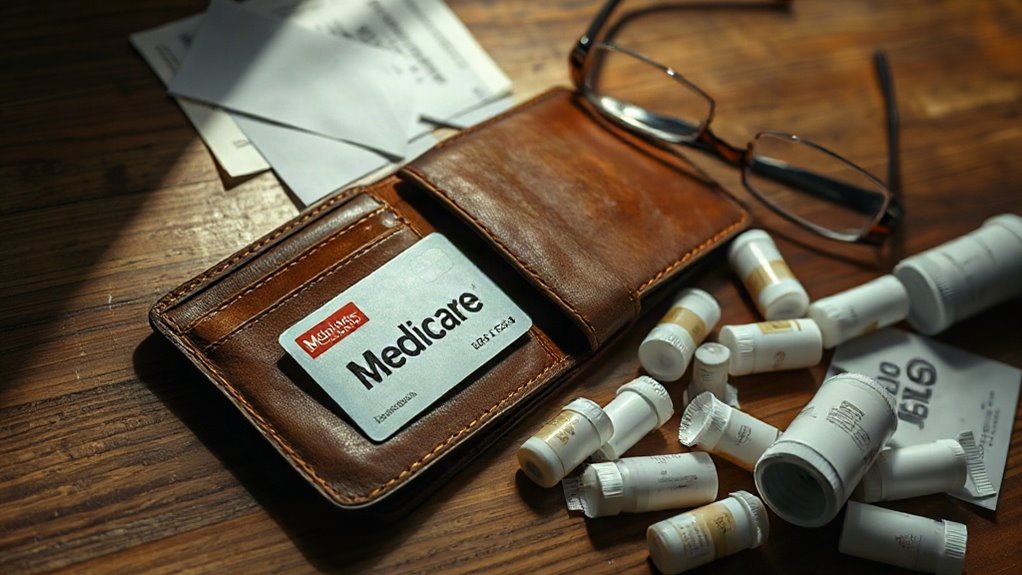

The Medicare GLP-1 Bridge Program sounds good, right? Just $50 a month for weight-loss meds. But here’s the kicker: not everyone qualifies. Many seriously ill patients get stuck paying full price—upwards of $1,000 monthly. Forget the discounts; they won’t work for Medicare recipients. They’re left facing a harsh reality, often skipping doses because of sky-high costs. So, while some get a break, many are still feeling the financial pinch. Curious about the details? There’s more.
Design Highlights
- Medicare’s GLP-1 Bridge Program subsidizes costs, but participants still pay a flat fee of $50 per month for medications.
- Many seriously ill patients are not eligible, as the program requires a BMI of 35 or higher for weight management.
- Full retail prices for GLP-1 medications can exceed $1,000 monthly, leaving non-participants with high out-of-pocket costs.
- Manufacturer discount cards often exclude Medicare patients, further burdening those unable to access the program.
- Limited Medicaid coverage in only 13 states leaves many patients without affordable options for GLP-1 treatments.
What You Need to Know About the Medicare GLP-1 Bridge Program
When it comes to the Medicare GLP-1 Bridge Program, there’s a lot to unpack. Launched by CMS, this program kicks off on July 1, 2026, running until the end of 2027.
It’s all about expanding access to certain GLP-1 medications for weight management—kind of a big deal, right? But wait, it operates outside the usual Medicare Part D rules. The demonstration aims to collect data on GLP-1 utilization for future planning. Additionally, the covered drugs include Foundayo®, Wegovy®, and Zepbound®.
So, you’ll pay a flat $50 a month for drugs like Wegovy and Zepbound. Sounds great, but that payment doesn’t count toward your deductible. Just a little twist there. The government subsidizes roughly $350 per month per participant to cover the remaining cost of these medications.
The program is a temporary demonstration, not a permanent solution. CMS is watching closely to see how this all plays out.
A temporary demonstration, this program is under CMS’s watchful eye as it unfolds.
It’s like a reality show for healthcare—without the drama!
Eligibility Criteria for the $50 Monthly Price?
How does one snag that enticing $50 monthly price for GLP-1 medications? Well, it’s not just a walk in the park.
First, you need to be 18 or older and enrolled in Medicare Part D—no coverage, no deal.
Next, you must actually use a covered GLP-1 for weight management. Sorry folks, if you’re getting it for something else, you’re out of luck.
Then there’s the BMI game: 35 or higher? You’re golden. Below that? Good luck finding a qualifying condition.
And don’t forget—prior authorization is a must. You’ll need a doctor to jump through hoops for Medicare.
Additionally, this program is designed to expand access to innovative weight-loss treatments for eligible beneficiaries.
Surviving spouses navigating Medicare costs should also be aware that IRMAA surcharges can dramatically increase premiums after a partner’s death, adding yet another financial burden during an already difficult time.
Oh, and this sweet deal only runs from July 1, 2026, to December 31, 2027. Enjoy the wait!
Financial Burdens for Patients Not Covered by the Program
Many folks might think they can snag GLP-1 medications without a hitch, but that’s far from reality.
Many believe accessing GLP-1 medications is easy, but the truth reveals a challenging reality.
For many patients, the cost can be eye-wateringly high. Medicare doesn’t cover these drugs for weight loss, leaving people to pay full retail prices. Ouch! Those cash prices? They can soar to over $1,000 a month.
And forget about manufacturer discount cards; they often exclude Medicare patients. So, if you’re not in the program, good luck maneuvering those financial waters. SingleCare discounts may lower GLP-1 costs below Medicare copays, making it crucial for patients to explore all available options.
It’s not just a monthly burden; it’s a monthly crisis. Patients on fixed incomes feel the pinch hard. They might skip doses or delay therapy just to make ends meet. This isn’t just about weight—it’s about survival. The program aims to streamline the coverage process for GLP-1s, but many remain vulnerable due to the high costs. Adding to the frustration, only 13 states currently extend Medicaid coverage for GLP-1s to treat obesity, leaving millions without a meaningful safety net.